Guide
HDPE Sliplining: Trenchless Rehabilitation of Aging Pipelines & Sewers (2026)
The counter-intuitive truth of sliplining: you insert a smaller pipe, lose some diameter — and often end up with more flow, because the glass-smooth HDPE bore beats the old tuberculated one by more than the diameter you gave up.

Dr. Wei Liu, P.E.
Senior Engineering Manager · Primepoly
Published: Jun 8, 2026
Updated: Jun 8, 2026
14 min read
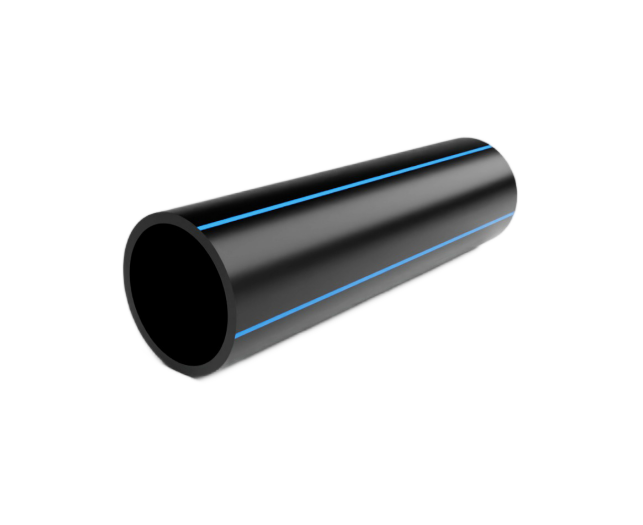
Sliplining is the quiet workhorse of pipe rehabilitation: you insert a new HDPE liner inside a deteriorated host pipe, grout the gap, and walk away with a corrosion-proof, leak-free pipe for another 50–100 years — without digging up the street. The objection people raise is always the same: doesn't a smaller pipe carry less water? Often, no. The old host is hydraulically rough — tuberculated, corroded, joint-offset — while new HDPE is glass-smooth, and that roughness improvement frequently recovers or exceeds the capacity you lost to the smaller diameter. This guide explains the methods, proves the capacity point with the math, and walks the design.
What HDPE sliplining is (rehabilitation, not replacement)
Sliplining means inserting a new, smaller-outside-diameter pipe — the liner — into an existing deteriorated host pipe along its existing line and grade, then sealing the ends and grouting the annular space between liner and host. It's been done since the 1940s, and HDPE is the dominant liner material because it's heat-fused into leak-free strings and is corrosion-proof. The key framing: this is rehabilitation of a host pipe, distinct from a new horizontal-directional-drilling installation, and distinct from pipe bursting — which fractures the old pipe outward and pulls a new one through, replacing (and often upsizing) rather than lining. Sliplining keeps the host as a structural shell or sacrificial form and threads a new pipe inside it.
The four sliplining methods compared
There are four practical methods, and they split into loose-fit and close-fit families. Conventional (continuous) sliplining fuses HDPE into one string above ground and pulls or pushes it through the host between insertion and receiving pits, leaving a deliberate annular gap (liner OD about 10% smaller than host ID) that is then grouted. Segmental sliplining joins bell-and-spigot segments and pushes them along one at a time, used where continuous fusion isn't feasible. The close-fit methods maximise the retained diameter: swagelining/rolldown pulls an HDPE pipe slightly larger than the host through a reduction die or rollers to temporarily shrink it, after which it reverts tight against the host; fold-and-form folds the HDPE into a C or U shape, inserts it, then re-rounds it with heat and pressure. The table compares them.
| Method | How it works | Annular grout? | Flow capacity |
|---|---|---|---|
| Conventional / continuous | Fuse a string above ground; pull/push through host between pits | Yes — fills the ~10% gap | Diameter reduced; smooth bore usually offsets it |
| Segmental | Jointed bell-and-spigot segments pushed in one at a time | Yes | Same as conventional |
| Swagelining / rolldown | HDPE pulled through a die/rollers to shrink it; reverts snug | Usually none (close fit) | Maximised — least capacity loss |
| Fold-and-form | HDPE folded to a C/U shape, inserted, then re-rounded with heat | Usually none (close fit) | Maximised — least capacity loss |
The capacity paradox: why a smaller liner can carry more flow
Here's the counter-intuitive heart of it. Conventional sliplining reduces the cross-sectional flow area — you lose the annular gap — but old deteriorated pipe is hydraulically rough (tuberculation, corrosion, joint offsets, biofilm) while new HDPE is glass-smooth. New HDPE has a Manning's n of about 0.009–0.010 versus roughly 0.013–0.024 for an aged host, and that roughness gain often overwhelms the diameter loss. The governing relation for gravity flow is Q_liner / Q_host = (n_host / n_liner) × (D_liner / D_host)^(8/3). The chart works a 24-inch host relined to a ~21.6-inch HDPE bore (a 10% diameter cut, which alone costs ~23% of area-driven flow) against a range of host roughness — and shows flow climbing past 100% as the old pipe gets rougher.
Source: Manning: Q ∝ (1/n)·D^(8/3)
Structural design: fully vs partially deteriorated host
The structural design hinges on how much the host can still carry. For a fully deteriorated host that provides no support, the HDPE liner is designed as a standalone structural pipe carrying all the loads — earth, live and especially external groundwater pressure — which drives a thicker wall (lower DR), and the governing check is long-term creep buckling under that external water pressure. For a partially deteriorated host that still carries some load, the liner is interactive, resisting mainly internal pressure and infiltration, allowing a thinner wall (higher DR). The table contrasts the two. Two practical limits also apply: keep the pull force under about one-third of the HDPE's yield strength (strain under 5%), and choose the DR so tensile capacity exceeds the frictional pull load with a margin.
| Fully deteriorated host | Partially deteriorated host | |
|---|---|---|
| Host support | None — host carries no load | Partial — host still carries some load |
| Liner role | Standalone structural pipe (all loads) | Interactive — mainly internal pressure & infiltration |
| Governing check | Long-term creep buckling under external groundwater | Internal pressure / infiltration resistance |
| Wall / DR | Thicker wall — lower DR | Thinner wall — higher DR |
The annular space: to grout or not to grout
Whether you grout depends on the method. Conventional and segmental (loose-fit) sliplining leaves a deliberate annulus, which is filled with low-density cellular, cement-sand or fly-ash grout to stop the host collapsing onto the liner, block groundwater migration and flotation, lock the liner in place and transfer load. At the ends and service connections, non-shrink grout is packed into the void for about half to one liner diameter and dressed off. The close-fit methods — swagelining/rolldown and fold-and-form — leave essentially no annulus, so they generally need no grout at all, which is part of why they retain more flow area. Skipping grout where there is an annulus is a real failure mode: it leaves voids that allow flotation, infiltration and host collapse.
The sliplining design & installation sequence
From condition survey to commissioning, the work follows a defined sequence — summarised in the path below. The two decisions that drive everything are the host's deterioration class (which sets the structural design) and the method choice (which sets whether you grout and how much diameter you keep).
5 costly mistakes
- Assuming capacity always drops — skipping the Manning's/Hazen-Williams comparison and rejecting sliplining when the smooth bore would have recovered the flow.
- Skipping the pre-rehab host inspection and cleaning (CCTV, debris, offset joints, ovality) — leading to stuck pulls and the wrong DR.
- Choosing the wrong DR or structural class — designing as interactive when the host is fully deteriorated, ignoring external-groundwater buckling.
- Exceeding the safe pull force or bend radius — over-straining the HDPE beyond ~1/3 yield or 5% strain, causing necking or wall thinning.
- Neglecting annular grout or end seals — leaving voids that allow flotation, infiltration or host collapse, or botching lateral reconnections that reintroduce inflow and infiltration.
Glossary
- Sliplining
- Inserting a new (smaller-OD) HDPE liner into an existing deteriorated host pipe and grouting the annulus — rehabilitation, not replacement.
- Host pipe
- The existing deteriorated pipe being rehabilitated; classified as fully or partially deteriorated, which sets the liner's structural design.
- Close-fit (swagelining / fold-and-form)
- Methods that temporarily shrink the HDPE so it reverts tight against the host — minimal annulus, usually no grout, maximum retained flow area.
- Annular space
- The gap between liner and host in loose-fit sliplining, filled with grout to prevent collapse, flotation and groundwater migration.
- Manning's n
- The roughness coefficient for gravity flow; new HDPE ≈ 0.009–0.010 versus ≈ 0.013–0.024 for an aged host — the basis of the capacity paradox.
- Pipe bursting
- A replacement (not lining) method that fractures the host outward while pulling a new pipe through — can upsize, unlike sliplining.
References & standards
- [1]Plastics Pipe Institute (PPI) — Handbook of PE Pipe, Ch. 11 — pipeline rehabilitation by sliplining
- [2]Plastics Pipe Institute (PPI) — Slip lining design guidelines (clearance, DR, safe pull)
- [3]NASSCO — Pipe rehabilitation method taxonomy & inspection
- [4]ASTM International — ASTM F585 — insertion of flexible PE pipe into existing sewers
- [5]ASTM International — ASTM F1606 — rehabilitation with deformed PE liner
- [6]Trenchless Technology — Flow monitoring proves sliplining advantages (the capacity case)
- [7]Trenchlesspedia — Swagelining (close-fit method definition)
- [8]AWWA — M28 — rehabilitation of water mains
Frequently asked questions
Need expert advice on your project?
Our engineering team helps utilities, contractors and EPCs specify the right pipe material and SDR for their project. Get a no-obligation technical consultation.
Talk to an engineerRead next
13 min read
HDPE Trenchless Installation: HDD, Pipe Bursting & Sliplining (2026)
11 min read
How to Repair HDPE Pipe: Methods, and When to Repair vs Replace (2026)
13 min read
HDPE Pipe for Sewer Force Mains & Pressure Wastewater (2026)
13 min read
HDPE Pipe Hydraulic Design & Flow Capacity: Sizing, Head Loss & Velocity (2026)
13 min read
HDPE Corrugated & Double-Wall Pipe for Drainage, Stormwater & Culverts (2026)
Explore further
Related applications, material comparisons and country buying guides selected for this topic.