Guide
How to Repair HDPE Pipe: Methods, and When to Repair vs Replace (2026)
Electrofusion, replacement spools, mechanical couplers and clamps — which to use, the 10% wall rule, and the cautions vendors get wrong.

Dr. Wei Liu, P.E.
Senior Engineering Manager · Primepoly
Published: Jun 8, 2026
Updated: Jun 8, 2026
11 min read
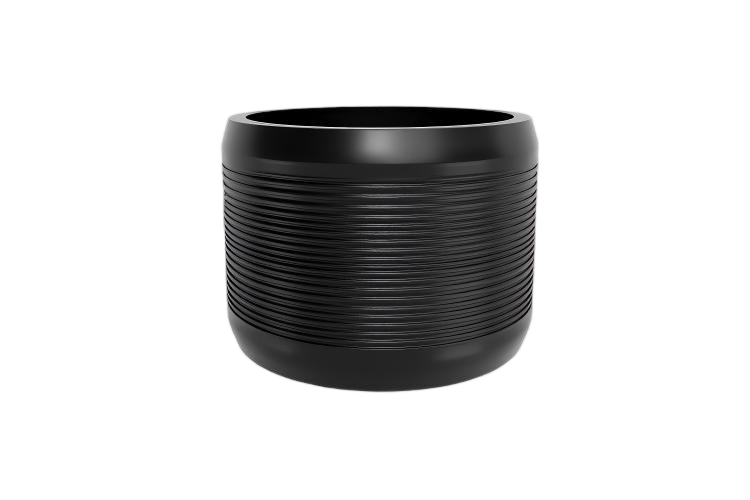
HDPE pipe is repairable — often invisibly and at full pressure — but the right method depends entirely on the damage, and a couple of repairs that work on metal or PVC simply don't work on polyethylene. You can't glue PE, and a bolt-on clamp that holds a steel pipe for years can relax on HDPE as the plastic cold-flows. This guide sets out the repair methods, when to use each, the one rule that decides repair versus replacement, and the cautions that vendor blogs routinely get wrong.
The 10% rule that decides everything
Before choosing a method, measure the damage against one number: 10% of the wall thickness. A scratch or gouge deeper than about 10% of the wall is a stress concentration that can grow into a crack, so it must be cut out — it cannot be buffed, filled or patched over. Shallower defects can sometimes be lightly buffed and left. That single test sorts most situations into "spot repair" versus "cut it out," and it's the first thing to apply to any damaged length.
First, isolate the line: squeeze-off
To work on a pressurised line without a valve, HDPE can be squeezed off — flattened with a squeeze tool upstream of the repair to stop the flow, then re-rounded afterwards. It's a technique, not a repair, and it has rules: locate it at least three pipe diameters (or 12 inches, whichever is greater) from any joint, fitting or previous squeeze; close slowly; don't over-squeeze; mark the spot; and follow the tool maker's procedure and the relevant standard (ASTM F1041 / F1734 and PPI TN-54). Done wrong, squeeze-off causes long-term damage.
The repair methods
Four methods cover almost every HDPE repair, plus the squeeze-off technique to isolate the work. The table summarises what each is for and — importantly — whether it's a permanent or temporary fix, because that distinction is where most field mistakes happen.
| Method | Best for | Permanent? | Key caution |
|---|---|---|---|
| Electrofusion coupler / saddle / patch | Small holes, leaks, tie-ins | Yes — full pressure | Scrape & clean the surface; not near flammable gas |
| Cut-out & re-fuse (replacement spool) | Larger damage, cracks, breaks | Yes — gold standard | Match OD/SDR/grade; use 2 EF couplers if pipe can't move |
| Mechanical / compression coupler | Emergencies; no fusion possible | If correctly specified | Needs internal stiffener + axial restraint |
| Full-circle band clamp | Fast leak-stop | Usually temporary | HDPE cold-flow relaxes the bolt load |
| Squeeze-off (technique) | Isolating the work area | n/a | ≥3× dia from joints; close slowly; re-round after |
Repair vs replace: how to decide
Spot-repair a small, single, localised defect when the rest of the pipe is sound and you have clean, dry access for fusion. Replace the section when the damage exceeds 10% of the wall, when there are multiple defects, cracks or a full break, when the pipe is old, oxidised or UV-degraded, or when the defect can't be isolated to one spot. The gold-standard permanent repair for anything beyond a pinhole is to cut out the damage and fuse in a new spool — typically tied in with two electrofusion couplers when the pipe can't move axially.
HDPE-specific cautions: no glue for PE
Two facts about polyethylene drive every repair decision. First, there is no glue for PE — it's a non-polar plastic that solvent cement and adhesives can't bond, so any "epoxy patch" or "PVC-cement" advice simply doesn't apply; PE must be heat-fused or mechanically joined. Second, PE cold-flows (creeps) under sustained load, so a bolt-on clamp's bolt tension relaxes over time and its seal can lose compression — which is why full-circle clamps are usually temporary on HDPE unless the maker specifically qualifies them, and why compression couplers need internal stiffeners and axial restraint.
Which repair method?
5 common repair mistakes
- Using a bolt-on full-circle clamp as a permanent fix — it relaxes as HDPE cold-flows; it's an emergency/temporary measure unless specifically qualified.
- Trying to glue, solvent-weld or epoxy-patch PE — no adhesive bonds to polyethylene; it must be fused or mechanically joined.
- Not matching the SDR, OD, grade and pressure rating of the coupler or replacement spool to the host pipe.
- Not removing the damaged section — fusing or patching over a gouge deeper than 10% of the wall, or over a crack, instead of cutting it out.
- Squeeze-off done wrong — too close to a joint (under 3× diameter or 12 in), closed too fast or too hard, or not re-rounded afterwards.
Glossary
- Electrofusion repair
- A permanent repair using an EF coupler over a re-cut section, or an EF saddle/patch over a small hole; needs the pipe scraped and cleaned.
- Replacement spool
- A new length of pipe cut and fused in to replace a damaged section — the gold-standard permanent repair, often tied in with two EF couplers.
- Compression coupler
- A mechanical (no-fusion) coupling for HDPE; needs an internal stiffener and axial restraint to resist cold-flow pull-out.
- Full-circle clamp
- A bolt-on stainless band clamp over a leak; usually temporary on HDPE because the pipe cold-flows and relaxes the bolt load.
- Squeeze-off
- Flattening the pipe with a tool to stop flow and isolate a repair, then re-rounding it; a technique, not a repair (ASTM F1041/F1734).
- Cold flow / creep
- PE's tendency to deform slowly under sustained load — the reason bolt-on clamps relax and compression fittings need restraint.
References & standards
- [1]PPI Municipal Advisory Board — HDPE pipe repairs (mechanical couplings, clamps)
- [2]PPI Municipal Advisory Board — HDPE fusion / electrofusion repair
- [3]PPI Municipal Advisory Board — Scratch depth tolerance (the 10% wall rule)
- [4]Plastics Pipe Institute (PPI) — MAB-4 — basic HDPE repair options
- [5]Plastics Pipe Institute (PPI) — TN-54 — guidelines for squeezing off polyethylene pipe
- [6]ASTM International — ASTM F1041 — squeeze-off of polyolefin pressure pipe
- [7]ASTM International — ASTM F1734 — qualification of squeeze tool & procedure
- [8]PE100+ Association — How can damaged PE pipe be repaired?
Frequently asked questions
Need expert advice on your project?
Our engineering team helps utilities, contractors and EPCs specify the right pipe material and SDR for their project. Get a no-obligation technical consultation.
Talk to an engineerRead next
Explore further
Related applications, material comparisons and country buying guides selected for this topic.