Guide
HDPE Pipe Fittings Guide: Types, Jointing & How to Choose (2026)
Molded, fabricated, electrofusion, flanges, mechanical and transition fittings — what each is for, why fabricated fittings are derated, and how to match them to your pipe.

Dr. Wei Liu, P.E.
Senior Engineering Manager · Primepoly
Published: Jun 7, 2026
Updated: Jun 7, 2026
13 min read
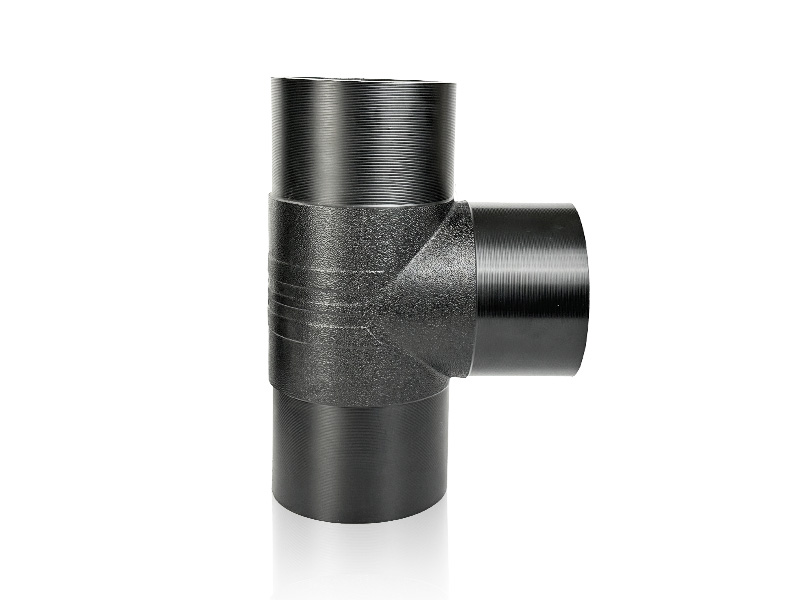
A polyethylene pipeline is only as good as its fittings — and the fittings are where most specification errors hide. A fabricated tee may carry only half the pressure of the pipe it joins; an SDR mismatch can make a butt-fusion joint impossible; a bare backing ring can corrode out of a flange in wet ground. This guide walks through the six HDPE fitting families, how each is joined, the standards that govern them, and a clear way to choose the right fitting for the size, pressure and site you're working with.
HDPE fittings at a glance
Six fitting families cover almost every PE connection. The table maps each to its subtypes, how it's joined, the sizes it suits, and — crucially — whether it carries full pressure or is derated.
| Family | Jointing | Typical size | Pressure |
|---|---|---|---|
| Molded (injection-moulded) | Butt fusion (spigot) | Up to ~DN500–630 | Full rating — no derating |
| Fabricated / segmented | Butt fusion / EF | Large diameter | Derated (≈0.5–0.8×) |
| Electrofusion (EF) | Electrofusion | ~DN20–630 + saddles | Full rating — no derating |
| Flanges & stub ends | Fused stub + bolted flange | DN50–DN1200+ | Per flange class / gasket |
| Mechanical / compression | Mechanical (no fusion) | Small (≤ ~DN63–110) | Per fitting rating |
| Transition (PE-to-steel/PVC) | Fused one side; threaded/flanged other | Standard sizes | Designed to pipe rating |
Molded (injection-moulded) butt-fusion fittings
Injection-moulded fittings — 45° and 90° elbows, equal and reducing tees, reducers, end caps and couplers — are made in one piece in a press, so the wall is engineered to carry the full pipe pressure rating with no derating. They're the default for small and medium diameters (commonly up to around DN500–DN630), joined to the pipe by butt fusion via their spigot ends. Above the molding size limit, you move to fabricated fittings.
Fabricated / segmented fittings — and why they're derated
Large-diameter and custom fittings are fabricated by cutting and butt-welding sections of pipe into bends, tees, wyes and large reducers. Because the mitre welds sit at an angle to the flow and the wall isn't thickened at the junction the way a molded fitting's is, fabricated fittings carry a reduced pressure rating. This derating is real and routinely missed — a PN16 line fitted with fabricated tees can be limited to PN8 at those tees.
The derating is defined by geometry. Per ISO 4427-3 / PIPA POP006, segmented bends keep full rating up to a 7.5° cut angle and drop to about 0.8 for cut angles up to 15°, while segmented tees and Y-junctions are derated to about 0.5; single-piece swept bends and molded/electrofusion fittings are not derated at all. The practical fix to keep full system pressure is to build the fabricated fitting from pipe one SDR thicker than the run — and to take the exact factor from the manufacturer's declaration tested to ISO 4427-3.
| Fitting geometry | Pressure factor (× pipe PN) |
|---|---|
| Swept bend (single heated section) | 1.0 (no derating) |
| Segmented bend, cut angle ≤ 7.5° | 1.0 |
| Segmented bend, cut angle 7.5–15° | ≈ 0.8 |
| Segmented tee / Y-junction | ≈ 0.5 |
| Molded & electrofusion fittings | 1.0 (full marked rating) |
Electrofusion (EF) fittings
Electrofusion fittings — couplers, reducers, elbows and saddle/tapping tees — have a resistance-wire coil embedded in the socket bore; an electrofusion control box energises the coil to melt and fuse the fitting to the pipe. They carry their full marked rating (no derating), tolerate some SDR difference between parts, and are the go-to where butt fusion isn't practical: repairs, tie-ins, congested trenches, and branch connections onto live mains (tapping saddles). The trade-off is meticulous surface preparation — the pipe must be scraped and cleaned before fusion.
Flanges & stub ends
Where a joint must be dismantled later — at valves, pumps, meters or a connection to steel — use a stub end (butt-fused or electrofused to the pipe) with a loose backing ring, gasket and bolts. The stub end matches the pipe; the backing ring and flange class set the bolted-joint rating. Specify a corrosion-protected (epoxy-coated, galvanised or stainless) backing ring for buried or wet service — a bare steel ring will rust out and is a classic field failure.
Mechanical / compression fittings
Compression and mechanical fittings join PE without any fusion equipment: a body, an elastomeric seal and an internal stiffener grip and seal the pipe. They're fast and tool-light, which makes them ideal for small-diameter service pipe (typically up to about DN63–DN110), temporary connections and repairs where a fusion machine isn't available. For larger diameters and permanent pressure mains, fused joints are stronger and more economical.
Transition fittings
Transition fittings bridge dissimilar materials — PE-to-steel, PE-to-PVC, and flange adaptors. The PE side is fused to the polyethylene pipe while the other side is threaded, welded or flanged to the mating material, with the assembly designed to carry the pipeline's rating across the material change. Use them at meter sets, pump connections and tie-ins to existing metal or PVC mains.
Jointing methods compared
| Method | Best for | Needs |
|---|---|---|
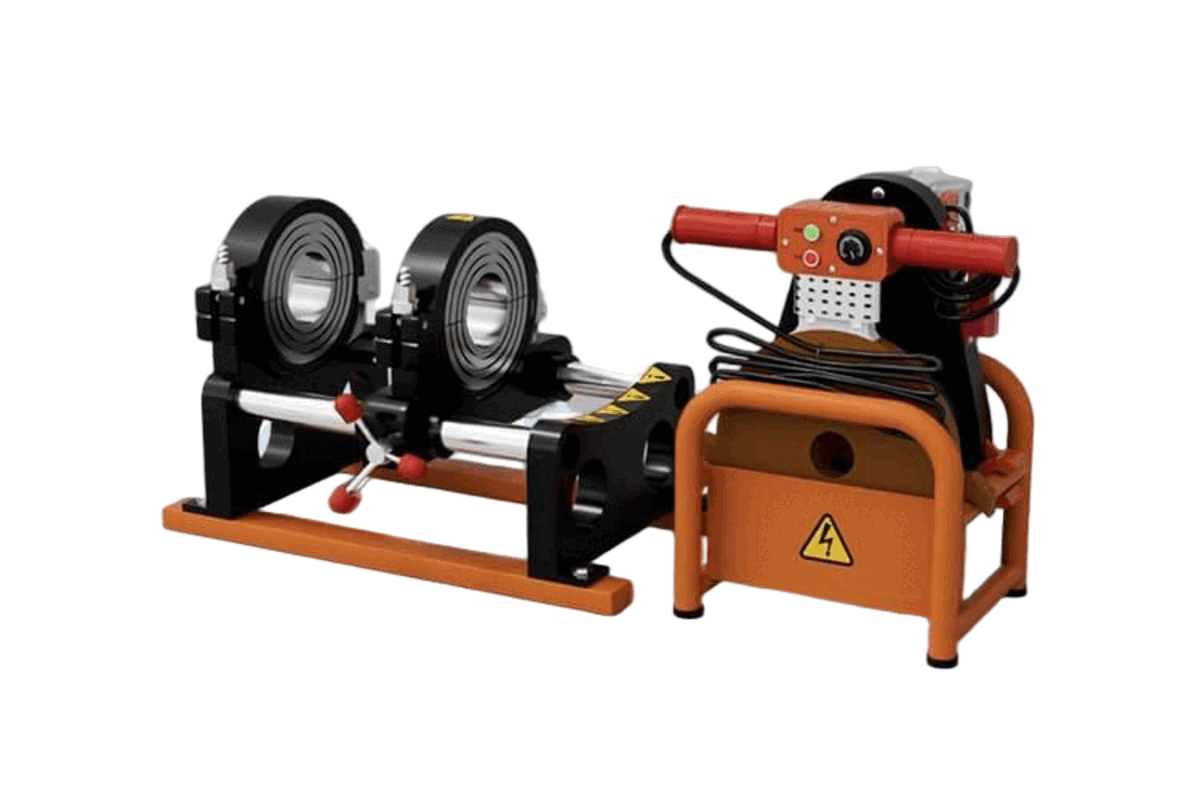
| Butt fusion | Molded/fabricated fittings, in-line, same SDR | Fusion machine, space, matching SDR |
| Electrofusion | Repairs, tie-ins, tight spots, saddles | EF box, scraping/cleaning, power |
| Mechanical / compression | Small dia, temporary, no machine | Hand tools only |
| Flanged (stub end + ring) | Dismantlable joints, valves/pumps, dissimilar metal | Bolts, gasket, corrosion-protected ring |
Standards you need to know
| Standard | Scope |
|---|---|
| ISO 4427-3 | PE fittings for water supply (incl. derating basis) |
| EN 12201-3 | European PE water fittings (mirrors ISO 4427-3) |
| ASTM D3261 | Butt-fusion PE fittings |
| ASTM F1055 | Electrofusion PE fittings |
| ASTM F2206 | Fabricated fittings of butt-fused PE pipe |
| AWWA C906 | PE pressure pipe & fittings, 4–65 in. (waterworks) |
| ISO 4437 (legacy ISO 8085) | PE gas fittings — cite ISO 4437 (8085 superseded) |
SDR & pressure matching
Butt fusion requires matching outside diameter and matching wall thickness (SDR) between the two parts, so fittings must be specified to the pipe's SDR and PN. An SDR17 fitting cannot be reliably butt-fused to SDR11 pipe — the wall thicknesses and melt-bead geometry differ — so a mismatch forces you to electrofusion (which tolerates some difference) or a transition/flanged joint. Fabricated fittings are built from the same SDR pipe as the run, or thicker, to offset their derating.
How to choose the right fitting
Work through size, pressure, on-site jointing capability and future-access needs. The path below resolves most selections.
5 common mistakes selecting HDPE fittings
- Assuming fabricated fittings carry full pipe pressure. Segmented tees are ~0.5× and bends ~0.8× the pipe PN — build from thicker-SDR pipe or use molded/EF fittings to keep the rating.
- SDR mismatch between pipe and fitting. An SDR17 fitting won't butt-fuse to SDR11 pipe — confirm SDR and OD system before ordering, or plan for electrofusion / a transition fitting.
- Forgetting backing-ring corrosion protection on flanges. A bare steel/GI backing ring rusts out in buried/wet service — spec epoxy-coated, galvanised or stainless rings with the right gasket and bolt grade.
- Not compensating fabricated derating with thicker pipe. To hold system PN, a fabricated fitting usually needs to be one SDR heavier than the run — design it in, don't discover it at commissioning.
- Picking a jointing method the site can't execute — large-OD butt fusion with no room/machine, or electrofusion with no clean prep or power. Match the fitting type to the field's real capability.
Glossary
- Molded (injection-moulded) fitting
- A one-piece pressed fitting (elbow, tee, reducer, cap) that carries the full pipe pressure rating with no derating; used up to medium diameters.
- Fabricated / segmented fitting
- A fitting welded from cut pipe sections for large or custom shapes; pressure-derated because of its mitre welds (≈0.8× bends, ≈0.5× tees/wyes).
- Electrofusion (EF) fitting
- A fitting with an embedded heating coil; an EF box fuses it to the pipe. Full rating, tolerates some SDR difference; needs the pipe scraped and cleaned.
- Stub end + backing ring
- A fused stub end with a loose flange ring for dismantlable bolted connections to valves, pumps and dissimilar materials.
- Transition fitting
- A fitting that joins PE to steel or PVC (or a flange adaptor), fused on the PE side and threaded/welded/flanged on the other.
- Derating factor
- A multiplier (<1.0) applied to a fabricated fitting's pressure rating to account for its mitre-weld geometry; from the maker's data per ISO 4427-3.
References & standards
- [1]ISO — ISO 4427 — Plastics piping systems for water supply: PE pipes & fittings
- [2]ASTM International — ASTM D3261 — butt-heat-fusion PE fittings for PE pipe & tubing
- [3]ASTM International — ASTM F1055 — electrofusion-type PE fittings
- [4]AWWA (ANSI webstore) — AWWA C906 — PE pressure pipe and fittings, 4–65 in.
- [5]Plastics Pipe Institute (PPI) — Handbook of PE Pipe, Ch. 4 — PE pipe and fittings manufacturing
- [6]PIPA (Australia) — POP006 — PE fabricated fittings: derating requirements
- [7]TWI — Standards used for polyethylene pipe
- [8]PE100+ Association — Types of fittings to connect PE & HDPE pipes
Frequently asked questions
Need expert advice on your project?
Our engineering team helps utilities, contractors and EPCs specify the right pipe material and SDR for their project. Get a no-obligation technical consultation.
Talk to an engineerRead next
Explore further
Related applications, material comparisons and country buying guides selected for this topic.