Application
HDPE Pipe for Sewer Force Mains & Pressure Wastewater (2026)
Pumped sewage is a brutal, corrosive duty — and HDPE's immunity to hydrogen-sulfide attack and its zero-leak fused joints are exactly why it dominates force mains.

Dr. Wei Liu, P.E.
Senior Engineering Manager · Primepoly
Published: Jun 8, 2026
Updated: Jun 8, 2026
13 min read
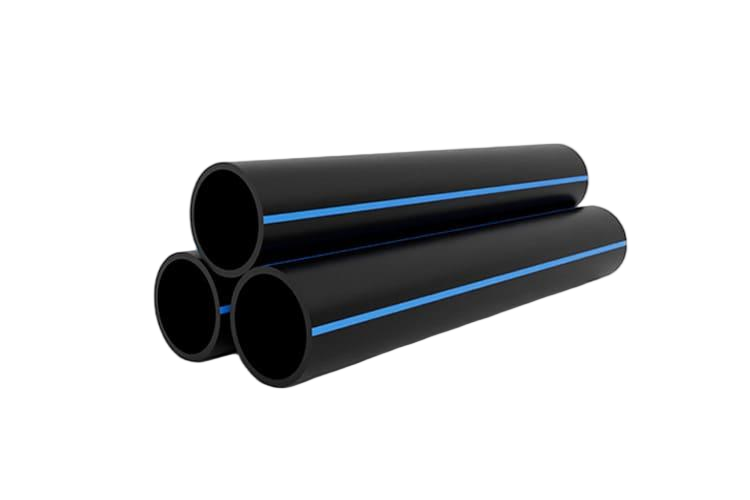
A sewer force main pumps wastewater under pressure from a lift station to where gravity can take over or to a treatment plant — and it's one of the harshest environments in civil infrastructure. Pumped sewage goes septic, generates hydrogen sulfide, and turns that into sulfuric acid that eats concrete and corrodes metal from the inside. HDPE simply doesn't care: it's immune to that attack, and its fused joints leak neither sewage out nor groundwater in. Those two facts — corrosion immunity and zero-leak joints — are why HDPE has become a default for force mains. This guide covers why, and how to design one.
What a sewer force main is
A force main (or rising main) is a pressurised pipe that carries wastewater pumped from a lift station's wet well — uphill, across flat ground, or to a treatment plant — wherever gravity sewer isn't feasible. It runs full under pump pressure, unlike a gravity sewer that flows partly full by slope. The same family includes low-pressure sewer (LPS) networks fed by individual grinder pumps and STEP systems that pump settled septic-tank effluent. All share the defining trait that makes them tough on pipe: pressurised, often-septic wastewater.
A brutal environment: H2S, septicity & crown corrosion
Pumped wastewater turns anaerobic, and sulfate-reducing bacteria generate hydrogen sulfide gas. Where that gas reaches exposed surfaces, other bacteria oxidise it into sulfuric acid — microbially induced corrosion, the classic "crown corrosion" that destroys the top of concrete pipes and manholes and corrodes unlined ductile iron and steel. It concentrates at high points, air-valve locations and the receiving manhole, where gas accumulates and is released. Any corrodible material in this service is on borrowed time unless fully protected.
Why HDPE wins: corrosion immunity & zero-leak joints
HDPE answers the force-main environment directly. It's chemically immune to hydrogen sulfide and to the sulfuric acid that destroys concrete and metal, so it doesn't corrode, tuberculate or thin at the crown — the single biggest advantage. And its butt- and electrofused joints are monolithic, with effectively zero allowable leakage: no exfiltration of sewage into groundwater (an environmental and regulatory must) and no infiltration of groundwater into the line (which would overload the treatment plant). Gasketed bell-and-spigot pipe leaks both ways; fused HDPE leaks neither, and is self-restraining so it needs no thrust blocks.
Supporting advantages: abrasion, surge, flexibility, smooth bore
Beyond the two headliners, HDPE brings more. Wastewater carries grit that abrades the invert during pump cycles, and PE has the best abrasion resistance of the common pressure-pipe materials. Pump start/stop creates surge, and HDPE's low modulus absorbs water hammer and tolerates the repeated pressure cycling. It's flexible enough for ground movement and trenchless replacement. And its smooth bore resists grease and slime buildup, keeping the flow capacity high for life — where lined metal starts lower and degrades, as the chart shows.
HDPE vs ductile iron, PVC & concrete
The honest comparison favours HDPE for this specific duty. The table sums up where the alternatives struggle with septic, pressurised wastewater and why HDPE is the corrosion-and-leak answer.
| Material | How it fares in a force main |
|---|---|
| Ductile iron | Crown corrosion from H2S → sulfuric acid unless specially lined; gasketed joints can leak |
| PVC | Gasketed joints leak (infiltration/exfiltration); more brittle, lower surge/fatigue tolerance |
| Concrete (RCP) | Crown destroyed by microbially induced sulfuric-acid attack; not for sustained pressure |
| HDPE (PE100) | Immune to H2S/acid; fused leak-free & self-restraining; abrasion- and surge-tolerant |
Force-main design essentials
Choosing HDPE is only half the job; the force main still has to be designed for its duty. The essentials below govern whether it performs.
- Cleansing velocity — keep roughly 0.6–1.0 m/s minimum at pumped flow to suspend solids; below it grit settles and fouls the line, well above ~2.4 m/s erosion and surge rise.
- Air/vacuum valves at every high point — gas pockets (air plus H2S) cut capacity, worsen surge and concentrate corrosion downstream.
- Pressure class for head plus surge — size the SDR for the pump's total dynamic head and the transient from pump start/stop, not the static head alone.
- SDR selection — match the pressure class (and any external load) to the duty.
- Pigging access — provide for periodic pigging to clear grit and grease and restore capacity.
Pressure & low-pressure sewer (LPS / STEP)
HDPE also suits the small-diameter pressure-sewer world. Low-pressure sewer (LPS) networks, fed by individual grinder pumps at each property, are commonly fused HDPE (often SDR 11) for the same reasons — corrosion immunity and leak-free joints — at a domestic scale. STEP systems, which pump settled septic-tank effluent, use similar small pressure mains. In all of these, the fused, jointless line that won't corrode or leak is exactly what a dispersed, hard-to-inspect pressure-sewer network needs.
Standards
Force-main HDPE is made to AWWA C906 (which explicitly covers wastewater and reclaimed water, PE4710, in 4–65 in.), ASTM F714, and ISO 4427 / EN 12201 — the ISO standard naming drainage and sewerage under pressure directly. Heat fusion follows ASTM F2620. The H2S corrosion mechanism is documented in the EPA odor-and-corrosion design manuals, and WEF Manuals of Practice cover collection-system design. Confirm current editions and the governing local wastewater authority.
5 costly mistakes
- Wrong velocity — too low and grit settles and blocks the main; too high and erosion and surge climb. Design for self-scour at minimum pumped flow.
- No air/vacuum valves at high points — gas pockets cut capacity, intensify surge and create corrosion hot spots downstream.
- Under-specifying the pressure class — sizing to static head only and ignoring the transient surge from pump start/stop and check-valve slam.
- Specifying a corrodible material for septic sewage — bare ductile iron, steel or concrete at the crown and high points where H2S becomes sulfuric acid.
- Defaulting to open-cut for replacement — when HDD, pipe bursting or sliplining with fused HDPE is faster and cheaper for a failing force main.
Glossary
- Force main (rising main)
- A pressurised pipe that pumps wastewater from a lift station to where gravity sewer can take over or to treatment.
- Crown corrosion
- Acid attack at the top (crown) of a sewer pipe or manhole where hydrogen-sulfide gas is oxidised to sulfuric acid.
- Hydrogen sulfide (H2S)
- The corrosive, odorous gas generated by septic wastewater; the source of sulfuric-acid crown corrosion.
- Microbially induced corrosion (MIC)
- Corrosion driven by bacteria — here, the bacterial conversion of H2S into sulfuric acid that destroys concrete and metal.
- Cleansing velocity
- The minimum flow velocity that keeps solids suspended in a force main so grit doesn't settle and foul the line.
- Air/vacuum valve
- A valve at a force-main high point that releases accumulated air and gas (and admits air on drain-down) to protect capacity and limit surge.
References & standards
- [1]Plastics Pipe Institute (PPI) — Sewer force main benefits
- [2]PE100+ Association — HDPE PE100 & PE100-RC — properties and types
- [3]AWWA — AWWA C906 — PE pressure pipe & fittings (waterworks/wastewater)
- [4]ISO — ISO 4427-1 — PE pipes for water supply & pressure sewerage
- [5]Florida DEP — Design guidelines for low-pressure sewer systems
- [6]McWane Ductile — Cement-lined ductile iron in wastewater (H2S/crown corrosion)
- [7]Emerald Coast Utilities Authority — Wastewater force main systems (design manual §576)
- [8]JM Eagle — HDPE water & sewer installation guide
Frequently asked questions
Need expert advice on your project?
Our engineering team helps utilities, contractors and EPCs specify the right pipe material and SDR for their project. Get a no-obligation technical consultation.
Talk to an engineerRead next
Explore further
Related applications, material comparisons and country buying guides selected for this topic.