Guide
HDPE Trenchless Installation: HDD, Pipe Bursting & Sliplining (2026)
Install or rehab a pipeline without digging a trench — the three methods, when to use each, the pull-stress engineering, and the cost case.

Dr. Wei Liu, P.E.
Senior Engineering Manager · Primepoly
Published: Jun 8, 2026
Updated: Jun 8, 2026
13 min read
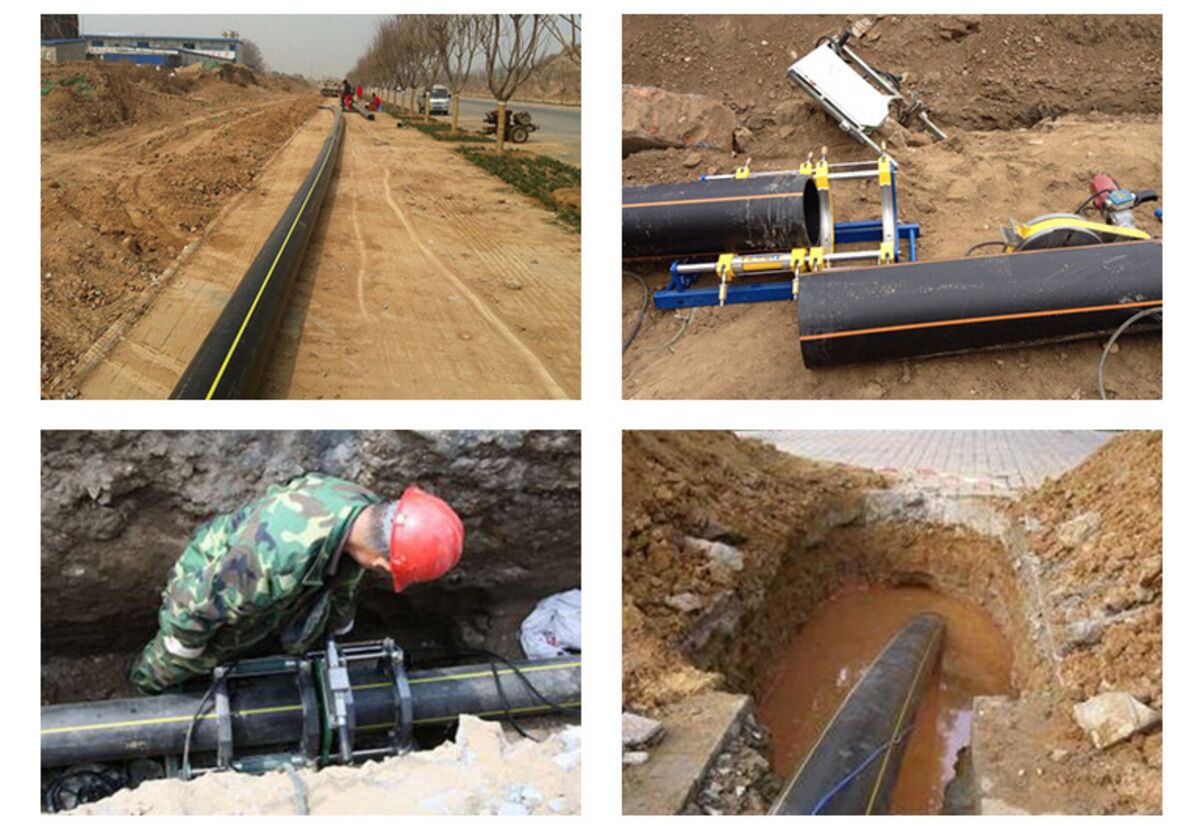
Trenchless methods install or replace a pipeline with little or no open excavation — pulling a fused HDPE string under a river, replacing an old main in place, or lining a leaking sewer — which is why they've transformed utility work in built-up and sensitive areas. HDPE is the natural fit: fused into a continuous, leak-free, fully restrained string, it can take the tensile pull and bend around the bore. This guide covers the three core methods, when to use each, the engineering that keeps the pull safe, and the cost case against digging a trench.
What "trenchless" means for HDPE
Trenchless installation places a pipe underground without digging a continuous open trench along its length — instead working from compact entry and exit points. It matters because the trench, not the pipe, is usually the expensive and disruptive part: excavation, traffic management and surface reinstatement. HDPE suits these methods uniquely well because butt fusion turns the whole pipeline into one continuous, leak-free, end-load-restrained string that can be pulled into place and bent around a bore.
The three methods at a glance
The table summarises what each method does, what it's best for, and its key constraint. The short version: HDD for new installs and crossings, bursting to replace and upsize, sliplining to reline.
| Method | What happens | Best for | Key constraint |
|---|---|---|---|
| HDD | Steered pilot bore, pre-ream, pull fused string back | New installs; crossings (river/road/rail) | Pull tension; bore stability; geotech |
| Pipe bursting | Fracture old pipe outward, pull new HDPE in behind | Replacing & upsizing a line in place | Host must be fracturable; nearby utilities |
| Sliplining | Insert smaller HDPE liner into a sound host | Rehab of leaking-but-sound host | Reduces bore; needs grouting & reconnections |
HDD: steered bore & pullback
Horizontal directional drilling steers a small pilot bore along a designed profile, enlarges it with one or more pre-reams, and then pulls the pre-fused HDPE string back through behind a reamer and swivel, with drilling fluid cooling and lubricating the bore and carrying out cuttings. It's the method for crossings — rivers, roads, rail and wetlands — and for long new installs with almost no surface disruption. The pullback tension and the bore's stability are the things to manage.
Pipe bursting: replace & upsize in place
Pipe bursting pulls a bursting head through an old pipe, fracturing it outward into the surrounding soil while drawing the new HDPE in behind it — by static (hydraulic rod) or pneumatic (percussive) means. Its great advantage is that it replaces a deteriorated line on the same alignment and can upsize it by a diameter or two. The host has to be fracturable (brittle materials like vitrified clay, asbestos cement, cast iron or concrete burst well; ductile iron is harder), and nearby shallow utilities are at risk from the ground displacement.
Sliplining: relining a sound host
Sliplining inserts a smaller-diameter fused HDPE liner into a larger host pipe that is structurally sound but leaking or corroded, either as a continuous pull-in or in jointed segments for tight access, with the annular space usually grouted and services reconnected. It's the rehab choice when the host is still round and adequate and some loss of bore is acceptable. The trade-off is exactly that reduced flow area — if you need more capacity, bursting (which can upsize) is the better route.
Why HDPE / PE100-RC is ideal for trenchless
HDPE's fused joints are as strong as the pipe wall, so the whole string is continuous, leak-free and fully end-load-restrained — it can take the tensile pull of a long pullback with no joint pull-out and no thrust blocks. It's flexible enough to bend around the bore, and has a high strength-to-weight ratio. For trenchless work, PE100-RC (the North American PE4710 "RC" grade) is often specified because its resistance to slow crack growth, point loads and surface scoring protects the pipe as it's dragged through the bore — and it enables sand-free installation.
The engineering: safe pull stress & bend radius
Two limits govern a safe pull. The pull stress must stay within the time-dependent safe value — because PE's strength falls under sustained load, the safe pull stress over a long bore is roughly a third of the short-term yield, and the pulling head is fitted with a breakaway/weak-link swivel sized so the string can't be over-pulled. And the pipe can't be bent tighter than the minimum radius for its DR (table below), with cold weather needing a larger radius. The full string is fused above ground first, each joint cooled before moving — and the project engineer sets the actual limits.
| Pipe DR | Min long-term bend radius |
|---|---|
| DR 7 – 9 | 20 × OD |
| DR 11 – 13.5 | 25 × OD |
| DR 15.5 – 17 | 27 × OD |
| DR 21+ | 30 × OD |
| Note | Short-term (install) radii are tighter; the project engineer governs |
Cost & surface disruption vs open-cut
The economic case for trenchless is mostly about what you don't dig. Surface reinstatement — restoring roads and pavements — can be the majority of an open-cut job's cost, and trenchless largely avoids it, with studies showing construction costs materially lower than open-cut (the savings biggest on small and medium diameters). The bigger gap is in social cost: trenchless can cut traffic delay, business disruption and emissions dramatically. The chart shows indicative ranges; the figures are proxies from rehab studies, so treat them as relative, not guaranteed.
Source: Trenchless cost studies (proxy)
How to choose: a method-selection path
Work through new-vs-rehab, then replace-vs-reline, then the host and obstacle conditions. The path below resolves most choices.
Standards & specifications
| Method | Standard |
|---|---|
| HDD | ASTM F1962; PPI Handbook Ch. 12 |
| Pipe bursting (water) | AWWA C622; ISTT/NASTT guidance |
| Sliplining | ASTM F585; PPI Handbook Ch. 11 |
| Base PE pipe / material | ASTM F714; ASTM D3350 |
| Rehab classification (ISO) | ISO 11295 / 11296 / 11297 |
5 common mistakes
- Over-pulling — exceeding the safe pull stress (ignoring the time-under-load derating), or not sizing the breakaway swivel to the allowable force.
- Wrong DR or bend radius — violating the minimum bend radius for the DR, or forgetting that cold weather needs a larger radius.
- Pulling before the fusion joints have cooled — moving the string too soon and stressing green joints.
- Bursting the wrong host — trying to burst ductile iron or steel, or upsizing near shallow parallel utilities and heaving the ground.
- Sliplining without checking the host or the flow loss — relining a collapsing host (which needs bursting or CIPP), or accepting an unacceptable bore reduction.
Glossary
- HDD (horizontal directional drilling)
- A steered pilot bore, pre-reamed, through which a fused HDPE string is pulled back — for new installs and obstacle crossings.
- Pipe bursting
- Pulling a bursting head through an old pipe to fracture it outward while drawing in new HDPE — replaces and can upsize a line in place.
- Sliplining
- Inserting a smaller fused HDPE liner into a sound-but-leaking host pipe to rehab it; reduces the bore.
- Safe pull stress
- The maximum tensile stress allowed during pullback, derated for time under load (≈ one-third of yield for a long bore).
- Bend radius (DR-dependent)
- The minimum radius a pipe can be bent without damage — larger for higher DR and in cold weather.
- Breakaway / weak-link swivel
- A pulling-head device that releases at a set force so the pipe can't be over-pulled.
References & standards
- [1]Plastics Pipe Institute (PPI) — Handbook of PE Pipe, Ch. 12 — horizontal directional drilling
- [2]Plastics Pipe Institute (PPI) — Handbook of PE Pipe, Ch. 11 — rehabilitation by sliplining
- [3]ASTM International — ASTM F1962 — maxi-HDD placement of PE pipe under obstacles
- [4]AWWA — AWWA C622 — pipe bursting of potable water mains 4–36 in.
- [5]PPI Municipal Advisory Board — HDD pullback / tensile-load guidance
- [6]Plastics Pipe Institute (PPI) — Sliplining design guidelines
- [7]PE100+ Association — Sliplining of HDPE / PE100 pipe
- [8]NASSCO — Pipe rehabilitation overview
Frequently asked questions
Need expert advice on your project?
Our engineering team helps utilities, contractors and EPCs specify the right pipe material and SDR for their project. Get a no-obligation technical consultation.
Talk to an engineerRead next
Explore further
Related applications, material comparisons and country buying guides selected for this topic.