Guide
HDPE Pipe Bedding, Backfill & Trench Design: Installing Flexible Pipe Correctly (2026)
For a flexible pipe the soil is the structure — bedding, the all-important haunch zone, soil classes, compaction, deflection control and the sand-free PE100-RC option.

Dr. Wei Liu, P.E.
Senior Engineering Manager · Primepoly
Published: Jun 7, 2026
Updated: Jun 7, 2026
13 min read
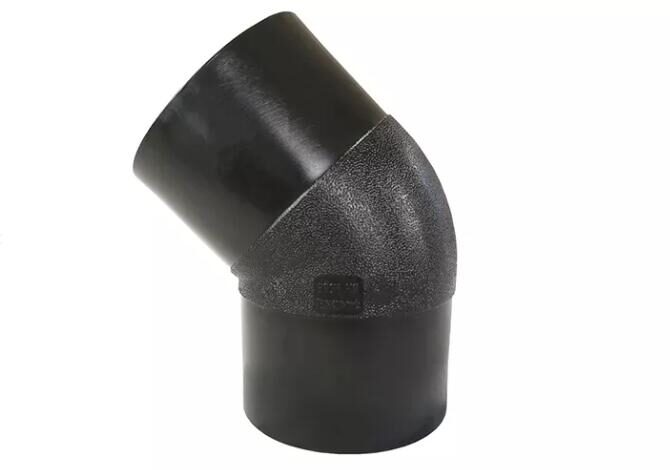
More buried HDPE failures come from the trench than from the pipe. The reason is fundamental: HDPE is a flexible pipe, and a flexible pipe doesn't carry the earth load on its own — it shares it with the compacted soil around it, so the soil envelope is effectively the structure. Get the bedding, haunching and backfill right and the pipe lasts a century; get them wrong and it over-deflects no matter how good the pipe is. This guide explains the flexible-pipe principle, the standards, the trench zones, soil classes and compaction, deflection control, and how PE100-RC lets you install without imported sand.
Why HDPE is different: flexible pipe & the pipe-soil structure
A rigid pipe — concrete or clay — carries the earth and traffic load mostly in its own wall and sheds the rest to the soil. A flexible pipe like HDPE does the opposite: under load it deflects slightly, and as the crown moves down the sides push outward into the embedment soil, mobilising passive soil resistance. The pipe and soil act together — "pipe-soil interaction" — and the compacted soil around the pipe carries most of the load. So the structure isn't the pipe; it's the pipe plus its soil envelope.
That changes how you install it. Because the soil is doing the structural work, the quality and compaction of the bedding, haunch and pipe-zone backfill matter far more than the pipe's wall stiffness. A strong pipe in poorly compacted soil will over-deflect; a correctly bedded pipe in a well-compacted envelope performs for decades. The whole of this guide follows from that single principle: build the soil envelope properly and the pipe takes care of itself.
Standards that govern
Buried flexible-pipe installation is well standardised. In the US, ASTM D2321 is the master practice for embedment and soil classification, with ASTM F1668 covering open-cut construction and AWWA M55 covering PE specifically (including its useful "basic" versus "engineered" installation distinction). In Europe, EN 1610 governs the construction and testing of buried drains and sewers, and in Australia and New Zealand AS/NZS 2566.2 covers buried flexible-pipeline installation. The project geotechnical report and the engineer's specification always take precedence over generic figures.
| Standard | Scope / region |
|---|---|
| ASTM D2321 | US — embedment & soil classification (master reference) |
| ASTM F1668 | US — construction procedures for buried plastic pipe |
| AWWA M55 | US — PE pipe design & installation (basic vs engineered) |
| EN 1610 | Europe — construction & testing of drains and sewers |
| AS/NZS 2566.2 | Australia / NZ — buried flexible pipelines: installation |
Anatomy of the trench: bedding, haunch & backfill
A flexible-pipe trench has distinct zones, each with a job. Below the pipe, a bedding layer (100–150 mm) gives it a uniform, level base. The haunch zone — from the top of the bedding up to the springline — provides the critical side support and must be worked full and compacted under the lower quadrants. The initial backfill (pipe-zone cover) continues to about 150 mm over the crown in select compacted material. Above that, final backfill — which can be native soil — runs to the surface. If the trench bottom is soft, a foundation layer is added below the bedding.
| Zone | Role |
|---|---|
| Foundation (if soft bottom) | Over-excavate & replace to firm the bedding base |
| Bedding (100–150 mm) | Uniform, level base the pipe sits on |
| Haunch zone (critical) | Side support under lower quadrants — compact both sides |
| Initial backfill (to ~150 mm over crown) | Select, compacted pipe-zone cover |
| Final backfill | Native soil to surface, compacted for surface use |
Embedment soil classes I–V
ASTM D2321 grades embedment soils from Class I (angular crushed rock — the stiffest, easiest to place in the haunches and free-draining) through Class II (clean coarse sands and gravels) and Class III (coarse soils with more fines), to Class IV (fine-grained silts and clays, usable only with engineering evaluation) and Class V (organic and high-plasticity soils — unsuitable, never in the pipe zone). The pipe zone uses Class I–III; Class IV only with geotechnical sign-off. Stiffer, cleaner soils need less compaction effort to reach the required support.
| Class | Soil | Pipe zone? |
|---|---|---|
| Class I | Angular crushed rock / stone | Best — stiffest, free-draining |
| Class II | Clean coarse sands & gravels | Excellent |
| Class III | Coarse soils with more fines | Usable — more compaction effort |
| Class IV | Fine silts & clays | Only with geotech sign-off |
| Class V | Organic / high-plasticity / frozen | Never in the pipe zone |
Compaction & doing the haunches right
Compact embedment in lifts — roughly 100–300 mm depending on soil class — and work each lift before placing the next, to the required density (commonly 85–95% Standard Proctor, higher for poorer soils and under traffic). The make-or-break detail is the haunch zone: the wedge-shaped spaces under the lower quadrants of the pipe must be physically worked full of material and compacted on both sides at once. Voids left under the haunches give the pipe no side support there, and it over-deflects. Never strike the pipe, and don't run heavy compactors directly over it until there's adequate cover.
Controlling deflection: the 5% / 7.5% limits & E′
A flexible pipe is meant to deflect a little, and design limits how much. The conservative service target is about 5% ring deflection, with AWWA M55 permitting up to 7.5% for PE. How much the pipe actually deflects is governed by the load and by the combined stiffness of the pipe and — dominantly — the soil, captured by E′, the modulus of soil reaction, in the modified Iowa (Spangler) formula. In practice E′ is set by the backfill type and its compaction, so poor haunch compaction means a low effective E′ and excess deflection. The soil, again, is what controls the outcome.
Verifying the install: mandrel & deflection testing
Because deflection is the governing performance measure, it's verified after installation. A mandrel sized to the minimum permitted inside diameter is pulled through the line (or a deflectometer/laser profiler is run), typically about 30 days after backfilling so soil consolidation has settled out. If the mandrel passes, the pipe is within its deflection limit and the embedment did its job; if it snags, the backfill — usually the haunches — wasn't compacted properly. The test turns "did we install it right" into a pass/fail check.
Trench width, cover & special conditions
The trench must be wide enough to place and compact embedment beside the pipe — a common rule is the pipe OD plus about 300 mm of working room each side, more for large diameters or hand tampers; too narrow and the haunches can't be compacted. Minimum cover is typically around 0.6 m in non-traffic areas and 0.9–1.2 m under roads and to clear frost, while the maximum fill height is a deflection/buckling calculation, not a fixed number. In rock, over-excavate and place a bedding cushion; in a high water table, guard against buoyancy with adequate cover, anchoring or by filling the pipe until it's covered.
The sand-free option: PE100-RC & native backfill
Standard PE100 wants select, stone-free embedment to avoid point loads. PE100-RC — a crack-resistant grade qualified against point loading by notch and point-load tests — changes that: it is independently verified for installation without a sand bed, reusing the native, stony excavated soil as backfill, and for trenchless methods like horizontal directional drilling and pipe bursting. That eliminates importing sand and exporting spoil, a real saving in cost, time and carbon — which is why RC grades are specified wherever select fill is expensive or trenchless installation is planned.
Embedment quick check
5 common installation mistakes
- Poor or skipped haunching — leaving voids under the lower pipe quadrants, which removes side support and causes excessive deflection (the number-one error).
- Large stones or debris against the pipe wall — creating point loads that can damage the wall or initiate slow crack growth (mitigated by PE100-RC).
- Inadequate compaction or the wrong soil — dumping rather than compacting, or using Class IV/V soil in the pipe zone, giving a low E′ and excess deflection.
- Treating flexible pipe like rigid pipe — assuming the pipe carries the load and the backfill quality doesn't matter.
- A trench too narrow to compact the embedment beside the pipe, so the haunches can't be reached or properly densified.
Glossary
- Flexible pipe
- Pipe (like HDPE) that carries load through pipe-soil interaction, deflecting and transferring load to the compacted soil envelope.
- Haunch zone
- The region under the lower quadrants of the pipe up to the springline; its compaction provides the primary side support — the #1 thing done wrong.
- Embedment soil classes (I–V)
- ASTM D2321 grading of backfill soils by suitability; pipe zone uses Class I–III, never Class V.
- Deflection limit
- The allowable ovalisation of the pipe, typically ≤5% (up to 7.5% per AWWA M55), verified by a mandrel test.
- E′ (modulus of soil reaction)
- The soil-stiffness term in the modified Iowa formula that dominates how much a flexible pipe deflects; set by backfill type and compaction.
- PE100-RC
- A crack-resistant PE100 grade qualified for installation without a sand bed (native backfill) and for trenchless methods.
References & standards
- [1]Plastics Pipe Institute (PPI) — Handbook of PE Pipe, Ch. 7 — underground installation
- [2]Plastics Pipe Institute (PPI) — Handbook of PE Pipe (2022 edition)
- [3]PPI Municipal Advisory Board — Basic and engineered installation of HDPE pipe (M55 paper)
- [4]ASTM International — ASTM D2321 — underground installation of thermoplastic pipe
- [5]ASTM International — ASTM F1668 — construction procedures for buried plastic pipe
- [6]Standards Australia — AS/NZS 2566.2 — buried flexible pipelines: installation
- [7]US Bureau of Reclamation — M-25 — prediction of flexible pipe deflection (E′ tables)
- [8]ADS — Technical Note 5.07 — post-installation (deflection) testing
Frequently asked questions
Need expert advice on your project?
Our engineering team helps utilities, contractors and EPCs specify the right pipe material and SDR for their project. Get a no-obligation technical consultation.
Talk to an engineerRead next
Explore further
Related applications, material comparisons and country buying guides selected for this topic.