Guide
HDPE Pipe Thermal Expansion & Contraction: Support Spacing & Managing Movement (2026)
HDPE moves ~10–15× more than steel — how to calculate it, why buried and above-ground are different problems, and how to support and restrain it.

Dr. Wei Liu, P.E.
Senior Engineering Manager · Primepoly
Published: Jun 7, 2026
Updated: Jun 7, 2026
12 min read
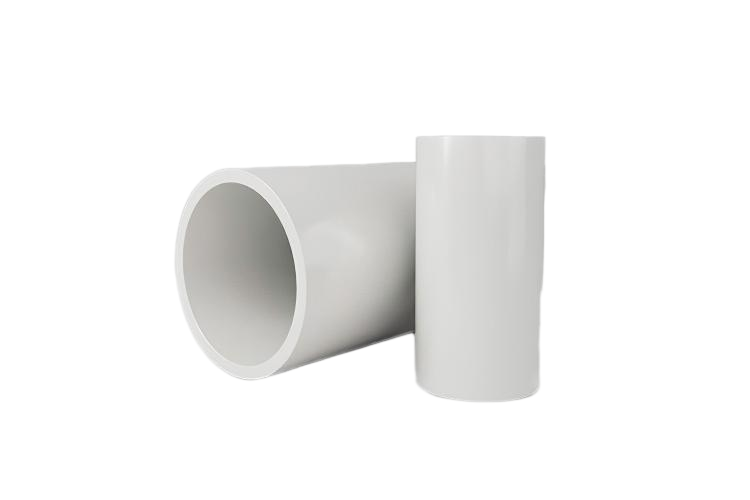
Polyethylene expands and contracts with temperature far more than metal — roughly ten to fifteen times as much as steel — and ignoring that movement is one of the most common HDPE design errors. A long run can grow by tens of centimetres between a cold morning and a hot afternoon, and the way you handle it depends entirely on whether the pipe is buried or above ground. This guide explains how much HDPE moves, why the two cases are different problems, and how to support, restrain and route the pipe so thermal movement never becomes a failure.
Why thermal movement is a defining issue for HDPE
Every material expands when heated, but polyethylene does so dramatically: its coefficient of linear thermal expansion is roughly ten to fifteen times that of steel and about ten times that of concrete. Combined with PE's low stiffness and its tendency to creep, that high movement is why HDPE can't simply be clamped down or supported like a steel line. The upside is that PE's low modulus also means the forces it generates are small, so a little design allowance absorbs the movement easily — if you plan for it.
How much does HDPE move? ΔL = α·L·ΔT
Thermal movement is simple to estimate: the change in length equals the expansion coefficient times the length times the temperature change (ΔL = α·L·ΔT). With α around 0.18 mm/m/°C, a 100-metre run that warms by 20 °C grows about 0.36 m. That is a lot of movement to accommodate, and it scales with both length and temperature swing — which is why long above-ground runs and sites with big day–night or seasonal temperature ranges need the most attention.
Source: Typical ranges (PPI / ISO 11359-2)
Buried vs above-ground: two different problems
Buried pipe and above-ground pipe behave so differently that they are really two separate design problems. Once a heat-fused line is backfilled, soil friction restrains it and the temperature around it is stable, so it barely moves — instead, thermal stress builds and concentrates as axial thrust wherever the line changes direction, at bends, tees and connections. A fully fused HDPE system is self-restrained and needs no thrust blocks, but any gasketed or mechanical fitting must be restrained against that thrust to avoid pull-out.
Above ground — or in the trench before backfill — the pipe is free to move, so expansion and contraction are the live issue. Here the design is about supporting the pipe closely enough that it doesn't sag, and giving it room to grow and shrink through loops, offsets, snaking or guided supports. Get the two cases mixed up — designing a buried line for free movement, or an above-ground line as if the soil will hold it — and the pipe either buckles or pulls its joints apart.
Above-ground support spacing
Because PE has low stiffness and creeps, above-ground pipe needs much closer support than steel — and the spacing tightens as temperature rises. The table gives typical maximum support spacings for water-filled PE100 at or below 20 °C; derate them as the operating temperature climbs, and provide continuous support at and above about 40 °C to control sag. Spacing also depends on SDR (thinner walls need closer support), so always confirm against the manufacturer's table for your exact pipe and service temperature.
| Diameter | SDR 17 | SDR 11 |
|---|---|---|
| 63 mm | 1.05 | 1.20 |
| 110 mm | 1.60 | 1.70 |
| 160 mm | 2.05 | 2.25 |
| 250 mm | 2.60 | 2.85 |
| 400 mm | 3.30 | 3.65 |
| 630 mm | 4.10 | 4.55 |
Support design done right
How you support PE matters as much as how often. Cradle the bottom of the pipe over a wide arc — about 120° — with the support at least half a pipe-diameter wide and all edges rounded; narrow U-bolts and straps cut into the pipe and create stress points. Critically, supports must let the pipe slide as it expands and contracts; rigidly clamping above-ground PE blocks the movement and concentrates stress. Anchors and guides then direct that movement to where loops or offsets can absorb it.
Managing movement: snaking, loops & anchors
Several techniques absorb thermal movement. In the trench, lay the fused string in a gentle serpentine — "snaking" — so it has slack to contract without pulling joints. Above ground, expansion loops, offsets and deflection legs give the pipe somewhere to grow, while anchors fix chosen points and guides steer the movement. At flanges, valves and gasketed fittings, restrain the joint so thermal thrust can't open it. And wherever possible, let the line equalise temperature and relax before the final tie-in and backfill.
Thermal contraction: the night-cooldown failure
Expansion gets the attention, but contraction causes the field failures. A line fused and tied in during the heat of the day then cools overnight and contracts — and that contraction can pull mechanical fittings, flange adaptors and gasketed joints apart, or shrink a fitting's nose enough to lose its gasket seal. The fix is to let the pipe cool and equalise before making rigid end connections, to snake the line so it has slack, and to avoid final tie-ins at peak temperature.
Stress relaxation & creep
Polyethylene is viscoelastic, so it relaxes stress over time — locked-in thermal stress in a buried line gradually fades as the pipe creeps to accommodate it, which is part of why buried PE is so forgiving. The flip side is that sustained loads must be limited and the design must use PE's long-term (not short-term) modulus, which is exactly why above-ground support spacing is based on long-term stiffness and a deflection limit rather than the pipe's initial rigidity.
Thermal movement design check
5 common thermal-design mistakes
- Rigidly clamping above-ground PE with narrow U-bolts or straps that grip and cut — blocking thermal movement and concentrating stress. Use 120° cradles that allow sliding.
- Using steel or PVC support spacing on PE — its low modulus and creep need far closer, often near-continuous support; steel spacing causes sag and overstress.
- Leaving no expansion or contraction allowance — straight rigid runs with no loop, offset, snaking or lateral room buckle on heating and pull joints on cooling.
- Ignoring contraction when fusing in the heat — making final tie-ins hot, then having overnight cooling pull fittings apart. Let the line equalise first.
- Assuming HDPE never needs restraint — true only for fully-fused systems; gasketed and mechanical fittings still need restraint or thrust blocks against thermal thrust.
Glossary
- Coefficient of thermal expansion (α)
- The amount a material expands per unit length per degree of temperature change; for PE about 0.15–0.20 mm/m/°C, ~10–15× steel.
- ΔL = α·L·ΔT
- The formula for thermal movement: change in length equals coefficient × length × temperature change.
- Snaking
- Laying a fused pipe string in a gentle serpentine in the trench so it has slack to contract without pulling joints.
- Expansion loop / offset
- A change in routing that gives an above-ground pipe room to expand and contract without overstressing fittings.
- Anchor & guide
- Supports that fix a point of the pipe (anchor) and steer its thermal movement (guide) toward a loop or offset.
- Stress relaxation / creep
- PE's viscoelastic tendency to relax locked-in stress over time, which softens buried thermal stress but requires designing to the long-term modulus.
References & sources
- [1]Plastics Pipe Institute (PPI) — TN-27 — FAQs: HDPE pipe (thermal coefficient & buried behaviour)
- [2]Plastics Pipe Institute (PPI) — Handbook of PE Pipe, Ch. 8 — above-ground applications
- [3]Performance Pipe (Chevron Phillips) — PP 815-TN — above-grade pipe support (spacing & cradle geometry)
- [4]Performance Pipe (Chevron Phillips) — PP 814-TN — thermal effects / temperature change
- [5]Plastics Pipe Institute (PPI) — TR-21 — thermal expansion and contraction of plastic pipe
- [6]Asahi/America — Thermal expansion, contraction & control of those forces
- [7]Stream / UPG — PE100 pipe support spacings (metric tables)
- [8]Advanced Piping Systems — Expansion management: navigating HDPE pipe installations
Frequently asked questions
Need expert advice on your project?
Our engineering team helps utilities, contractors and EPCs specify the right pipe material and SDR for their project. Get a no-obligation technical consultation.
Talk to an engineerRead next
Explore further
Related applications, material comparisons and country buying guides selected for this topic.