Application
HDPE Microduct for Fibre-Optic Cable: Blowing, Jetting & the FTTH Network (2026)
You don't pull modern fibre — you blow it. A jet of air floats a micro-cable two kilometres through a slick-lined HDPE microduct, at almost no tension. And you can lay the empty duct now and blow the fibre years later.

Dr. Wei Liu, P.E.
Senior Engineering Manager · Primepoly
Published: Jun 8, 2026
Updated: Jun 8, 2026
14 min read
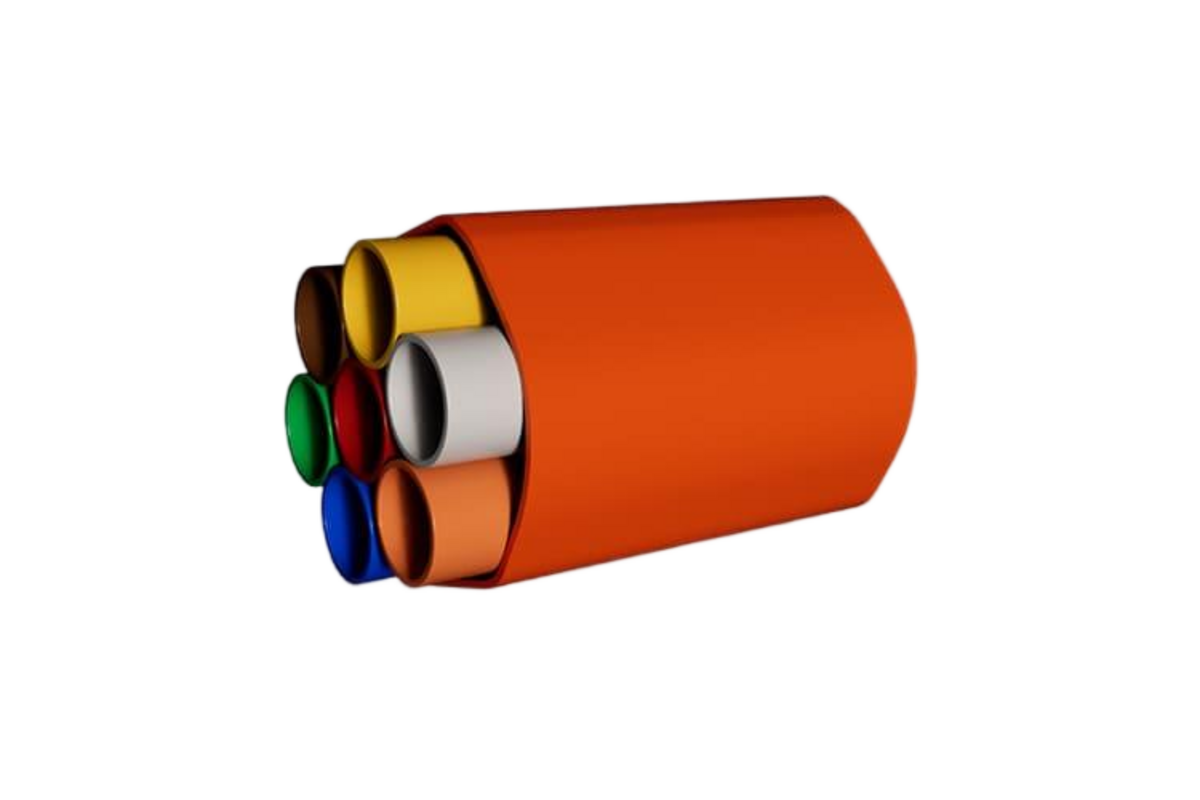
Fibre-to-the-home didn't just need more cable — it needed a faster, gentler way to install it, and that's what the HDPE microduct delivers. Instead of pulling a cable through a duct under tension (risking the fragile fibre and limiting the distance), you blow a tiny micro-cable through a small, slick-lined HDPE tube on a jet of compressed air, floating it a kilometre or two in a single shot at almost no tension. Better still, you can lay the empty microducts during the civil works and blow the fibre in years later, when it's needed. This guide explains the microduct, the blowing, and why it has become the backbone of modern fibre rollouts.
What is a fibre-optic microduct?
A microduct is a small-bore HDPE tube — typically 3 to 16 mm in outside diameter — purpose-made for installing fibre-optic cable by blowing rather than pulling. It's much smaller than a conventional cable duct, and its job is not to be a big protective pipe but to be a precise, low-friction guideway down which a slim micro-cable can be jetted with air. Microducts are made from HDPE for the usual reasons — flexible, supplied in long coils with few or no joints, corrosion-free and durable — plus one special feature that defines them: a permanently slick internal surface. The result is the building block of fibre networks: a future fibre path you can install empty and populate later.
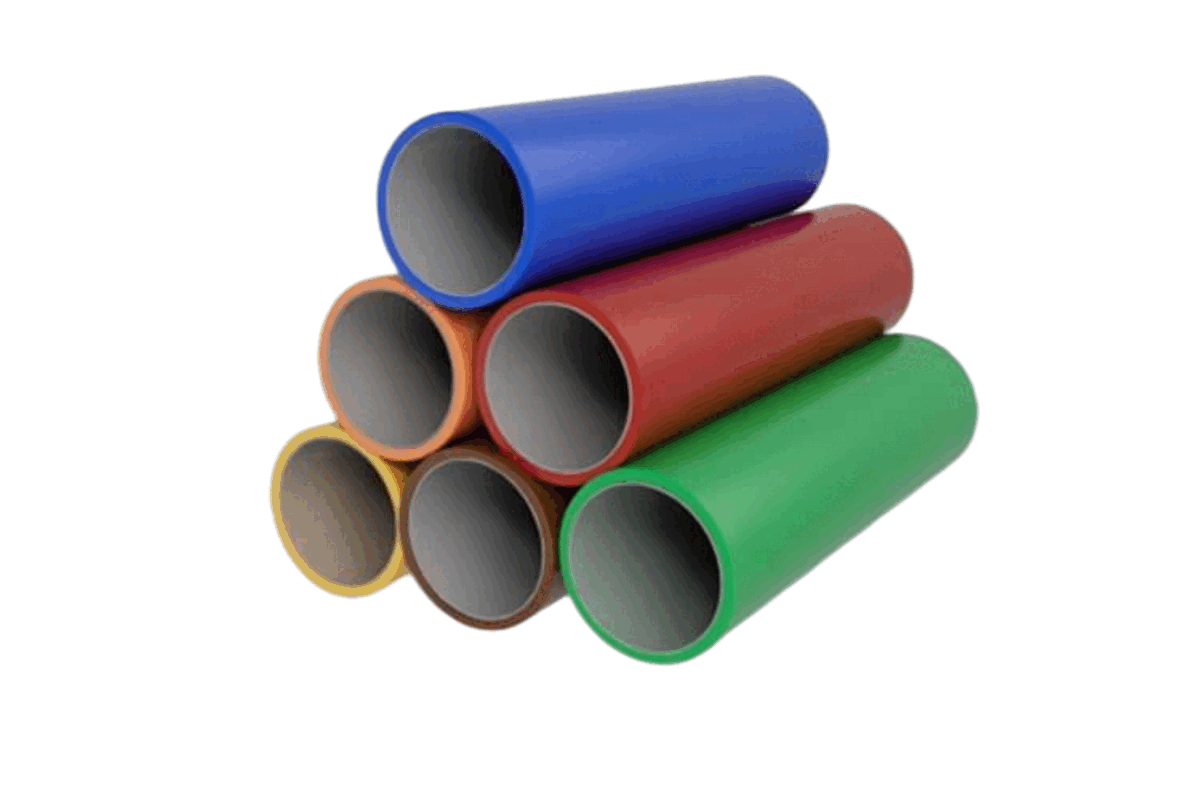
Single, bundled & tube-in-duct: how microducts are deployed
Microducts are deployed three ways. Singly, as a standalone tube. In multi-way bundles, where several microducts share one outer sheath — 7-, 12-, 19- or 24-way assemblies are common, packing many future fibre paths into one cable-sized run. Or as a tube-in-duct arrangement, where microducts are installed (or 'overblown') inside a larger existing protective duct to add capacity to infrastructure that's already in the ground. There are also two install philosophies: direct-install microduct goes inside a waiting protective duct, while direct-bury microduct is reinforced (often with a water-block layer) so it can be buried on its own. The difference between them is mostly wall thickness, which is why the size table below splits into thin-wall and thick-wall.
Standard microduct sizes (thin-wall vs thick-wall)
Microducts come in a set of standard sizes, given as outside diameter over inside diameter in millimetres, and the table lists the common ones. The important nuance — which a lot of size charts omit — is that the same nominal sizes split into two wall classes. Thin-wall microducts (like 5/3.5, 7/5.5, 10/8, 12/10) are made to go inside a protective duct, often in high-way-count bundles, and are not for direct burial. Thick-wall microducts (like 10/6, 12/8, 14/10, 16/12) have the reinforced wall needed to be buried on their own. So it's the wall, not just the bore, that tells you whether a microduct can be direct-buried — specify the wall class, not only the OD/ID.
| Size (OD/ID mm) | Wall class | Typical use |
|---|---|---|
| 5 / 3.5 | Thin-wall | High-way-count bundles, blown inside a duct |
| 7 / 5.5 | Thin-wall | Bundles / inside a protective duct |
| 10 / 8 | Thin-wall | Inside a duct / occupied-duct overblow |
| 10 / 6 | Thick-wall | Standalone direct-buried microduct |
| 12 / 8 | Thick-wall | Direct-buried, larger micro-cable |
| 16 / 12 | Thick-wall | Direct-buried, high-fibre-count micro-cable |
The low-friction lined bore: why microducts blow farther
The feature that makes a microduct a microduct is its permanently low-friction inner bore. Where bare HDPE has a coefficient of friction against a cable of around 0.18–0.22, a microduct has a co-extruded solid lining (the best-known is SILICORE, others include EM-Liner) that drops it to about 0.07 — more than 60% lower — and some bores are longitudinally ribbed to reduce the contact area further. That slickness is not a temporary lubricant that washes out; it's built into the wall for the life of the duct. The payoff is distance: lower friction means the air jet can carry the cable far further before it stalls — on the order of five times farther than an unlined tube — which is exactly what makes long single-shot blows possible.
Cable blowing & jetting: air + push, not pull
Here's the method that changes everything. In cable blowing (also called jetting), compressed air is forced through the microduct and the fast-moving air exerts a viscous drag along the entire length of the cable, effectively floating it forward, while a machine simultaneously pushes the cable in mechanically. Because the driving force is distributed along the whole cable rather than pulled from one end, the tension on the fragile fibre stays very low — which is the key advantage, since micro-cables can only take a small pull force and pulling risks damaging the fibre. Single-shot distances reach 1,500 to 2,000 m for bundles and up to around 3,500 m for a single micro-cable, and tandem machines extend it further. The video shows a jetting machine in action.
Microduct + blowing vs traditional pull-in conduit
Set against the old way — pulling a cable through a conduit with a winch — blowing wins on the things that matter for fibre, and the table compares them. Pulling applies all its force at one end, so tension on the cable is high, distances are short (you need pull pits along the route), and there's a real risk of damaging the fibre. Blowing distributes the force, so tension stays low, distances are long, and the fibre is protected. Microducts also pack far more capacity into a given footprint (many tubes in a small bore) and, crucially, support futureproofing in a way pulling can't. The honest exception: for a single very large cable over a very short run, or a cable that isn't jet-compatible, traditional pulling still has its place.
| Aspect | Microduct + blowing | Traditional duct + pulling |
|---|---|---|
| Force on the fibre | Low, distributed along the cable (air drag) | High, applied at one end (tension) |
| Distance per shot | 1,500–3,500 m | Shorter — needs pull pits along the route |
| Fibre-damage risk | Low | Higher |
| Footprint / density | Many tubes in a small bore | One large cable per duct |
| Futureproofing | Excellent (blow later, overblow occupied ducts) | Poor (re-pull means disruption) |
| Best when | New FTTH, congested routes, phased build | One large cable, very short run, non-jettable cable |
Gas-blocking, colour-coding & push-fit connectors
A few practical features round out the system. Gas- and water-blocking keeps water or gas from migrating along the inside of the duct and reaching splice closures or buildings — done with a water-block layer in the sheath and gas-block push-fit connectors that seal around the cable. Colour-coding identifies each microduct in a bundle (manufacturers offer many colours, and connector bodies are coded too), which keeps a 24-way bundle manageable. And the connectors themselves are push-fit couplers — a collet with stainless teeth grips the duct and the bore runs straight through, so you can blow cable right through a joint without it snagging. Match the connector to the exact duct size, and use the gas-block type wherever migration matters.
Applications: FTTH, 5G & 'blow now, fibre later'
Microducts are everywhere fibre is going: fibre-to-the-home and fibre-to-the-premises rollouts, backbone and long-haul routes, data-centre interconnect, and 5G small-cell fronthaul. But the defining commercial idea is futureproofing — 'blow now, fibre later.' Because the civil works (the digging) can be up to 70% of the total cost of a fibre route, the smart move is to lay empty microducts during construction and blow the fibre only when and where it's needed, even overblowing into existing occupied ducts to add capacity without digging again. The empty microduct is a low-cost option on future capacity: it costs little to lay now and saves the expensive re-dig later. That economic logic, as much as the blowing technique, is why microducts dominate modern fibre builds.
5 common mistakes
- Wrong microduct size for the cable — too tight or too loose a fit kills the blowing distance; match the cable OD to the duct ID (commonly ~0.5–0.7×).
- Exceeding the single-shot blowing distance with no intermediate/tandem assist — plan cascade-machine positions in advance.
- No gas/water block — water or gas migrates the length of the duct and reaches splice closures or buildings.
- Violating the minimum bend radius — kinks and tight bends spike friction and stall the blow.
- Mixing incompatible or wrong-size push-fit connectors — leaks, pressure loss and a blocked bore.
Glossary
- Microduct
- A small-bore HDPE tube (OD ~3–16 mm) with a permanently low-friction lined bore, for installing fibre cable by blowing.
- Cable blowing / jetting
- Installing cable with compressed air (which floats it) plus a machine that pushes it — low tension, long distance, vs pulling.
- Thin-wall vs thick-wall
- Thin-wall microduct goes inside a protective duct; thick-wall (reinforced) microduct can be direct-buried — the wall class, not just the bore.
- Multi-way bundle
- Several microducts under one sheath (e.g. 7-, 12-, 24-way) packing many future fibre paths into one run.
- Low-friction lining (SILICORE-type)
- A co-extruded solid lining (CoF ~0.07) built into the bore that lets cable blow ~5× farther than bare HDPE.
- Blow now, fibre later
- Laying empty microducts during civil works and blowing fibre only when needed — the futureproofing economics behind microducts.
References & standards
- [1]Wikipedia — Microducts (overview, sizes, GR-3155)
- [2]Wikipedia — Cable jetting (the blowing method)
- [3]Dura-Line — SILICORE ULF — the low-friction lining (CoF data)
- [4]Emtelle — Direct-install metal-free microduct tube bundle (way-counts, ~2000 m)
- [5]Prysmian — Microduct cables — unlocking fibre network efficiency (overblow, 70% civils)
- [6]Plumettaz — MicroJet — cable-jetting machine (method & specs)
- [7]IEC — IEC 60794-5 — microduct cabling for installation by blowing
Frequently asked questions
Need expert advice on your project?
Our engineering team helps utilities, contractors and EPCs specify the right pipe material and SDR for their project. Get a no-obligation technical consultation.
Talk to an engineerRead next
11 min read
HDPE Cable Duct, Conduit & Microduct: Power & Telecom Ducting (2026)
13 min read
HDPE Trenchless Installation: HDD, Pipe Bursting & Sliplining (2026)
14 min read
HDPE Pipe Bending Radius & Cold Bending: Directional Changes Without Fittings (2026)
11 min read
HDPE Pipe Color Coding & Stripe Identification: A Region-by-Region Guide (2026)
12 min read
HDPE Pipe Handling, Storage & Transport: Best Practices (2026)
Explore further
Related applications, material comparisons and country buying guides selected for this topic.