Guide
HDPE Pipe Handling, Storage & Transport: Best Practices (2026)
A 10%-deep gouge can mean rejection — how to lift, stack, store, coil, load and protect HDPE pipe from the factory to the trench.

Dr. Wei Liu, P.E.
Senior Engineering Manager · Primepoly
Published: Jun 7, 2026
Updated: Jun 7, 2026
12 min read
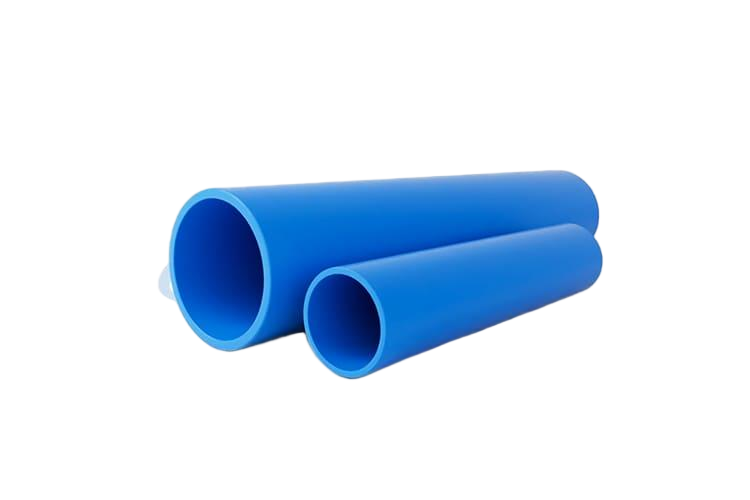
HDPE pipe is tough, but it isn't indestructible — and a single careless lift or an over-tight strap can turn a perfect length into a reject. A scratch deeper than a tenth of the wall, an ovalised stack, a coil released the wrong way: each is avoidable with the right method. This guide covers how to receive, lift, stack, store, load and protect HDPE pipe from the factory through transport to the trench, so it arrives — and installs — without damage.
Receiving & inspection
Inspect every delivery before you sign for it and again before it goes into storage. Look for gouges, deep scratches, flat spots, ovality and impact damage, and check that end caps and coil restraints are intact. The single most important acceptance check is gouge depth: a scratch or gouge deeper than about 10% of the wall thickness is cause for rejection or repair, because it creates a stress concentration that can grow into a crack under pressure.
Lifting & moving: slings, not chains
Always lift HDPE with wide fabric or nylon webbing slings — never chains, wire rope, steel cable or bare hooks, which gouge the surface — and use a spreader bar with two lift points for lengths over about 6 m. Keep sling angles reasonable, lift at the correct points, and cover any burrs on forklift tines. Never drag, roll or push pipe off a truck or along the ground: dragging gouges the wall and is a crush hazard. Lift it and place it.
Storing straight lengths: stacking
Support straight pipe continuously and evenly on timber dunnage or bearers, with the thickest-wall (lowest-SDR) pipe on the bottom, and block or brace the bottom row so it can't roll. Bottom rows carry the load and can ovalise or creep, so keep the stack height within limits — typically on the order of 1.5–3 m depending on diameter, SDR and temperature — and stack lower in hot weather, since warm pipe is softer. The table gives typical guidance; the manufacturer's stacking table governs.
| Diameter band | Typical max stack height | Note |
|---|---|---|
| Small (≤ 110 mm) | ~2.0–2.5 m | Most rows; lowest SDR on the bottom |
| Medium (160–315 mm) | ~1.5–2.0 m | Use bearers between rows |
| Large (≥ 355 mm) | 1–2 rows | Thin-wall large-dia ovalises easily |
| Hot weather | Stack lower | Warm pipe is softer — reduce height |
Storing coils: stored energy & re-rounding
Small-diameter pipe is supplied in coils, which need their own care. Store coils flat on a continuous surface or secured upright against a strong support, high enough only that the bottom convolutions don't distort. Coiled pipe holds its curvature and is often oval, so let it relax and re-round after uncoiling — and warm cold coils, which are stiffer. Thin-wall or large-diameter coiled ends usually need re-rounding clamps to restore a circular, aligned end before butt or electrofusion.
UV & outdoor storage
Black HDPE contains carbon black (typically over 2%), which gives it excellent UV resistance and makes it suitable for outdoor storage and service essentially indefinitely. Non-black or coloured pipe relies on UV stabilisers that deplete, so it should not sit in unprotected outdoor storage for more than about two years before being covered or used. Keep electrofusion fittings and fusion ends in their sealed packaging until use to protect the fusion surface from UV and contamination, and cap pipe ends to keep the bore clean and round.
| Pipe / component | Outdoor storage |
|---|---|
| Black pipe (carbon black >2%) | Essentially indefinite |
| Non-black / coloured pipe | ~2 years, then cover or use |
| Electrofusion fittings / fusion ends | Keep sealed in packaging until use |
Cold-weather & wet handling
Polyethylene stays serviceable in the cold and is far tougher than PVC, but its impact resistance falls as the temperature drops below freezing — so handle it gently in cold weather, avoid dropping or impacting it, and don't ram forklift tines into it. Pipe is also extremely slippery when wet, frosty or snowy, which is both a handling-quality and a safety concern; plan lifts accordingly.
Transport & truck loading
On the truck, support pipe continuously on bolsters or bunks (wood on pipe), stack it plumb, and keep it clear of point loads and sharp edges. Strap it firmly but do not over-tighten — over-tensioned straps squeeze straight pipe oval; tighten belly straps before top straps, and re-check straps within the first 80 km and after any overnight stop or temperature drop. Avoid overhang and keep within legal load height.
Container & export loading
For export, loading efficiency directly affects freight cost. Coil small-diameter pipe and nest smaller sizes inside larger ones where it won't distort them, protect the pipe from container ribs and sharp edges with padding, and rotate stock first-in-first-out so coloured pipe and fittings don't exceed their UV limits in storage. Because HDPE fills a container by volume long before weight, smart loading is the difference between a competitive and an expensive delivered price.
Preparing for fusion: re-rounding & clean ends
Good handling pays off at the joint. Keep pipe ends capped and clean so the fusion zone isn't contaminated by dirt, grime or moisture, and wipe any contaminated surface with an approved cleaner before joining. Out-of-round pipe — especially coiled or thin-wall large-diameter pipe — should be re-rounded with clamps to restore a circular, aligned end before butt fusion or electrofusion, so the joint forms evenly all the way around.
Pre-installation acceptance check
5 common handling mistakes
- Dragging or rolling pipe along the ground or off the truck — it gouges the wall (a >10% gouge means rejection) and is a crush hazard. Lift and place it.
- Using chains, wire rope or bare hooks and forks to lift — they gouge and point-load. Use wide fabric slings, cover burred forks, and use a spreader bar for long lengths.
- Over-stacking or skipping dunnage — exceeding the height limit, omitting bearers or aligning them wrong ovalises and creeps the bottom rows.
- Ignoring UV on non-black pipe and exposed fusion fittings — beyond ~2 years unprotected outdoors the stabilisers deplete; unbagged EF fittings get UV and contamination damage.
- Over-tightening transport straps — squeezing straight pipe oval. Strap firmly without ovalising, support continuously, and re-check straps after the first leg.
Glossary
- 10% gouge rule
- A scratch or gouge deeper than about 10% of the wall thickness is cause to reject or repair pressure pipe, because it concentrates stress.
- Dunnage / bearers
- Timber supports placed under and between stacked pipe to spread load and prevent ovalisation of the bottom rows.
- Re-rounding clamp
- A clamp that restores a circular cross-section to oval or coiled pipe and aligns the ends before fusion.
- Stored energy (coil)
- The tension held in a coiled pipe; straps must be released in a controlled, sequential way to avoid dangerous spring-back.
- Carbon black (UV)
- The black pigment/stabiliser (>2%) that gives HDPE long-term UV resistance; coloured pipe lacks it and has limited outdoor life.
- Ovalisation
- Loss of round cross-section from over-stacking, point loads or over-tight straps; must be re-rounded before fusion.
References & sources
- [1]Plastics Pipe Institute (PPI) — Material handling guide for HDPE pipe & fittings
- [2]PPI Municipal Advisory Board — Storing PE pipe
- [3]Plastics Pipe Institute (PPI) — Handbook of Polyethylene Pipe (2nd ed.)
- [4]PIPA (Australia) — POP005 — packing, handling and storage of PE pipes and fittings
- [5]Vinidex — PE handling and storage
- [6]PE100+ Association — Pipe assembly and handling (re-rounding / fusion prep)
- [7]Performance Pipe (Chevron Phillips) — Field handbook (PP-901)
- [8]ISO — ISO 4427-1 — PE pipes for water supply (general / ovality)
Frequently asked questions
Need expert advice on your project?
Our engineering team helps utilities, contractors and EPCs specify the right pipe material and SDR for their project. Get a no-obligation technical consultation.
Talk to an engineerRead next
Explore further
Related applications, material comparisons and country buying guides selected for this topic.