Application
HDPE Cable Duct, Conduit & Microduct: Power & Telecom Ducting (2026)
Coilable, corrosion-free ducting with a low-friction bore — from MV/HV power duct to blown-fiber microduct, and the standards that govern them.

Dr. Wei Liu, P.E.
Senior Engineering Manager · Primepoly
Published: Jun 8, 2026
Updated: Jun 8, 2026
11 min read
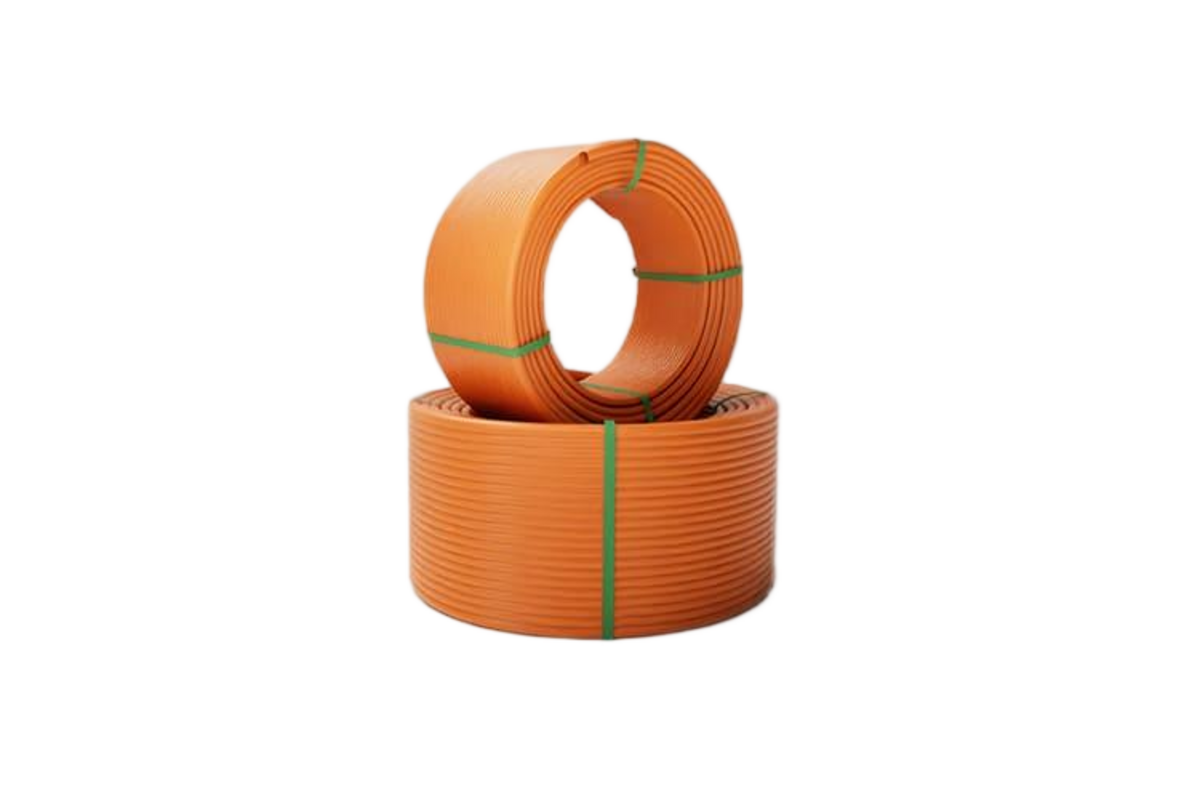
Underneath every modern power and fibre network is a layer of polyethylene ducting that protects the cables and lets them be installed — and later replaced — without digging again. HDPE duct is coilable into long jointless lengths, corrosion-free, and has a smooth, low-friction bore that makes pulling cables or air-jetting fibre fast and reliable. This guide covers the duct family from MV/HV power duct to blown-fibre microduct, why HDPE suits the job, the all-important low-friction inner layer, and the standards that govern it.
Cable duct, conduit & microduct: what they are
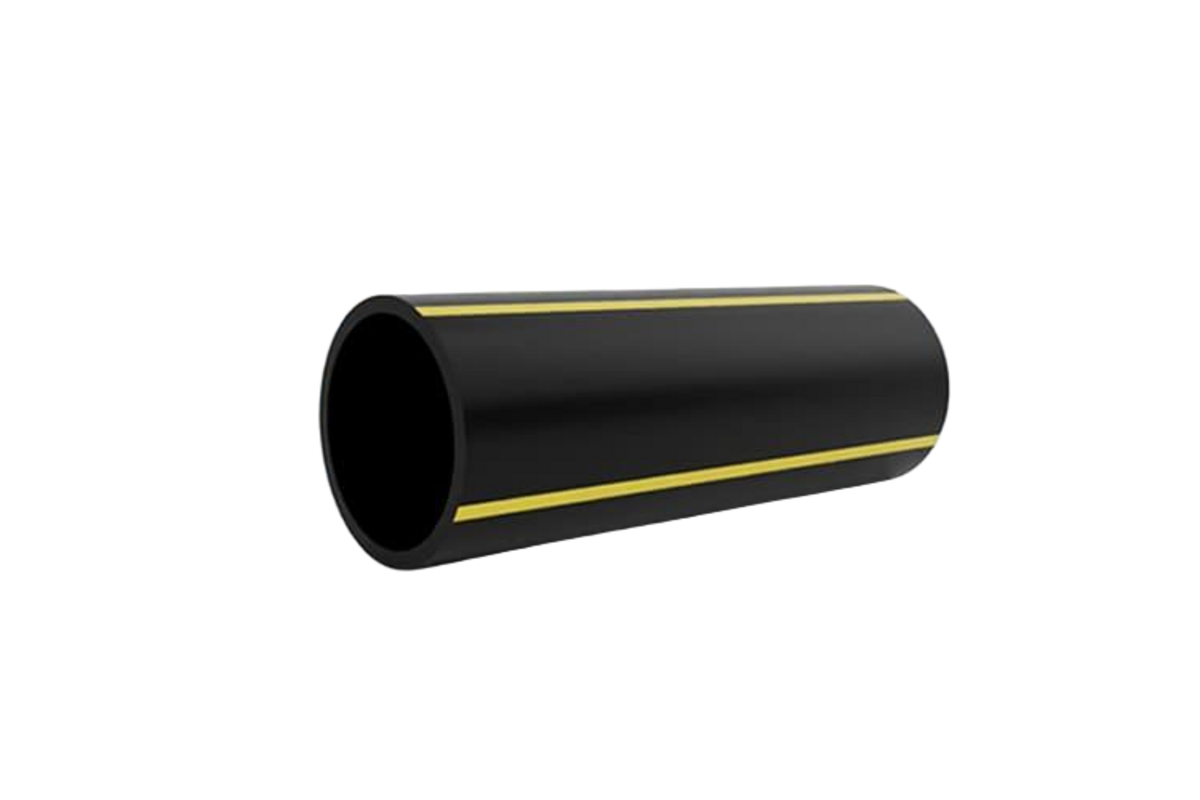
"HDPE duct" spans several products. Solid-wall power cable duct protects MV/HV cables and is rated by SDR for crush and burial depth. Telecom innerduct (roughly 18–63 mm) carries fibre or copper that's pulled or blown in. Microduct is small-bore tubing (about 3–16 mm) with a low-friction inner skin, usually supplied in bundles for blown fibre. Sub-duct divides a larger conduit into several smaller paths. The table maps the family.
| Type | Description | Typical use |
|---|---|---|
| Power cable duct | Solid-wall, SDR-rated for crush/depth | MV/HV underground cable protection |
| Telecom innerduct | Smooth/ribbed bore, ~18–63 mm | Pulling or blowing fibre/copper |
| Microduct | Small-bore 3–16 mm, low-friction skin | Blown/jetted fibre units |
| Microduct bundle | Many microducts in one sheath (7/12/24-way) | High-density, future-proof FTTx |
| Sub-duct | Smaller duct inside a larger conduit | Subdivides a 100–110 mm main duct |
| Low-friction lined duct | Co-extruded silicone / solid-lubricant inner layer | Longer pull / blow distances |
Why HDPE for power & telecom ducting
HDPE's properties line up neatly with ducting needs. It's flexible and coilable, so it comes in long jointless lengths that install fast with few couplers; it's corrosion- and chemical-free; it's electrically insulating (non-conductive), which suits cable protection; it's impact- and crush-resistant and lightweight; it lasts decades; and it can be installed trenchlessly by directional drilling, ploughing or micro-trenching. Above all, its smooth, low-friction bore is what makes pulling or blowing cables through it efficient.
Smooth vs ribbed vs corrugated & the low-friction layer
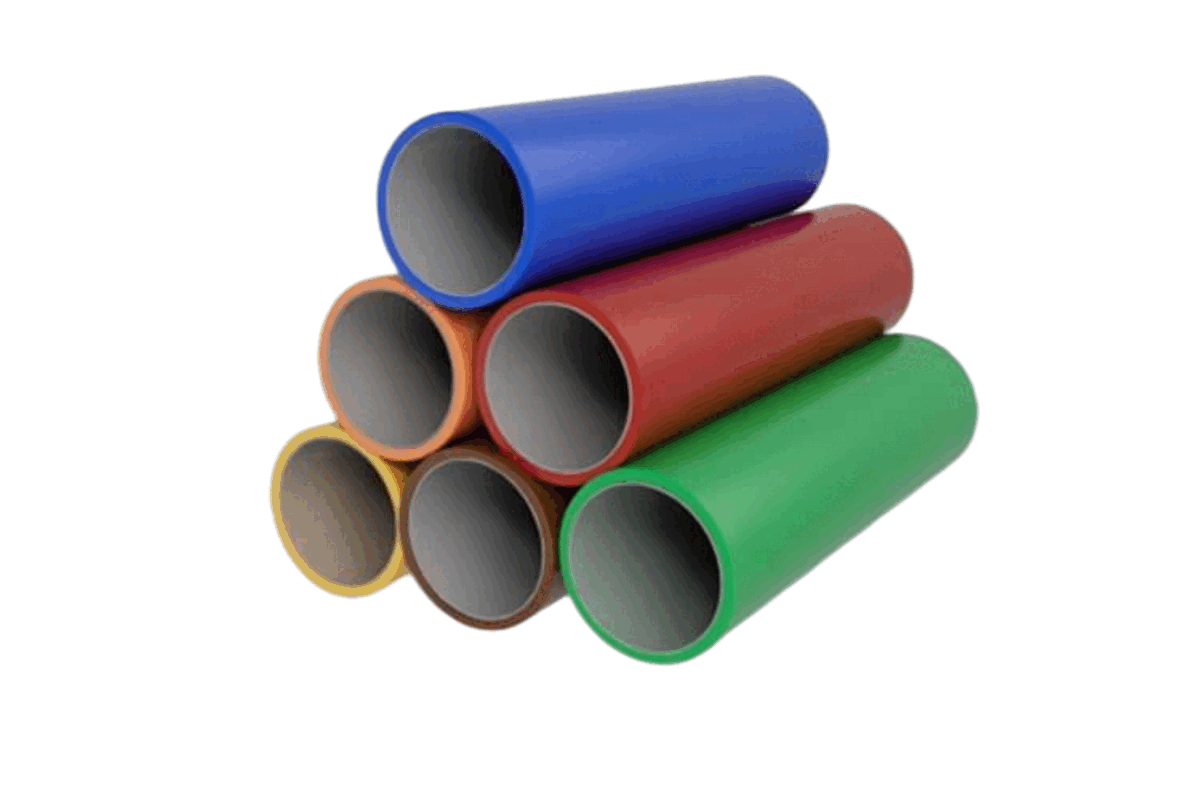
The bore profile and inner surface set how easily a cable moves through the duct. A smooth wall gives the largest bore; a ribbed or longitudinally grooved bore reduces the contact area and therefore the friction for blowing; corrugated wall trades some bore for flexibility and crush resistance. The biggest lever, though, is a permanently lubricated inner layer — a co-extruded silicone or solid-lubricant skin that drops the coefficient of friction from around 0.18–0.22 for plain HDPE to roughly 0.07, which can extend a jetting run several times over.
Microduct & blown fibre: sizes, bundles & fill ratio
Microduct turns fibre installation into an air-blowing job: compressed air jets a fibre unit through a pre-installed small-bore duct, the air drag carrying it far beyond what a push could. Microducts are usually supplied in bundles — 7-, 12-, 19- or 24-way — inside one HDPE sheath, in a range of standard sizes (the table lists common OD/ID pairings, which vary by vendor). Two rules drive performance: keep the fibre-to-duct fill ratio in the recommended 50–75% band, and use a low-friction inner skin — the difference between a short blow and a long one.
| Microduct (OD/ID) | Typical use |
|---|---|
| 5 / 3.5 mm | Smallest drop / micro fibre units |
| 7 / 4 mm & 7 / 5.5 mm | Common drop & distribution microduct |
| 10 / 8 mm | Distribution fibre units |
| 12 / 10 mm | Higher-count fibre cables |
| 14 / 10 & 16 / 12 mm | Feeder / high-count blown cable |
Colour coding: APWA locate vs duct jacket
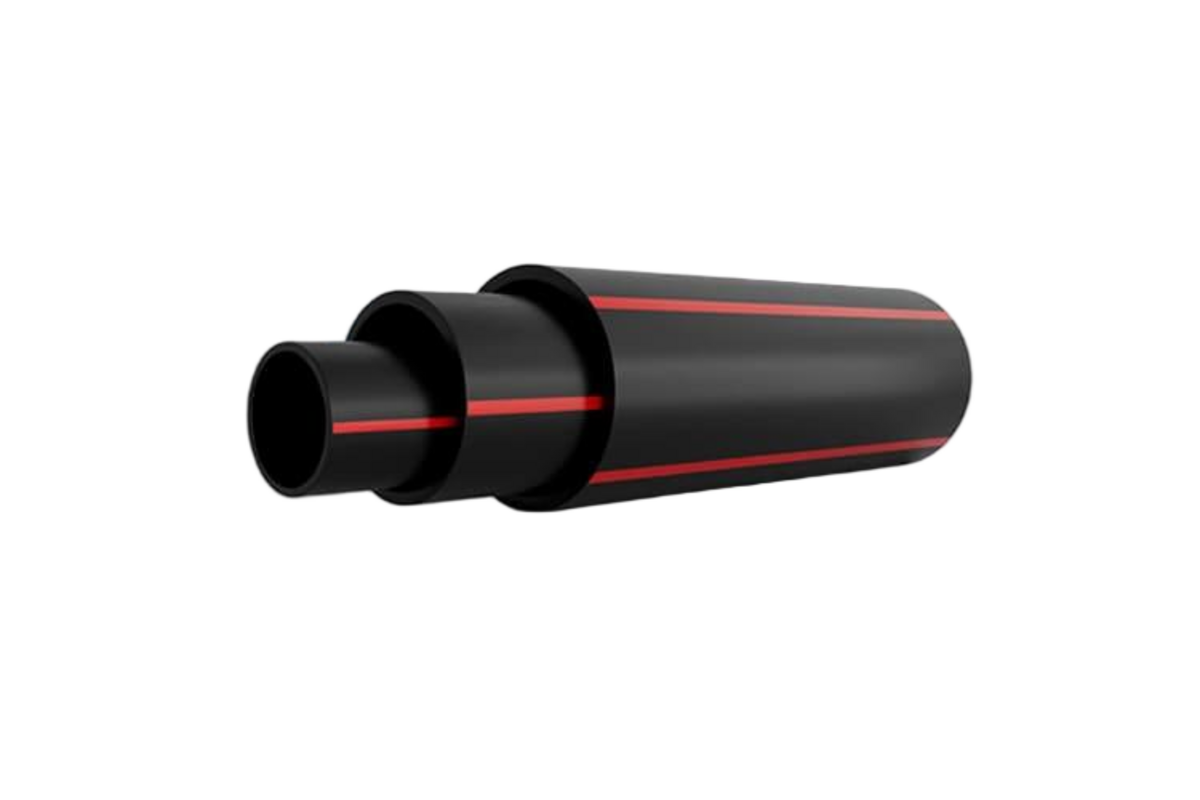
Colour causes real confusion here because two unrelated systems share colours. The APWA Uniform Color Code is the set of paint and flag colours used to mark buried utilities on the ground before digging — red for electric power, orange for communications, yellow for gas. That is a locate-marking system, not a duct specification. The duct's own jacket colour (and the colours of the individual microducts in a bundle) are set by the operator and project spec and vary by region — power duct is often red or black-with-red-stripe, telecom often orange in the US but other colours elsewhere.
Standards & specifications
Several standards govern duct, and which applies depends on region and product. ASTM F2160 covers solid-wall HDPE conduit by outside diameter. IEC/EN 61386 covers conduit systems for cable management (and has superseded the old EN 50086, which is withdrawn). IEC/EN 60794-5-20 covers the microducts and fibre units installed by blowing, and Telcordia GR-3155 is the North American microduct specification. Match the standard to the product and market, and follow the operator's own spec on top.
| Standard | Scope |
|---|---|
| ASTM F2160 | Solid-wall HDPE conduit (OD-controlled) |
| IEC / EN 61386 | Conduit systems for cable management (supersedes EN 50086) |
| IEC / EN 60794-5-20 | Microduct fibre units for installation by blowing |
| Telcordia GR-3155 | Microducts for fibre optic cables (North America) |
| EN 50086 | Withdrawn — replaced by EN 61386 (don't cite as current) |
Installation: bury, plough, micro-trench, HDD
HDPE duct is installed several ways: direct-buried in an open trench, ploughed in with a vibratory plough, micro-trenched into a narrow saw-cut for urban fibre, or pulled through under obstacles by directional drilling. It ships in long coils (commonly 250 m or 500 m), is jointed with push-fit or compression couplers, electrofusion or threaded fittings plus microduct connectors, and should always be end-capped to keep water and gas out. Many ducts come with a pull tape or rope pre-installed for the cable pull.
5 common buyer mistakes
- Confusing APWA locate colours with the duct jacket colours — ordering "orange = telecom" when the operator spec mandates a different jacket or stripe scheme.
- Choosing the wrong SDR for the burial depth and load — a thin-wall duct that crushes under cover or traffic.
- Treating microduct sizes and bundles as interchangeable — the duct must match the fibre unit and jetting plan, and the fill ratio must stay in the 50–75% band or the blow distance collapses.
- Ignoring the low-friction inner layer — plain-bore HDPE drastically shortens jetting distance versus a silicone-lined duct.
- Skipping end caps or mixing incompatible couplers — letting water and gas in, or failing joints under jetting pressure.
References & standards
- [1]ASTM International — ASTM F2160 — solid-wall HDPE conduit (OD-controlled)
- [2]IEC — IEC 61386-21 — conduit systems for cable management (rigid)
- [3]IEC — IEC 60794-5-20 — outdoor microduct fibre units for blowing
- [4]Plastics Pipe Institute (PPI) — About HDPE conduit (power & communications)
- [5]The Fiber Optic Association (FOA) — Fiber optic ducts and microducts — reference guide
- [6]Dura-Line — FuturePath microduct technology (data sheet)
- [7]APWA — Uniform Color Code (utility locate marking)
- [8]JM Eagle — HDPE communication duct (product & standards)
Frequently asked questions
Need expert advice on your project?
Our engineering team helps utilities, contractors and EPCs specify the right pipe material and SDR for their project. Get a no-obligation technical consultation.
Talk to an engineerRead next
Explore further
Related applications, material comparisons and country buying guides selected for this topic.