Application
HDPE Pipe for Gas Distribution: The PE Gas Pipe Buyer’s Guide (2026)
Standards, grades, pressure limits, colour coding, jointing and locating — the US (49 CFR / ASTM) and EU/ISO (EN 1555 / ISO 4437) regimes side by side.

Dr. Wei Liu, P.E.
Senior Engineering Manager · Primepoly
Published: Jun 6, 2026
Updated: Jun 6, 2026
12 min read
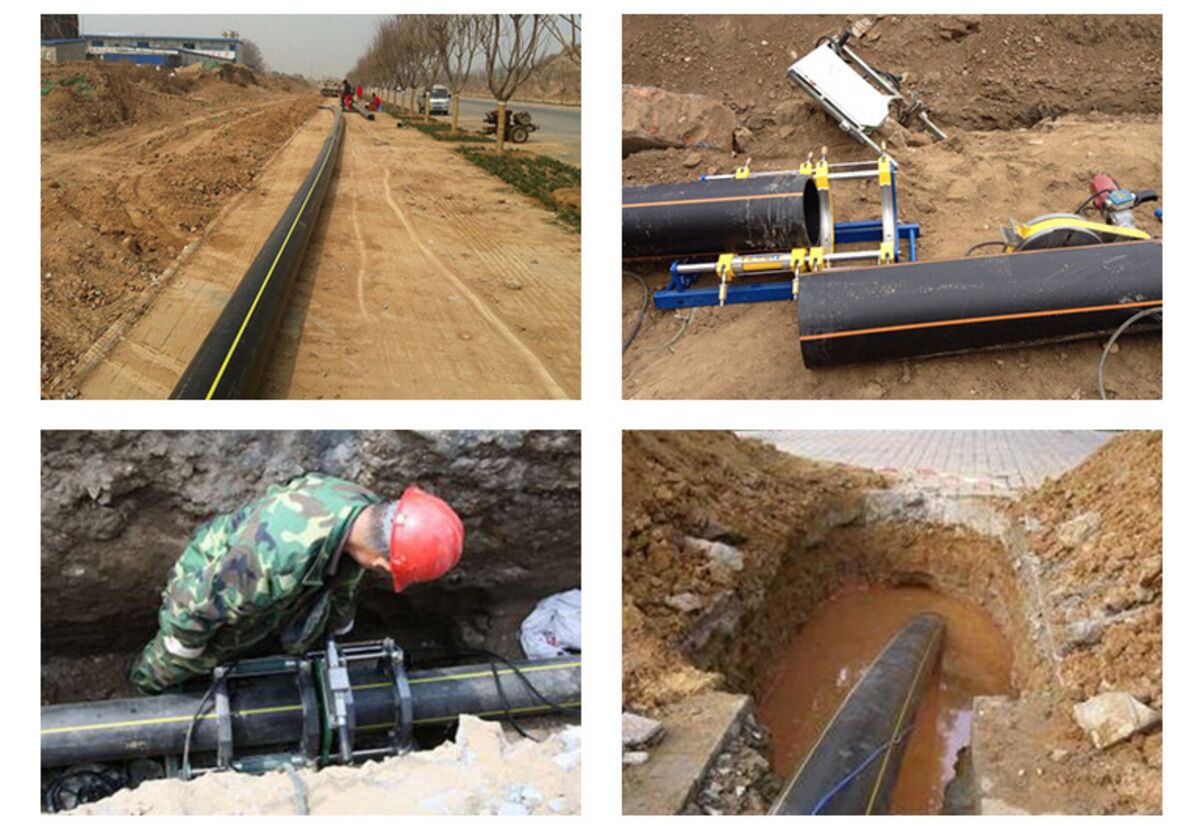
Polyethylene has quietly become the default material for gas distribution — it now accounts for the overwhelming majority of new mains and services installed worldwide, replacing the bare steel and cast iron that corrode and leak. But “PE gas pipe” hides a set of regional rules that catch out international buyers: the grade names, the pressure ceilings and even the pipe colour change depending on whether you are working to US or European standards. This guide puts both regimes side by side so you can specify correctly the first time.
What is PE gas pipe?
PE gas pipe is buried polyethylene pressure pipe certified specifically for gaseous fuels — natural gas, propane/LPG and similar. It is the same polyethylene family used for water, but qualified to gas standards with tighter limits on pressure, temperature and material grade, and marked with gas-specific colours. Its appeal is the same everywhere: it does not corrode, it flexes instead of cracking, it can be coiled for long jointless service runs, and it installs faster and cheaper than steel.
The standards that govern it
Two regulatory worlds apply. In North America the product standard is ASTM D2513 and installation is governed by federal pipeline-safety rules in 49 CFR Part 192 (notably §192.121 on design). In Europe and most of the rest of the world, EN 1555 and ISO 4437 cover PE gas systems. Knowing which regime your project answers to determines the grade names, pressure limits and colour you must specify.
| Region | Standard(s) | Scope |
|---|---|---|
| US — product | ASTM D2513 | PE gas pressure pipe, tubing & fittings |
| US — regulation | 49 CFR Part 192 | Federal pipeline safety (design, jointing, qualification) |
| Europe | EN 1555 | PE systems for the supply of gaseous fuels |
| International | ISO 4437 | Buried PE pipes for gaseous fuels |
Material grades: PE2708, PE4710, PE80, PE100 & PE100-RC
Grades split along the same regional line. North America uses PE2708 (a medium-density material) and the higher-performance bimodal PE4710; the ISO world uses PE80 and the stronger PE100, plus PE100-RC for demanding or trenchless installations. The higher grades carry more pressure for a given wall and resist slow crack growth far better — which matters for rocky backfill and long service life. Do not treat the grades as interchangeable; the cheaper one can forfeit a higher pressure allowance or crack-resistance margin.
| Grade | Region / system | Notes |
|---|---|---|
| PE2708 | US (ASTM) | Medium-density, unimodal; common for services |
| PE4710 | US (ASTM) | Bimodal, higher HDB; qualifies for 125 psig / 0.40 design factor |
| PE80 | ISO / EN | MRS 8.0 MPa; older grade, often yellow |
| PE100 | ISO / EN | MRS 10.0 MPa; current standard, orange for gas |
| PE100-RC | ISO / EN | Crack-resistant; for trenchless & rocky backfill |
Maximum operating pressure: US vs EU
This is the number buyers most often get wrong across borders. In the US, plastic gas pipe is generally capped at 100 psig design pressure, with a specific exception allowing qualifying PE2708/PE4710 up to 125 psig in sizes up to 12 in. In the EU/ISO framework, the design ceiling for PE gas is a maximum operating pressure of 10 bar at the 20 °C reference temperature. Both are standard envelopes; individual national gas codes can define their own pressure tiers, so verify the local rule before you finalise the class.
| Regime | Limit | Basis |
|---|---|---|
| US — general plastic | 100 psig (~6.9 bar) | 49 CFR §192.121 |
| US — PE2708 / PE4710 | Up to 125 psig, sizes ≤ 12 in. | §192.121 exception |
| EU / ISO | Up to 10 bar at 20 °C | ISO 4437 / EN 1555 |
| Any regime | Derate above 20–23 °C | Temperature reference |
Colour coding by region
Colour is a safety signal, and it is the trap that catches global buyers. In the US the universal gas colour is yellow — either solid-yellow medium-density pipe or black pipe with yellow stripes. In the EU and ISO world the gas colour for PE100 is orange (older PE80 may be yellow). China’s GB/T standard mirrors the ISO logic with orange stripes for PE100 and yellow for PE80. There is no single “gas colour” worldwide — specify by the destination market’s convention.
| Region | Gas pipe colour | Note |
|---|---|---|
| US | Solid yellow, or black with yellow stripe | APWA gas colour = yellow; water = blue |
| EU / ISO | Orange (PE100); yellow (older PE80) | Black pipe with co-extruded stripes |
| China (GB/T) | Orange stripes (PE100); yellow (PE80) | Mirrors the ISO grade-based logic |
Sizing & SDR for gas
SDR 11 is the workhorse wall for medium-pressure gas, with SDR 13.5 and SDR 17/17.6 used on lower-pressure distribution networks. Sizes run from small service tubing (1/2 in. CTS) through distribution mains (up to 12 in. IPS and beyond), or roughly 20 mm to 630 mm OD in metric markets. As with water, the SDR — not just the grade — sets the pressure rating, so pick the wall to the pressure tier rather than defaulting to the thinnest available.
Joining PE gas pipe (and why not solvent cement)
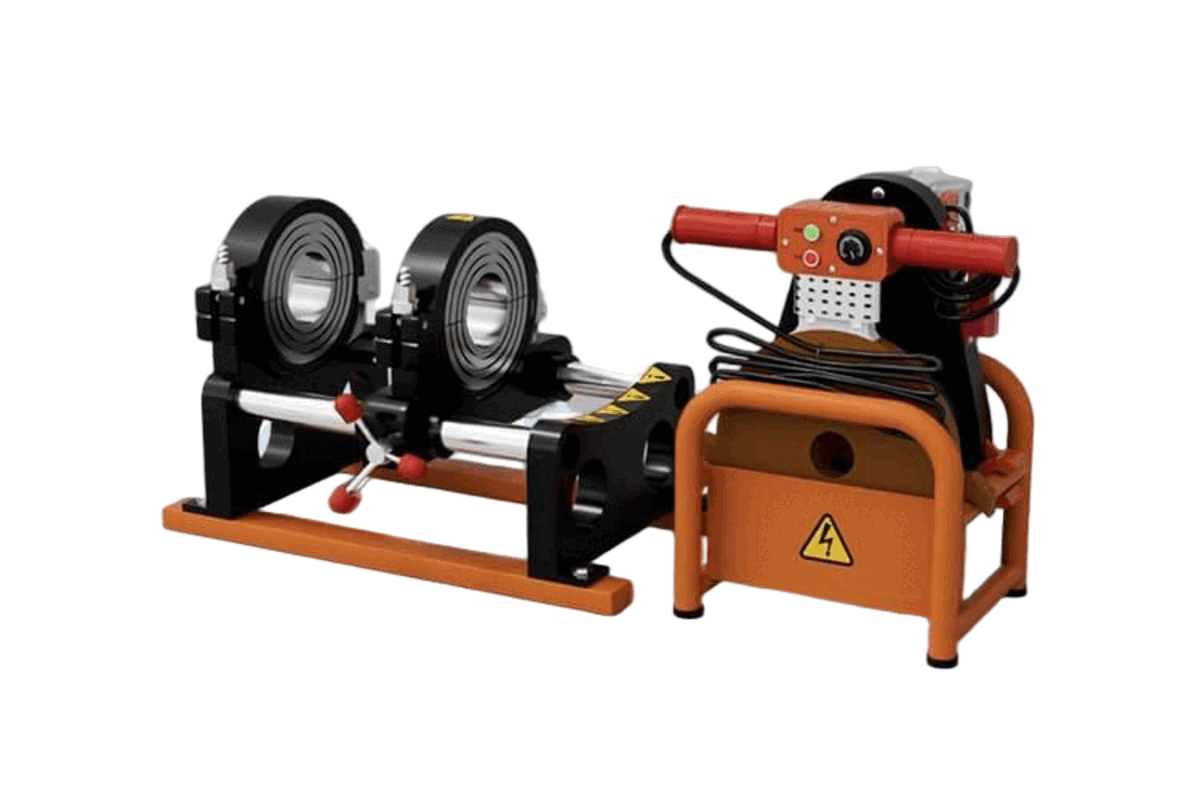
PE gas pipe is joined by heat fusion — butt fusion for mains, socket and saddle fusion for services and branches, and electrofusion for couplings and tie-ins in tight spots. Each method melts the polyethylene into a homogeneous joint as strong as the pipe. Mechanical and transition fittings handle connections to steel and meters. One rule is absolute: polyethylene cannot be solvent-welded — there is no “glue” for PE — and for regulated gas, fusion operators must be qualified under the applicable code.
Locating buried PE: tracer wire & detectable tape
Polyethylene carries no electrical current, so a buried PE gas main is invisible to a standard pipe locator. Codes therefore require a locating system: a tracer wire (commonly 12–14 AWG, yellow-jacketed) laid alongside the pipe, supplemented — not replaced — by magnetic detectable warning tape above it. Omitting the tracer system is both a code violation and a serious dig-in risk, and it is one of the most common buyer oversights.
Why PE replaced steel & cast iron
Gas utilities switched to polyethylene for reasons that compound over an asset’s life: it is immune to the corrosion that drives steel and cast-iron leaks (no cathodic protection needed), it flexes with ground movement instead of cracking, it can be coiled to give jointless service runs, and it installs faster at lower cost. Regulators have actively pushed the change — US programmes to replace high-risk cast-iron and bare-steel mains have steadily cut the iron share of the network toward a few percent, with PE the usual replacement.
Operations: squeeze-off, derating & permeation
PE offers an operational trick steel cannot: squeeze-off. Crews can flatten the pipe with a squeeze tool to stop flow for an emergency repair or tie-in, then re-round it — following the manufacturer’s limits to avoid damage. Two design notes round out the picture: pressure must be derated as temperature rises above the 20–23 °C reference, and because PE is slightly permeable to hydrocarbons, denser PE4710/PE100 is preferred where the line runs through contaminated soil.
How to specify it: a quick path
Specification checklist: 5 mistakes to avoid
- Assuming “orange = gas” everywhere. In the US gas is yellow (or black with yellow stripe); orange-for-gas is an EU/ISO convention tied to the PE100 grade. Specify the destination market’s colour.
- Mis-matching SDR to the pressure tier — defaulting to a thin wall to save material when the MOP needs SDR 11, or over-buying SDR 11 where SDR 17.6 would do.
- Treating PE2708 and PE4710 (or PE80 and PE100) as interchangeable — the cheaper grade can forfeit the 125 psig allowance or the slow-crack-growth margin.
- Forgetting the locating system — buying PE without budgeting tracer wire and detectable tape. PE is invisible to standard locators.
- Specifying solvent cement or unqualified fusion — PE cannot be glued, and regulated gas fusion requires code-qualified operators and procedures.
The verdict
For gas distribution, polyethylene is the default for good reason — corrosion immunity, flexibility, leak reduction and lower installed cost. The buyer’s job is to get the regional specifics right: the governing standard, the pressure ceiling, the grade, the SDR, the colour, the locating system and a qualified fusion crew. Nail those, and PE gas pipe delivers 50-plus years of safe, low-maintenance service. Get the colour or pressure wrong across a border, and you create a safety and compliance problem before the pipe is even in the ground.
References & standards
- [1]US DOT / PHMSA (eCFR) — 49 CFR §192.121 — design of plastic pipe
- [2]Federal Register / PHMSA — Pipeline Safety: Plastic Pipe Rule (2018 final rule)
- [3]PHMSA — Pipeline replacement background — cast iron & bare steel programmes
- [4]Plastics Pipe Institute (PPI) — Handbook of Polyethylene Pipe (2022 edition)
- [5]PPI Municipal Advisory Board — MAB-01 — generic electrofusion procedure for PE gas piping
- [6]ISO — ISO 4437-1:2024 — PE piping systems for gaseous fuels (general)
- [7]ASTM International — ASTM D2513 — PE gas pressure pipe, tubing and fittings
- [8]PE100+ Association — Recommended maximum operating pressure for PE gas pipe (≤ 10 bar)
Frequently asked questions
Need expert advice on your project?
Our engineering team helps utilities, contractors and EPCs specify the right pipe material and SDR for their project. Get a no-obligation technical consultation.
Talk to an engineerRead next
Explore further
Related applications, material comparisons and country buying guides selected for this topic.