Application
HDPE Pipe for Construction & Mine Dewatering: Wellpoints, Deep Wells & Discharge Mains (2026)
Dewatering is temporary, mobile and pipe-hungry — the line moves as the dig advances. That's exactly why a light, corrosion-proof, re-usable HDPE pipe (quick-coupled when it moves, fused when it stays) earns its place over corroding steel.

Dr. Wei Liu, P.E.
Senior Engineering Manager · Primepoly
Published: Jun 8, 2026
Updated: Jun 8, 2026
14 min read
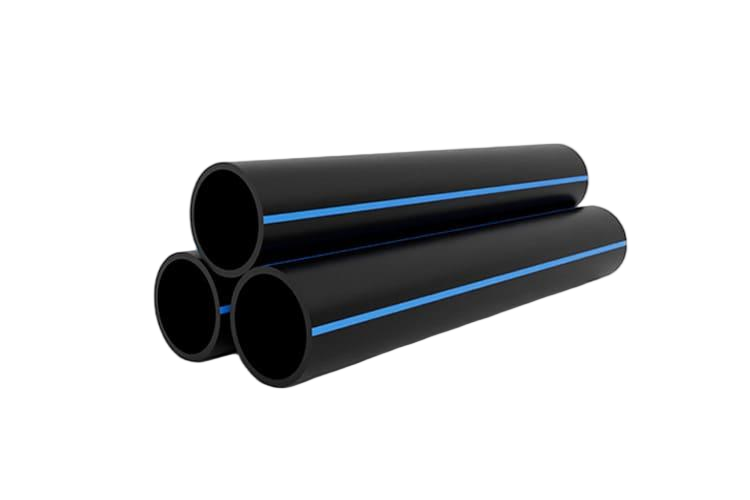
Dewatering — temporarily lowering the groundwater so you can excavate below it, or keeping a mine pit dry — is one of the most pipe-hungry jobs in construction and mining, and it has an unusual demand: the pipework is temporary and mobile, moving and being re-used as the excavation or pit advances. That's exactly the duty HDPE is built for. It's light enough to deploy and relocate fast, immune to the corrosion that destroys steel in gritty and acidic groundwater, and it can be quick-coupled where it moves and fused where it stays. This guide maps where HDPE fits across the dewatering methods, and gives the jointing and discharge rules that keep a system working.
What dewatering is — temporary, mobile, pipe-hungry
Dewatering is the temporary control of groundwater (and seepage or surface water) to let work happen in the dry — lowering the water table so an excavation can be dug below it, or keeping a mine pit from flooding. Two things make it unusual as a piping job. First, it's temporary: the system goes in, does its job, and comes out, often to be re-used on the next project. Second, it's mobile: as the excavation deepens or the pit advances, the pipework is relocated to follow it. So the ideal dewatering pipe is light, fast to connect and disconnect, tough enough to be moved repeatedly, and corrosion-proof against whatever the groundwater throws at it — which is the case for HDPE.
The four methods — and where HDPE fits
Dewatering is done four ways, suited to different soils and depths, and the table maps where HDPE goes in each. Wellpoint systems use a line of closely-spaced shallow well screens connected to a common header pipe and a vacuum pump — the workhorse for sands, with HDPE as the header and discharge main. Deep wells are bored wells each with a submersible pump, for higher flow and bigger drawdown in permeable ground, with HDPE risers and a ring main collecting them. Eductor (ejector) wells use a venturi to create a vacuum and are the method for low-permeability silts and clays where wellpoints can't pull water. Sump pumping simply collects water in a low point and pumps it out, needing only a discharge pipe. Across all of them, HDPE carries the water.
| Method | Best soils / drawdown | Where HDPE fits |
|---|---|---|
| Wellpoint system | Sands & sandy gravels; ~4.5–6 m/stage (multi-stage to ~20–25 m) | Header main + discharge main |
| Deep wells | Permeable sand/gravel/fissured rock; large drawdown, high flow | Pump risers + ring main + transfer main |
| Eductor / ejector wells | Low-permeability silts & clays; large drawdown, low flow | Supply + return mains + discharge main |
| Sump pumping | Stable, permeable ground; shallow | Discharge pipe only |
Why HDPE for dewatering water
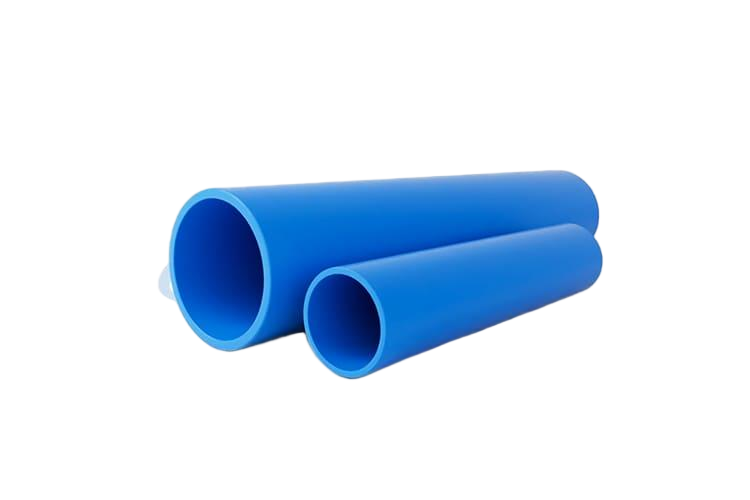
HDPE suits the dewatering duty on several counts at once. It's lightweight, so a crew can deploy, relocate and re-use it quickly as the dig or pit moves — which matters because dewatering pipework is constantly on the move. It's corrosion-immune, which is the standout win where the groundwater is gritty, acidic or saline: acid mine drainage and salty water that would corrode steel and demand cathodic protection do nothing to HDPE. It's abrasion-resistant against the sandy, silty water that wears steel, and it keeps particles moving at velocity. Fused, it's leak-tight, so the system doesn't re-saturate or erode the very site it's draining. And it lasts — a permanent mine discharge main is good for decades. Light, tough, corrosion-proof and re-usable is exactly the dewatering brief.
Jointing: quick-couple for temporary, fuse for permanent
The one jointing decision that defines a dewatering system is temporary versus permanent, and there's a clean rule for it. Where the pipework moves with the excavation — headers that get relocated, rental discharge lines, anything reconfigured often — use quick couplings: Camlock, Bauer-style or Perrot couplings, or stub-flanges with backing rings, which disconnect and reconnect in seconds and reseal on a rubber O-ring. Where the pipework stays for the life of the pit — long perimeter mains, permanent mine discharge pipelines — use butt fusion (and electrofusion for fittings) for a monolithic, leak-free, full-pressure joint. The rule of thumb: if it moves with the dig, quick-couple it; if it stays for the life of the pit, fuse it. Most jobs use both, on different parts of the system.
Designing the system
A dewatering system comes together in a sequence — method, sizing, jointing, discharge, then the site-specific tweaks. The path below walks it. The two decisions that catch people out are the jointing choice (temporary vs permanent) and the discharge consent, which is a legal requirement, not an afterthought.
The part contractors get fined for: silt & discharge consent
Here's the part that turns a routine job into an incident: you cannot just dump the water you pump out. Dewatering water is usually silty, and discharging it to a watercourse, a sewer or the ground almost always needs a permit or consent, with limits on suspended solids (typical consent limits run around 25–100 mg/L). So the water is routed through settlement tanks or lagoons to drop the silt before it's discharged, and the discharge point and consent are arranged before pumping starts. Sizing matters here too — design the discharge main for the flow and head, at a velocity high enough to keep silt moving but not so high it erodes (commonly around 1.5–2.5 m/s), and HDPE's smooth bore keeps the head loss low on long runs. Skipping the settlement or the consent is how dewatering contractors get stop-work orders and fines.
Mine & pit dewatering — and where lay-flat beats HDPE
Mine dewatering scales everything up: large-diameter HDPE discharge mains move big volumes out of an open pit, and the corrosion immunity becomes a decisive advantage because mine water is often acidic (acid mine drainage) or saline, which corrodes steel fast. The lines are also relocated as benches and highwalls advance, suiting HDPE's re-usability. But here's the honest limit worth stating, because competitors get it wrong: on a steep highwall, solid HDPE is a poor fit — it's stiff, doesn't follow the bench contour, needs anchoring against the downslope load, and a thick, high-pressure-rated wall is heavy and awkward to handle on a slope. For that specific wall section, flexible high-pressure lay-flat hose usually wins (it takes the slope and the water weight holds it down). HDPE owns the flat ground — the ring mains, sump-transfer and long perimeter and discharge runs.
HDPE vs steel, aluminium, lay-flat & PVC
Against the alternatives, HDPE is the all-rounder, and the table is honest about the exceptions. Steel handles high pressure and large diameters but corrodes in acidic or saline water, is heavy, and is harder to relocate. Aluminium irrigation pipe is very light and quick-couples fast but is low-pressure, dents, and corrodes in aggressive water — fine for shallow wellpoint duty, not for high-head mine mains. Lay-flat hose is the lightest, rolls up, and follows a bench contour — it wins the steep-highwall niche — but it's less durable, more vulnerable to cuts and UV, and shorter-lived than HDPE. PVC is cheap and rigid but brittle and weak under the repeated quick-couple cycling and impact of a mobile dewatering system. HDPE's blend of corrosion immunity, abrasion resistance, re-usability and either-jointing flexibility is why it's the default for most of the system.
| Material | Pros | Cons vs HDPE |
|---|---|---|
| HDPE | Corrosion-immune, abrasion-resistant, fuse-or-couple, re-usable, long life | Stiff on steep slopes; heavy in high-PN thick walls |
| Steel | High pressure, rigid, large diameter | Corrodes in AMD/saline; heavy; needs protection; harder to relocate |
| Aluminium irrigation pipe | Very light, fast quick-couple | Low pressure; dents; corrodes in acidic/saline water |
| Lay-flat hose | Lightest, rolls up, follows bench contour — wins the steep highwall | Lower abrasion life; vulnerable to cuts/UV; shorter-lived |
| PVC | Cheap, rigid | Brittle; poor impact/fatigue; weak under quick-couple cycling |
5 common mistakes
- Wrong method for the soil — running wellpoints in silt or clay (which need eductor wells), or eductors in clean gravel (a waste of energy).
- Undersizing the discharge main — chasing pump capacity but bottlenecking on pipe diameter and head loss, or a velocity so low the silt drops out and blocks the line.
- No discharge consent or settlement — dumping silty water, leading to stop-work orders, fines and environmental damage.
- Fusing what should be quick-coupled (or vice versa) — fusing a header you'll relocate weekly, or quick-coupling a permanent high-pressure mine main.
- Forcing rigid HDPE down a steep mine highwall instead of using lay-flat hose for that section — and reserving HDPE for the flat ring mains and discharge runs.
Glossary
- Dewatering
- Temporarily lowering groundwater (or removing seepage/surface water) so excavation can proceed in the dry, or to keep a mine pit dry.
- Wellpoint system
- A line of closely-spaced shallow well screens on a common header main, drawn by a vacuum pump — ~4.5–6 m drawdown per stage.
- Eductor / ejector well
- A venturi-driven well that creates a vacuum to draw water up — the method for low-permeability silts and clays.
- Quick coupling
- Camlock / stub-flange connections that disconnect and reseal in seconds — used for the mobile parts of a dewatering system.
- Acid mine drainage (AMD)
- Acidic, often metal-laden water from mining; corrodes steel but does nothing to corrosion-immune HDPE.
- Discharge consent
- The permit (with a suspended-solids limit) required to discharge dewatering water — silt is dropped in a settlement tank first.
References & standards
- [1]CIRIA — C750 — groundwater control: design and practice
- [2]Stuart Wells — Wellpointing — header material, spacing & pump coverage
- [3]Stuart Wells — Ejector (eductor) wells — venturi, low-permeability soils
- [4]BBA Pumps — Wellpoint systems & HDPE header pipes
- [5]WL Plastics — HDPE for mining & dewatering (pH 2–12, abrasion, surge)
- [6]Australian Mining — Safe pumping from deep pits (HDPE vs lay-flat on highwalls)
- [7]Burns & McDonnell — Pit dewatering strategies — proactive vs reactive
Frequently asked questions
Need expert advice on your project?
Our engineering team helps utilities, contractors and EPCs specify the right pipe material and SDR for their project. Get a no-obligation technical consultation.
Talk to an engineerRead next
13 min read
HDPE Pipe for Mining Slurry & Tailings: Abrasion, Wear Life & Design (2026)
14 min read
Controlling HDPE Pipe Flotation: Anti-Buoyancy Design for Wet Trenches & High Groundwater (2026)
13 min read
Connecting HDPE Pipe: Flanges, Stub Ends & Mechanical Joints (2026)
13 min read
HDPE Pipe for Sewer Force Mains & Pressure Wastewater (2026)
15 min read
HDPE Pipe for Heap Leach Mining: Solution Application, Collection & Transfer (2026)
Explore further
Related applications, material comparisons and country buying guides selected for this topic.