Application
HDPE Pipe for Heap Leach Mining: Solution Application, Collection & Transfer (2026)
Copper leaches in acid, gold leaches in cyanide — opposite ends of the pH scale. HDPE is the one pipe material immune to both, which is why it follows the solution from the drip line on top of the heap to the pond at the bottom.

Dr. Wei Liu, P.E.
Senior Engineering Manager · Primepoly
Published: Jun 8, 2026
Updated: Jun 8, 2026
15 min read
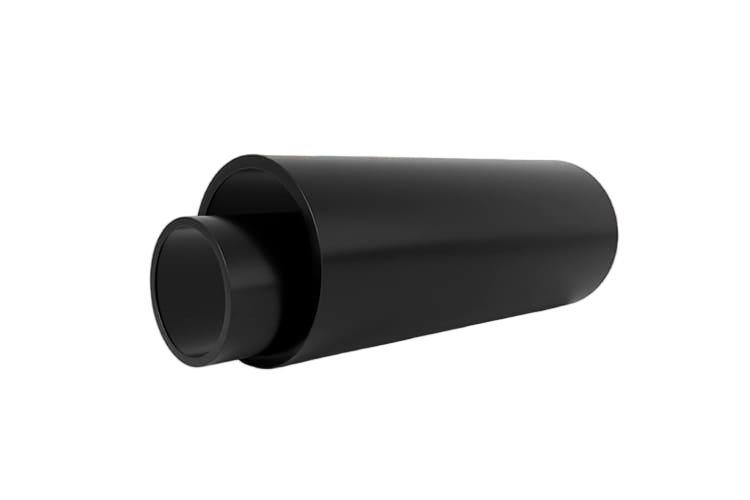
Heap leach mining sets a hard problem for pipe: copper is leached with dilute sulfuric acid at around pH 1–2, while gold is leached with alkaline sodium cyanide at around pH 10.5–11 — opposite ends of the pH scale, both highly corrosive, both toxic. HDPE is the one common pipe material that is immune across that whole range, which is why it carries the leach solution all the way through the circuit: from the drip lines spread across the top of the heap, down through the collection pipes at the base, along the transfer mains, to the pond piping. This guide follows the solution and maps HDPE to every leg of its journey.
Heap leach mining in 90 seconds
The process is elegantly simple. Crushed ore is stacked in lifts on a lined pad, and a leach solution is applied to the top through drip emitters or sprinklers. The solution percolates down through the heap, dissolving the target metal, and the now-metal-bearing pregnant leach solution (PLS) drains onto the sloped liner at the base, where collection pipes gather it and send it to recovery. For copper, PLS goes to solvent extraction and electrowinning (SX-EW) to produce cathode copper, and the stripped solution — the raffinate — is re-acidified and pumped back to the heap. For gold and silver, PLS goes to carbon adsorption or Merrill-Crowe zinc precipitation, and the barren solution is re-fortified with cyanide and recirculated. The solution goes round and round, so every pipe in the loop sees the leach chemistry continuously.
Two circuits, opposite chemistries: acidic copper vs alkaline gold
The reason HDPE matters so much here is the chemistry, and the table sets out the two circuits side by side. Copper heap leaching uses dilute sulfuric acid, often with ferric iron as an oxidant, at a strongly acidic pH of about 1–2. Gold heap leaching uses dilute sodium cyanide at a strongly alkaline pH of about 10.5–11 — deliberately kept that high with lime ("protective alkalinity") because below about pH 9.3 cyanide starts converting to hydrogen cyanide, a lethal gas. So a single mine site can run pipework at both extremes of the pH scale, and a pipe material that survives one but not the other is only half a solution. HDPE survives both, which is the headline of this whole article.
| Aspect | Copper circuit | Gold / silver circuit |
|---|---|---|
| Lixiviant | Dilute sulfuric acid (often with ferric) | Dilute sodium cyanide (NaCN) |
| Chemistry / pH | Acidic, ~pH 1–2 | Alkaline, ~pH 10.5–11 (lime-buffered) |
| Recovery route | SX-EW (solvent extraction & electrowinning) | Carbon adsorption or Merrill-Crowe |
| Recirculated stream | Raffinate (re-acidified) | Barren solution (re-fortified with cyanide) |
| HDPE resistance | Excellent | Fully resistant (industry-standard cyanide pipe) |
Why HDPE is the default for both circuits
HDPE is excellent against the acidic copper circuit — it resists dilute sulfuric acid and ferric solutions with ease — and fully resistant to the alkaline cyanide circuit, handling the high-pH lime-buffered cyanide solution that gold leaching uses. That span across both acid and alkaline leach chemistry is matched by few materials and is the core reason HDPE dominates. On top of corrosion immunity it brings UV stability (black, carbon-black pipe shrugs off years of exposure on the open pad), flexibility (it conforms to heap settlement and to the lift-by-lift raising of the pad), abrasion resistance, light weight for laying over huge pad areas, and — crucially — fused, leak-free joints. That last point is as much environmental as engineering: leaking acid or cyanide solution is a serious hazard and a regulatory red line, and a fully fused HDPE line has no gasketed joints to leak.
Follow the solution: where HDPE goes
HDPE turns up at every stage of the solution's journey, and the table maps the four zones. At the top, the application network — drip-irrigation lateral lines with emitters, or sprinkler and wobbler headers — distributes solution evenly over the heap. At the base, slotted or perforated collection pipe in the drainage layer above the geomembrane liner gathers the PLS. Between the heap, the ponds and the plant run the transfer mains — large-diameter butt-fused HDPE, usually surface-laid, carrying PLS, raffinate and barren solution. And at the ponds (PLS, raffinate and events/storm ponds) HDPE handles the inlet and outlet piping and risers, over the pond's own HDPE geomembrane liner. One material, the whole circuit.
| Zone | Function | HDPE form |
|---|---|---|
| Application (top of heap) | Distribute solution over the heap | Drip lateral lines + emitters, or sprinkler/wobbler headers |
| Collection (base) | Gather PLS on the liner | Slotted/perforated collection pipe in the drainage layer |
| Transfer | Move PLS / raffinate / barren between heap, ponds & plant | Large-diameter butt-fused PE100 mains (surface-laid) |
| Ponds | PLS, raffinate & events/storm ponds | Inlet/outlet piping & risers over the pond liner |
Solution application: drip vs sprinkler
How the solution is applied to the heap is a real design choice, with honest trade-offs. Drip irrigation — HDPE lateral lines with pressure-compensating emitters — loses far less solution to evaporation (cutting cyanide and water loss and UV exposure), keeps the heap surface unsaturated so oxygen can diffuse in and speed the reaction, and allows higher application rates without puddling; the downside is that the tubing is hard to recover economically once buried under the next lift. Sprinklers and wobblers are low-pressure, need no filtration, wet the full surface and are retrievable, but lose more to evaporation and can seal the surface with dislodged fines. Drip clogging and scaling are managed with filtration, plug-resistant emitters and antiscalant dosing. In cold climates, drip lines can be buried for freeze protection and the system designed to drain down.
Collection, transfer mains & the leak-free argument
Below the heap and between the ponds, HDPE's fused joints are the headline. The slotted collection pipe sits in the drainage layer above the geomembrane liner, gathering PLS without corroding in the leach solution. The transfer mains — large-diameter PE100, butt-fused, often surface-laid across the site — must be pressure-rated for static head plus surge, and being fused they accommodate the thermal expansion of long surface runs without joints to leak. And that leak-free quality is the environmental crux: a gasketed or mechanically-jointed line carries leak paths for toxic acid or cyanide solution, while a fully fused HDPE line is monolithic. Regulators favour it for exactly that reason, which is why fusion quality assurance — qualified procedures, operators and joint records — is non-negotiable on a leach operation.
Designing for the pad: UV, lift-raising, freeze & alternatives
A few pad-specific design points round it out. Specify black, carbon-black-pigmented pipe for the exposed runs — UV protection is essential for years on an open pad. Plan for the heap being raised lift by lift: the surface drip lines are re-laid as each new lift is stacked, which is part of why flexible, low-cost HDPE tubing wins over rigid pipe on top. Design for freeze and drain-down in cold climates. And against the alternatives, HDPE is the all-rounder: PVC is cheaper and stiffer but brittle, UV-degrades without protection and has leak-prone gasketed or solvent joints; bare carbon steel corrodes fast in sulfuric raffinate; lined or rubber-lined steel and FRP appear on some high-pressure mains and pumps but cost more and are joint-intensive. For most field piping, HDPE wins on installed cost and leak-tightness.
5 common mistakes
- Using natural or non-UV pipe on the exposed pad — UV embrittlement; always specify black carbon-black HDPE.
- Under-pressure-rating the transfer mains — ignoring surge/water-hammer on long PLS/raffinate lines; pick the right SDR.
- Neglecting filtration and antiscalant on drip systems — chronic emitter clogging and scale wreck application uniformity (and recovery).
- Treating the acidic copper and alkaline gold circuits as the same spec — verify resistance for the actual circuit, and watch fittings and elastomers, not just the PE pipe.
- Compromising fused-joint quality — unqualified operators or bad parameters create exactly the leak paths regulators care about; fusion QA is non-negotiable for toxic solution.
Glossary
- Heap leach
- Stacking crushed ore on a lined pad and applying a leach solution that percolates through and dissolves the target metal.
- PLS (pregnant leach solution)
- The metal-bearing solution collected at the base of the heap and sent to recovery.
- Raffinate / barren solution
- The stripped solution after metal recovery — re-acidified (copper) or re-fortified with cyanide (gold) and recirculated.
- SX-EW
- Solvent extraction and electrowinning — the copper-recovery route that produces cathode copper from PLS.
- Protective alkalinity
- Keeping cyanide solution above ~pH 9.5 (target 10.5–11) with lime so it doesn't off-gas lethal hydrogen cyanide (HCN).
- Lift
- A layer of stacked ore; heaps are raised lift by lift, and surface drip lines are re-laid as each lift is added.
References & standards
- [1]Plastics Pipe Institute (PPI) — Mining applications — HDPE (acids to caustic; leach pads)
- [2]Plastics Pipe Institute (PPI) — TR-19 — chemical resistance of thermoplastics piping materials
- [3]911 Metallurgist — Heap leach solution irrigation (drip vs spray, rates, freeze)
- [4]Ore-Max — How drip irrigation works in heap leach mining (oxygen diffusion)
- [5]Netafim — Irrigation solutions for heap leaching
- [6]Emerson — Measuring pH in cyanide leaching (protective alkalinity, HCN)
- [7]AGRU America — Mining — heap leach pad liners & leak detection
Frequently asked questions
Need expert advice on your project?
Our engineering team helps utilities, contractors and EPCs specify the right pipe material and SDR for their project. Get a no-obligation technical consultation.
Talk to an engineerRead next
13 min read
HDPE Pipe for Mining Slurry & Tailings: Abrasion, Wear Life & Design (2026)
12 min read
HDPE Pipe Applications: Mining, Irrigation & Aquaculture Case Studies
13 min read
HDPE Pipe Chemical Resistance Guide: What PE100 Can (and Can't) Handle (2026)
12 min read
HDPE Pipe for Reclaimed & Recycled Water (Purple Pipe) (2026)
11 min read
HDPE vs Steel & Ductile Iron: A Total Cost of Ownership Comparison
Explore further
Related applications, material comparisons and country buying guides selected for this topic.