Guide
HDPE Pipe Chemical Resistance Guide: What PE100 Can (and Can't) Handle (2026)
What PE100 resists, the three things that attack it, why temperature changes everything, and the gasket that fails before the pipe does.

Dr. Wei Liu, P.E.
Senior Engineering Manager · Primepoly
Published: Jun 7, 2026
Updated: Jun 7, 2026
13 min read
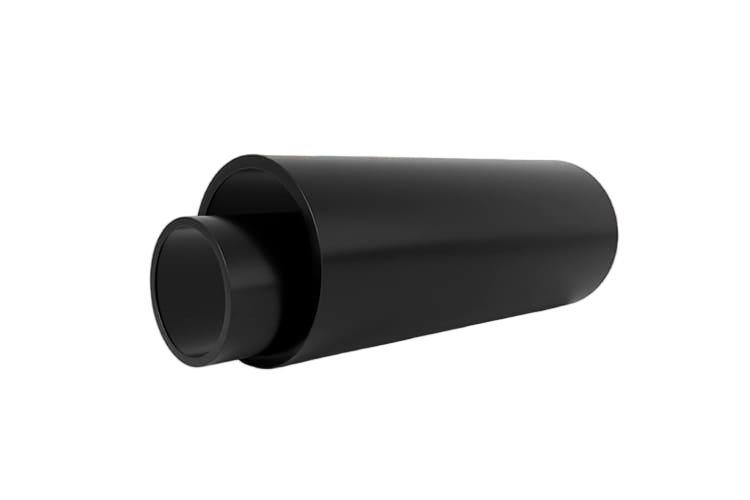
Chemical resistance is one of HDPE's strongest selling points — it shrugs off acids, alkalis, salts and brines that corrode metal — but "plastic" is not the same as "chemically bulletproof." A handful of substances do attack polyethylene, and the rules change with temperature, concentration and stress. This guide sets out what PE100 resists, the three distinct ways it can be attacked, how to read a resistance chart correctly, and the seal that often fails long before the pipe.
Why HDPE is chemically resistant
Polyethylene is a non-polar, chemically inert polymer with no metal to corrode and no ester linkages to hydrolyse, so it stands up to a very wide range of aqueous chemicals. It doesn't rust, scale, tuberculate or suffer galvanic attack the way steel does, which is why HDPE is the default for mining slurry, brine, effluent and aggressive-soil service. The exceptions are specific and worth understanding precisely, rather than relying on a vague sense that "plastic resists chemicals."
What PE100 resists well
PE100 is satisfactory with the great majority of inorganic chemicals across wide concentration ranges. The table gives the broad picture; note that a rating good at 20 °C can drop a class by 60 °C, so always read at your operating temperature.
| Chemical group | At 20 °C | At 60 °C |
|---|---|---|
| Dilute & many concentrated acids (HCl, phosphoric, acetic) | Satisfactory | Satisfactory / Limited |
| Strong oxidising acids (conc. nitric, hot conc. sulfuric) | Limited | Not resistant |
| Alkalis / bases (NaOH, KOH, ammonia) | Satisfactory | Satisfactory |
| Salts & brines (NaCl, seawater, most salt solutions) | Satisfactory | Satisfactory |
| Alcohols (methanol, ethanol, isopropanol) | Satisfactory | Satisfactory / Limited |
| Aromatic / chlorinated solvents (benzene, toluene, TCE) | Limited | Not resistant |
| Halogens (chlorine, bromine, high concentration) | Limited | Not resistant |
What attacks or limits PE: three mechanisms
Three distinct mechanisms can degrade or limit polyethylene, and it helps to keep them separate because the warning signs and the fixes differ. One is chemical oxidation; one is physical swelling and permeation; and one is stress-driven cracking that needs no aggressive chemistry at all.
| Mechanism | Caused by | Effect |
|---|---|---|
| Oxidation / embrittlement | Strong oxidisers: conc. nitric, hot sulfuric, halogens, hypochlorite | Chemical degradation, antioxidant depletion, loss of strength |
| Swelling / permeation | Aromatic & chlorinated solvents, hydrocarbons | Softening, swelling, permeation (absorbed, not dissolved) |
| Environmental stress cracking (ESCR) | Surfactants / detergents + tensile stress | Slow crack growth even when the chemical isn't aggressive |
Temperature & concentration: every rating is conditional
Chemical resistance is never a single yes/no — it depends on both concentration and temperature, which is why proper charts list a rating at 20 °C and again at 60 °C. A chemical rated satisfactory at ambient can become limited or non-resistant when hot, and a dilute solution can be fine where a concentrated one is not. Always match the rating to your actual maximum operating temperature and the real concentration of the medium, including any mixtures.
How to read a chemical-resistance chart correctly
A resistance chart is only useful if you read it for your exact service. Work through these steps before relying on a rating.
- Identify the exact chemical, its concentration, and your maximum operating temperature — including any mixtures or synergistic effects.
- Read the rating at your operating temperature, not just at 20 °C — heat can drop it a full class.
- Watch for the three attack mechanisms: strong oxidiser (oxidation), aromatic/chlorinated solvent (swelling/permeation), or surfactant-under-stress (ESCR).
- Check the fittings, gaskets, O-rings, seals and valve elastomers separately — the elastomer is frequently the weak link, not the PE.
- If the pipe is mechanically stressed and the fluid bears surfactants, evaluate ESCR and prefer PE100-RC; for hydrocarbon or contaminated-ground service, consider permeation and barrier pipe.
- When a rating is borderline ("limited") or the medium is a mixture, run a pilot/immersion test and defer to the manufacturer's grade-specific table.
Don't forget gaskets, seals & fittings
A chemical-resistance assessment that stops at the pipe is incomplete. Flange gaskets, O-rings, mechanical-joint seals and valve elastomers are made of EPDM, NBR, Viton and similar materials, each with its own compatibility — and they often fail before the polyethylene does. Check every elastomer in the system against the same chemical, concentration and temperature, and treat the seal, not the pipe, as the likely limiting component.
Permeation & contaminated ground
Even when a chemical doesn't attack polyethylene, PE is permeable to gases and many hydrocarbons — they can diffuse through the wall. For potable-water pipe routed through hydrocarbon-contaminated ground, or for hydrocarbon service, specify a barrier or multilayer (co-extruded) pipe; no PE pipe is fully permeation-proof in heavily contaminated soil. This is a design consideration distinct from chemical attack, and it's easy to overlook.
HDPE vs PVC vs steel vs stainless
Against other piping materials, HDPE's strength is breadth and corrosion immunity. The table summarises the trade-offs; the headline is that HDPE and PVC share a weakness for aromatics, chlorinated solvents and ketones, metals corrode where HDPE doesn't, and for continuous strong-solvent service neither plastic is suitable — that calls for lined steel, PVDF or FRP.
| Medium | HDPE | PVC | Carbon steel | Stainless 316 |
|---|---|---|---|---|
| Dilute acids / bases | Excellent | Good | Poor (corrodes) | Good |
| Salts / brine / seawater | Excellent | Good | Poor | Good (watch chlorides) |
| Aromatics / chlorinated solvents | Limited (swells) | Limited (attacked) | Good | Good |
| Strong oxidisers | Limited | Limited | Poor | Varies |
Applications that rely on PE chemical resistance
HDPE's chemical resistance underpins many of its toughest applications: mining slurry and tailings (abrasion plus aggressive chemistry), acid and alkali process effluent, brine, desalination and seawater intake/outfall, landfill leachate, and general wastewater. In each, the combination of corrosion immunity, abrasion resistance and leak-free fusion joints is what makes PE100 the practical choice over metal.
Is PE right for your chemical service?
5 common chemical-resistance mistakes
- Ignoring temperature — quoting the 20 °C rating for a 60 °C line, when resistance can drop a full class with heat.
- Ignoring ESCR — assuming a "compatible" chemical is safe under tensile stress, when surfactants and detergents crack stressed PE that is otherwise chemically fine.
- Forgetting the gasket, seal and elastomer compatibility — the PE passes but the EPDM or NBR O-ring fails first.
- Assuming "plastic = chemically bulletproof" — strong oxidisers (concentrated nitric, hot sulfuric, high-concentration halogens) embrittle PE, and aromatics and chlorinated solvents swell it.
- Ignoring permeation — using standard PE through contaminated ground or for hydrocarbon service without a barrier pipe.
Glossary
- Chemically inert
- PE's non-reactive nature toward most aqueous chemicals; it doesn't corrode, scale or suffer galvanic attack like metal.
- Oxidation / embrittlement
- Degradation of PE by strong oxidisers (concentrated nitric/hot sulfuric acid, high-concentration halogens), depleting antioxidants and embrittling the polymer.
- Swelling / permeation
- Absorption of aromatic and chlorinated solvents and hydrocarbons, which soften and permeate PE without dissolving it at ambient.
- ESCR
- Environmental stress cracking — slow cracking of stressed PE in contact with surfactants/detergents, even when the chemical isn't otherwise aggressive; PE100-RC resists it.
- Resistance rating (S/L/N)
- The classification used in charts — Satisfactory, Limited or Not resistant — given per chemical and concentration at both 20 °C and 60 °C.
- Barrier / multilayer pipe
- Co-extruded PE pipe with a barrier layer to resist hydrocarbon permeation through contaminated ground.
References & sources
- [1]Plastics Pipe Institute (PPI) — TR-19 — chemical resistance of plastic piping materials
- [2]PE100+ Association — Chemical resistance of PE & HDPE pipe
- [3]PE100+ Association — Is PE pipe resistant to chemicals in soils? (permeation)
- [4]ISO — ISO/TR 10358 — combined chemical-resistance classification for plastics pipes
- [5]INEOS — HDPE chemical resistance guide (ratings at 20 °C and 60 °C)
- [6]INEOS — Environmental stress crack resistance of polyethylene
- [7]Vinidex — Chemical resistance of PE pipes
- [8]Coastal Resource Group — HDPE chemical resistance chart — acids, bases & solvents
Frequently asked questions
Need expert advice on your project?
Our engineering team helps utilities, contractors and EPCs specify the right pipe material and SDR for their project. Get a no-obligation technical consultation.
Talk to an engineerRead next
Explore further
Related applications, material comparisons and country buying guides selected for this topic.