Comparison
HDPE vs Polypropylene (PP) Pipe: Which Polyolefin for Which Job? (2026)
Two recyclable, heat-fusible polyolefins that look alike and split cleanly by duty: PP for hot and chemical-industrial service, HDPE for cold, buried, gas and trenchless. Melt point is not service temperature.

Dr. Wei Liu, P.E.
Senior Engineering Manager · Primepoly
Published: Jun 8, 2026
Updated: Jun 8, 2026
13 min read
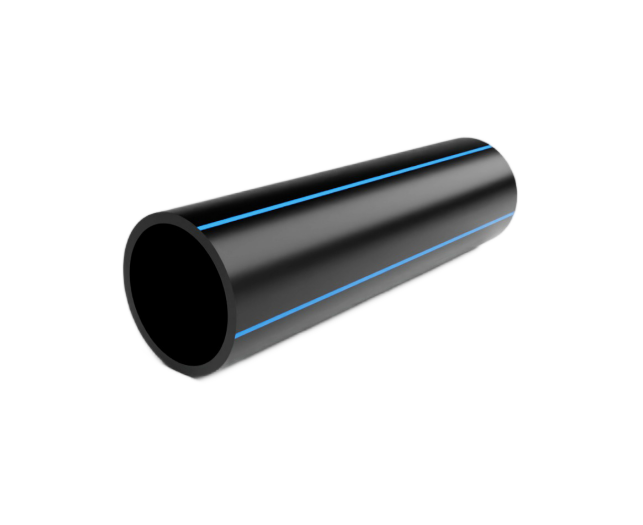
HDPE and polypropylene are close cousins — both polyolefins, both corrosion-free, both heat-fusible and recyclable, and both sold as black plastic pressure pipe that looks much the same on a pallet. But they split cleanly by duty. PP takes more heat and suits hot and chemical-industrial service; HDPE stays tough in the cold and owns buried, gas, trenchless and large-diameter water work. The trap people fall into is reading across from one number — PP's higher melting point — and assuming it's simply the better pipe. It isn't; melt point is not service temperature. This guide compares them honestly and gives you a way to choose.
HDPE vs PP at a glance
Before the detail, the table gives the head-to-head. Read it as a division of labour, not a winner-takes-all: PP leads on temperature and is a touch lighter and stiffer; HDPE leads on cold-weather toughness, impact resistance, fusion-jointing maturity at large diameter, and the buried/trenchless/gas duties. Both are corrosion-free, recyclable polyolefins, so neither corrodes and both can be heat-fused — the choice is about temperature, toughness and the specific application, which the rest of the guide unpacks.
| Property | HDPE | Polypropylene (PP) |
|---|---|---|
| Max continuous temperature | ~60 °C (PE-RT extends it) | ~80–95 °C (PP-H / PP-R) |
| Cold / impact toughness | Ductile to ≈ −40 °C | Brittle below ≈ 0 to −5 °C |
| Density | ≈ 0.95 g/cm³ | ≈ 0.905 g/cm³ (lighter) |
| Stiffness | Lower (more flexible) | Higher (stiffer) |
| Jointing | Butt / electrofusion (mature at large dia.) | Butt / socket / electrofusion |
| Gas distribution | Yes — the code material for gas | No — not used for buried gas mains |
| Typical home turf | Buried water, sewer, trenchless, gas, cold climate | Hot-water plumbing, chemical/industrial process |
First, which PP? PP-H, PP-R and PP-B
"PP" isn't one material, and you can't compare it to HDPE without saying which grade. PP-H (homopolymer) is the stiffest and most heat- and chemical-resistant, the workhorse of industrial process and ventilation pipe. PP-R (random copolymer) is the familiar green or grey hot-and-cold plumbing pipe, balancing temperature resistance with enough toughness for buildings. PP-B (block copolymer) trades some heat resistance for better impact strength, used in soil, waste and drainage. So when someone says "PP pipe handles 90 °C," they usually mean PP-H or PP-R — and the cold-weather brittleness caveat applies across the family. Match the PP grade to the duty before comparing it with HDPE.
Temperature: PP's main advantage — and its cold-weather weakness
Temperature is the clearest difference. PP keeps useful strength at higher temperatures — PP-H and PP-R handle continuous hot service in the roughly 80–95 °C range, which is why PP-R is a hot-water plumbing staple — while HDPE's continuous limit is around 60 °C (with PE-RT extending raised-temperature service). At the cold end the order flips: HDPE stays ductile and impact-tough down to about −40 °C, whereas PP becomes brittle below roughly 0 to −5 °C and can crack under impact in winter handling or cold-climate burial. The bar chart shows the maximum continuous service temperatures. The takeaway is duty-driven: if it's hot, lean PP; if it's cold or impact-exposed, lean HDPE.
Source: Manufacturer data (PE100 / PP-B / PP-R / PP-H)
Chemical resistance: largely a tie — check the chart
On chemical resistance the two are close, and broadly excellent: both are inert polyolefins that resist a wide range of acids, alkalis and salt solutions and neither corrodes. The differences are at the edges and are temperature-dependent — PP-H is often preferred for certain hot acids and solvents in industrial process service, partly because it's run hotter, while HDPE is the choice for cold, buried and abrasive duties. Neither handles strong oxidisers or many non-polar solvents well. The honest rule is the same for both materials: don't rely on a general claim — check the specific chemical, at its actual concentration and temperature, against the manufacturer's resistance chart, and consider permeation for thin walls.
Where each wins: HDPE's territory vs PP's territory
Sort the applications and the division is clear. HDPE owns the cold and the ground: large-diameter water transmission and distribution, buried sewer and drainage, trenchless installation (its flexibility and fusion suit HDD and pipe bursting), mining slurry and dredging, cold-climate work — and, uniquely, gas distribution, which is a polyethylene-only job by code in most countries; PP is not used for buried gas mains. PP owns the hot and the industrial-indoor: hot-and-cold building plumbing (PP-R), chemical and industrial process lines (PP-H), and laboratory and ventilation systems, where its higher temperature rating earns its place. The overlap — ambient-temperature chemical and water lines — can go either way, which is where the decision path below helps.
How to choose: a decision path
Most HDPE-or-PP decisions resolve on three questions in order — temperature, then the special cases (gas, cold, trenchless, buried large-diameter), then the chemical and weight check. The path below walks them. When both still qualify, the tie-breakers are availability at the diameter you need, the maturity of large-diameter fusion (HDPE's strength), and cost.
What they share: heat-fusible, recyclable polyolefins
It's worth ending on the common ground, because it's substantial. Both HDPE and PP are polyolefins, so both are corrosion-free and chemically inert, both can be joined by heat fusion (butt and electrofusion / socket) into strong monolithic joints with no glue or gaskets, both are fully recyclable, and both are light and tough compared with metal or concrete. PP is slightly lighter (around 0.905 versus 0.95 g/cm³) and a little stiffer; HDPE is tougher, especially cold. Choosing between them isn't choosing between a good and a bad pipe — it's matching two excellent, related materials to the temperature and the application. Standards: HDPE to ISO 4427 / EN 12201, PP to ISO 15874 / EN 1852.
5 common mistakes
- Picking PP over HDPE because it melts hotter — melt point isn't service temperature; compare the temperature-rated pressure capacity.
- Using PP in cold-climate or impact-exposed service — it turns brittle below roughly 0 to −5 °C; HDPE stays ductile to about −40 °C.
- Specifying PP for buried gas distribution — gas mains are polyethylene-only by code in most countries.
- Running HDPE on a continuous hot line above ~60 °C without PE-RT or a switch to PP — HDPE derates and loses strength when hot.
- Comparing 'PP' to HDPE without naming the grade — PP-H, PP-R and PP-B differ in heat and impact; match the grade to the duty first.
Glossary
- Polyolefin
- The polymer family that includes both PE (HDPE) and PP — corrosion-free, heat-fusible and recyclable; the shared basis of these two pipes.
- PP-H (homopolymer)
- The stiffest, most heat- and chemical-resistant PP — used for industrial process and ventilation pipe.
- PP-R (random copolymer)
- The hot-and-cold building plumbing PP, balancing temperature resistance and toughness.
- PP-B (block copolymer)
- An impact-tough PP grade for soil, waste and drainage — trades some heat resistance for impact strength.
- PE-RT
- Raised-temperature polyethylene — an HDPE-family grade that extends PE's continuous hot-service range.
- Service temperature vs melt point
- The temperature a pipe is rated to operate at (well below melt), versus the temperature the polymer melts — not interchangeable.
References & standards
- [1]ISO — ISO 4427-1 — PE pipes & fittings for water supply
- [2]ISO — ISO 15874-1 — PP (polypropylene) piping systems for hot & cold water
- [3]ISO — ISO 1852 / EN 1852 — PP pipes & fittings for non-pressure drainage
- [4]Plastics Pipe Institute (PPI) — TR-19 — chemical resistance of thermoplastic piping materials
- [5]AGRU — PP-H industrial piping systems — properties & temperature
- [6]SIMONA — PE & PP pressure pipe — material comparison
- [7]PE100+ Association — PE100 chemical resistance & material properties
Frequently asked questions
Need expert advice on your project?
Our engineering team helps utilities, contractors and EPCs specify the right pipe material and SDR for their project. Get a no-obligation technical consultation.
Talk to an engineerRead next
11 min read
HDPE vs PPR Pipe: Which to Use Where (2026)
13 min read
HDPE vs PVC: Which Pipe Material Is Right for Your Project?
13 min read
HDPE Pipe Chemical Resistance Guide: What PE100 Can (and Can't) Handle (2026)
13 min read
HDPE Pipe Grades Explained: PE80 vs PE100 vs PE4710 (and PE100-RC) (2026)
11 min read
HDPE vs PEX Pipe: Which to Use Where (2026)
Explore further
Related applications, material comparisons and country buying guides selected for this topic.