Comparison
HDPE vs PPR Pipe: Which to Use Where (2026)
Two polyolefin cousins that rarely compete — HDPE owns buried, cold, large-diameter and gas; PPR owns indoor hot-water plumbing. Here's the honest split.

Dr. Wei Liu, P.E.
Senior Engineering Manager · Primepoly
Published: Jun 8, 2026
Updated: Jun 8, 2026
11 min read
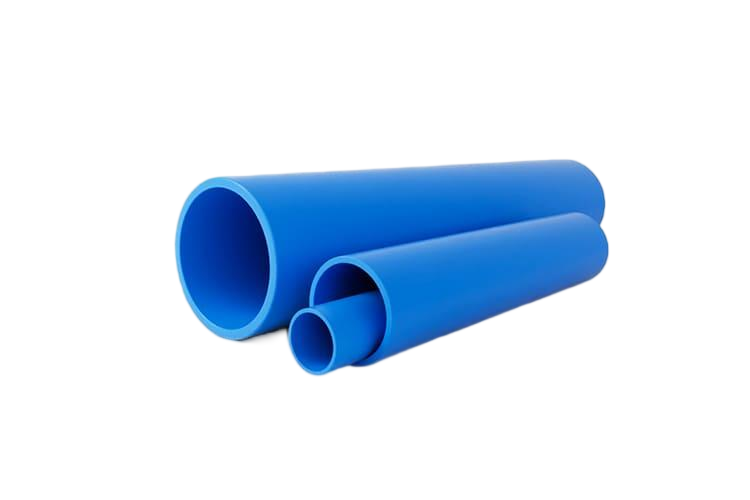
HDPE and PPR are often pitted against each other, but they're really two polyolefin cousins that do different jobs. HDPE is the material for buried water mains, gas, large diameters and cold-water pressure pipe, joined by butt and electrofusion into long fused strings. PPR is the material for indoor hot-and-cold potable plumbing and heating, joined by socket fusion into compact fittings. They share corrosion immunity and heat-fusion, but they diverge on temperature, flexibility, size and standards. This guide is a "which to use where," not a "which is better."
HDPE vs PPR at a glance
The table maps the two materials across the properties that matter. Read it as a division of labour rather than a contest: HDPE leads on burial, size, flexibility and gas; PPR leads on hot water and compact indoor plumbing.
| Property | HDPE (PE100) | PPR (PP-R) |
|---|---|---|
| Material | Polyethylene (polyolefin) | Polypropylene random copolymer |
| Primary job | Buried water mains, gas, service lines, irrigation, mining, sewer, trenchless | Indoor hot & cold potable plumbing, heating |
| Water temperature | Cold-water material; derates sharply with heat | Hot-water material by design |
| Continuous temp | ~20 °C reference; ~half rating by 60 °C | ~70 °C continuous (ISO 15874) |
| Pressure rating | By SDR & grade (e.g. SDR11 ≈ 16 bar @20 °C) | PN10/16/20/25 (bar @20 °C) |
| Joining | Butt & electrofusion (continuous strings) | Socket fusion (compact fittings) |
| Flexibility | Flexible, coilable, trenchless | Rigid, cut-to-length straight lengths |
| Diameter range | ~20 mm up to ~1600–2000 mm+ | Common DN16–160 (up to ~630 mm) |
| Standards | ISO 4427, EN 12201, AWWA C901/C906 | ISO 15874, DIN 8077/8078 |
The core distinction: buried cold mains vs indoor hot plumbing
The single most useful thing to understand is the application split. HDPE is a buried-infrastructure material — water distribution mains, gas, irrigation, mining slurry, sewer and trenchless installs, often at large diameter and always fused into continuous restrained strings. PPR is a building-services material — the hot and cold potable plumbing inside a building, plus heating loops and some in-building industrial lines. When you frame the choice by where the pipe goes, the answer is usually obvious.
Material basics: PE vs PP-R
Both are polyolefins, so both resist corrosion and can be heat-fused — but the polymers differ. Polyethylene (PE) is tougher and more flexible, with excellent low-temperature impact and slow-crack-growth resistance, which suits buried and cold-climate service. Polypropylene random copolymer (PP-R) is stiffer and handles higher temperatures, which suits hot water, but it's more brittle when cold and has high thermal expansion that hot systems must design around (often with glass-fibre or aluminium-reinforced layers).
Temperature: why PPR owns hot water and HDPE owns cold
Temperature is the dividing line. PPR is engineered for continuous hot water — roughly 70 °C continuous (ISO 15874 application classes use 70–80 °C design temperatures) with peaks to about 95 °C — which is exactly why it dominates indoor plumbing and heating. HDPE is a cold-water material: it carries its pressure rating at 20 °C and derates sharply as temperature rises, with roughly half its capacity left near 60 °C, and it isn't suited to sustained hot water. For hot water, PPR (or PEX/PE-RT) wins decisively.
Pressure & the temperature derating curve
Both materials lose pressure capacity as they heat up, but it matters most for PPR because it's used hot. A PPR pipe marked PN20 (20 bar at 20 °C) carries far less at 70 °C over a 50-year life — read the manufacturer's derating table rather than the PN stamp. HDPE's rating is quoted cold at 20 °C and is rarely used hot at all. The table gives indicative figures; always defer to the producer's curve for the exact grade.
| Condition | HDPE (PE100) | PPR (PN20) |
|---|---|---|
| At 20 °C | Full PN (SDR11 ≈ 16 bar) | Full PN (~20 bar) |
| At ~60 °C | ≈ half the 20 °C rating | Reduced per the derating curve |
| At ~70 °C continuous | Not for sustained hot water | ≈ 8–10 bar over 50 yr |
| Peak / short-term | ~60 °C short-term only | ~95 °C peak |
Joining: butt/electrofusion vs socket fusion
Both are heat-fused and leak-free, but by different methods suited to their jobs. HDPE is joined by butt fusion (continuous strings, large diameter, buried mains) and electrofusion (fittings and tight spots), producing fully restrained joints with no thrust blocks. PPR is joined mainly by socket (heat) fusion — the pipe and a socket fitting are heated and pushed together — which is fast and compact for the many small fittings of indoor plumbing. Both beat glued or threaded joints for reliability.
Durability: toughness, UV, expansion & oxygen barrier
A few durability factors separate them. HDPE is tougher at low temperature and has superior slow-crack-growth resistance; PPR is stiffer but more brittle when cold. Both degrade in sunlight unless protected — HDPE is carbon-black stabilised for outdoor and buried use, while PPR usually needs jacketing or insulation against prolonged sun. And for closed-loop heating, PPR is available with an EVOH or aluminium oxygen-barrier layer to stop oxygen ingress that would corrode the system's metal components — something cold buried HDPE doesn't need.
Standards & approvals
The two materials are governed by separate standards families. HDPE water pipe is made to ISO 4427, EN 12201 or AWWA C901/C906 (PE100 / PE4710). PPR is made to ISO 15874 (EN ISO 15874) and DIN 8077/8078, with ASTM F2389 in North America. For potable use, both also need the relevant drinking-water contact certification on top of the dimensional standard.
Which to use where
Match the material to the job — buried vs indoor, cold vs hot, large vs small. The path below resolves nearly every case.
5 common misconceptions
- "HDPE can do indoor hot water" — no; it derates steeply with heat. Use PPR (or PEX/PE-RT) for sustained hot water.
- "PPR is fine for buried mains and large diameter" — no; limited diameters, rigid, brittle when cold, and it needs UV protection. HDPE is the buried-main material.
- "They're interchangeable polyolefins" — they share corrosion immunity and fusion, but temperature behaviour, flexibility, diameters and standards differ fundamentally.
- "PN20 means 20 bar everywhere" — PN is rated at 20 °C; PPR capacity drops sharply at 70 °C and over a 50-year life. Always read the derating table.
- "Plastic is UV-proof" — both degrade in sunlight; HDPE needs carbon-black stabilisation, PPR needs jacketing or insulation for outdoor runs.
Glossary
- PP-R (PPR)
- Polypropylene random copolymer — a stiffer, higher-temperature polyolefin used for indoor hot-and-cold plumbing and heating.
- PN (nominal pressure)
- A pipe's pressure rating in bar at 20 °C; for hot PPR systems it must be derated for temperature and time.
- Temperature derating
- The reduction in a pipe's allowable pressure as service temperature rises — steep for both PE and PP-R above 20 °C.
- Socket fusion
- PPR's main joining method: pipe and socket fitting are heated and pushed together to fuse — fast and compact for indoor fittings.
- ISO 15874
- The international standard for PP (PPR) hot-and-cold water piping systems, defining application classes and design temperatures.
- Oxygen-barrier layer
- An EVOH or aluminium layer in PPR heating pipe that blocks oxygen ingress, protecting metal components from corrosion.
References & standards
- [1]ISO — ISO 4427-1 — PE piping systems for water supply (general)
- [2]ISO — ISO 4427-2 — PE pipes for water supply (pipes)
- [3]ISO — ISO 15874-1 — PP (PPR) hot & cold water systems (general)
- [4]ISO — ISO 15874-2 — PP (PPR) hot & cold water systems (pipes)
- [5]Plastics Pipe Institute (PPI) — Handbook of Polyethylene Pipe
- [6]DIN / European Standards — DIN 8077 — polypropylene (PP) pipe dimensions
- [7]Engineering ToolBox — EN 12201 — PE pipes for water supply (overview)
- [8]Aquatherm — PP-R / PP-RCT applications & heat fusion
Frequently asked questions
Need expert advice on your project?
Our engineering team helps utilities, contractors and EPCs specify the right pipe material and SDR for their project. Get a no-obligation technical consultation.
Talk to an engineerRead next
Explore further
Related applications, material comparisons and country buying guides selected for this topic.