Comparison
HDPE vs Copper Pipe for Water Service Lines & Plumbing (2026)
An honest comparison: where fused polyethylene wins on corrosion, cost and freeze — and where copper genuinely wins on heat, fire and antimicrobial performance.

Dr. Wei Liu, P.E.
Senior Engineering Manager · Primepoly
Published: Jun 8, 2026
Updated: Jun 8, 2026
12 min read
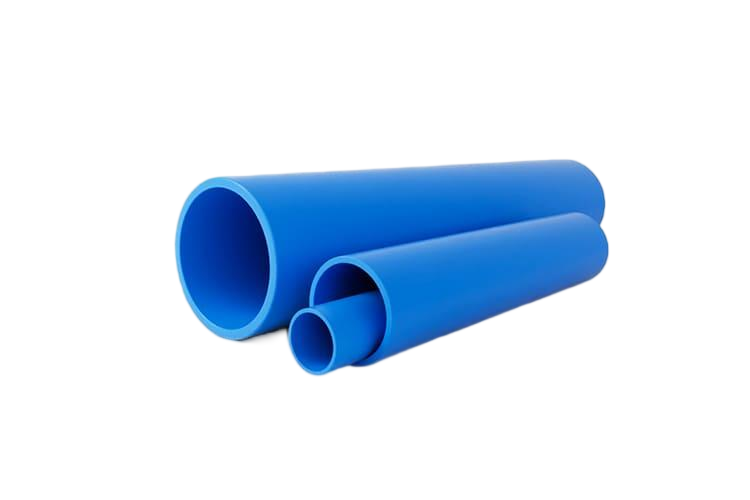
For buried water service lines and plumbing, the choice often comes down to fused polyethylene or copper — and the honest answer is that each wins in different places. HDPE is immune to corrosion, cheaper, coilable and freeze-tolerant, which makes it dominant for buried service lines. Copper handles high temperature, is non-combustible, and is naturally antimicrobial, which keeps it the choice for hot water and certain code-mandated situations. This guide compares them fairly — including the points where copper genuinely beats plastic.
HDPE vs copper at a glance
The table sums up the trade-offs. Read it as a map of where each material is strong: HDPE on corrosion, joints, install, freeze and cost; copper on temperature, fire, antimicrobial performance and proven longevity in good water. The sections below unpack the ones that matter most.
| Attribute | HDPE / PE100 | Copper (Type K/L/M) |
|---|---|---|
| Corrosion | Immune — no rust, pitting or tuberculation | Pits in soft/acidic water → pinhole leaks; can leach copper |
| Joints | Heat-fused, monolithic, leak-free | Soldered/brazed (flame) or press; more joints |
| Service-line install | Coilable, trenchless, few joints | Rigid lengths, many couplings |
| Freeze | Flexible — tends to expand, not burst | Splits / bursts readily when frozen |
| Health | Leaches no metal, lead-free (certify NSF 61/WRAS) | Antimicrobial (a real plus) but can leach copper |
| Temperature / fire | Cold-water rated; derates with heat; combustible | Handles high temp; non-combustible — wins hot water |
| Cost | Cheaper material + faster install; no scrap value | Expensive, price-volatile; high scrap value (theft target) |
| Service life | 50–100 yr design; corrosion-immune | Century-scale in benign water; ~20 yr in aggressive water |
Corrosion & water chemistry: why copper pits and HDPE doesn't
This is HDPE's biggest advantage. Polyethylene is immune to corrosion — it doesn't rust, pit or tuberculate, and it's unaffected by soil chemistry or galvanic action. Copper, by contrast, corrodes and pits in aggressive water: soft or acidic (low-pH) water causes cuprosolvency — uniform copper leaching that shows up as blue water and a metallic taste — while certain other waters cause pitting and pinhole leaks, sometimes within twenty years. Aggressive soils attack buried copper too. In hostile water or ground, HDPE simply sidesteps the problem.
Joints & installation on a service line
HDPE is heat-fused — butt fusion or electrofusion — into a monolithic, leak-free line with no internal restriction, or joined with mechanical fittings at service taps; no flame, no solder. And because it comes in long coils, a buried service line can be installed in one continuous run with few or zero joints, often pulled in trenchlessly. Copper comes in rigid lengths needing many soldered, brazed or pressed joints — each a potential leak point — and soldering brings an open-flame fire risk. On a long buried run, HDPE's coilability is a decisive practical edge.
Freeze, ground movement & flexibility
HDPE is flexible, so it tends to expand rather than burst when water freezes inside it, and it absorbs ground movement and settlement without failing — a real benefit in freeze-prone or unstable ground. It is not freeze-proof, though; sustained freezing can still damage it. Copper is rigid and conducts heat away quickly, which makes it among the most likely materials to split and burst when frozen. For buried lines in cold climates, HDPE's flexibility is a meaningful advantage.
Water quality & health (and copper's antimicrobial advantage)
Both can deliver safe water, with honest nuances on each side. HDPE leaches no metal and is lead-free, but it must be water-grade certified (NSF/ANSI 61 or WRAS), and in ground grossly contaminated with hydrocarbons it can permeate organics into the water — there you specify barrier pipe. Copper's nuance cuts both ways: it can leach copper under corrosive conditions (taste, and a health concern for infants and sensitive groups), but it is also genuinely biostatic — naturally inhibiting biofilm and organisms like Legionella, an EPA-registered antimicrobial property that plastic doesn't share.
Temperature & fire: where copper wins
This is copper's clearest win. Copper handles high temperatures and is non-combustible, which makes it the default for hot-water distribution, risers and fire-rated or high-temperature locations. HDPE is pressure-rated for cold water and derates sharply as temperature rises — its continuous-service pressure capacity at around 60 °C is roughly half its 20 °C value — and it's combustible. For hot water and fire-exposed runs, copper (or another high-temperature material) is the right call, not HDPE.
Cost, lifecycle & theft
HDPE is generally much cheaper on material and faster to install — fewer joints, trenchless-friendly, and no scrap value to attract thieves. Copper is expensive and its price is commodity-volatile, though it carries a high recyclable scrap value at end of life — which is a double edge, because that same value makes installed copper a target for theft from vacant buildings and irrigation systems. Avoid hard "X times cheaper" claims, since copper's price swings, but the direction is consistent: HDPE lowers installed cost on a buried service line.
Standards & certifications
HDPE service pipe is made to ISO 4427, EN 12201 or AWWA C901 in PE4710/PE100 material, with potable contact certified separately under NSF/ANSI 61 or WRAS. Copper tube is made to ASTM B88 (Types K/L/M) in the US or EN 1057 in Europe, with potable contact also evaluated under NSF/ANSI 61. As always, the dimensional standard proves the pipe; the contact certification proves it's safe for drinking water — specify both.
Which should you choose?
Match the material to the duty. The path below captures the decisive factors — buried vs hot, water chemistry, freeze, and code.
5 common mistakes & misconceptions
- Treating "plastic" as one thing — fused HDPE for buried mains and service lines is engineered very differently from PEX or PVC interior plumbing.
- Believing HDPE is freeze-proof — it's freeze-resistant (tends to expand, not burst), but sustained freezing can still fail it.
- Assuming copper lasts forever — true only in benign water; in soft/acidic or certain hard waters it pits and develops pinhole leaks, sometimes within ~20 years.
- Assuming any plastic means cleaner water — only if NSF 61 / WRAS certified, and HDPE needs barrier pipe in fuel-contaminated soil.
- Ignoring copper's antimicrobial upside — it's a genuine plus, just weighed against copper's cost, theft risk and leaching in corrosive water.
Glossary
- Cuprosolvency
- The dissolving of copper into water by soft, acidic (low-pH) water — causing blue water, a metallic taste and copper leaching.
- Pinhole leak
- A small perforation from localised pitting corrosion of copper tube, a common failure mode in aggressive waters.
- Butt / electrofusion
- Heat-fusion methods that join HDPE into a monolithic, leak-free line — no solder, no flame.
- Biostatic / antimicrobial
- Copper's natural ability to inhibit microbial growth and biofilm (EPA-registered) — a property HDPE does not have.
- Permeation (barrier pipe)
- The passage of organics through PE wall in hydrocarbon-contaminated soil; avoided by specifying barrier/multilayer pipe.
- NSF/ANSI 61
- The North American drinking-water-contact health standard applied to both HDPE and copper, separate from the dimensional standard.
References & standards
- [1]Copper Development Association — Copper Tube Handbook (ASTM B88 types, install, corrosion)
- [2]Copper Development Association — Pitting corrosion of copper in cold potable water
- [3]NSF — NSF/ANSI/CAN 61 — drinking water system components
- [4]US EPA — Revised Lead and Copper Rule
- [5]AWWA — AWWA C901 — PE pressure pipe & tubing for water service
- [6]Plastics Pipe Institute (PPI) — Assessment of BTEX permeation through HDPE water pipe
- [7]ASTM International — ASTM B88 — seamless copper water tube
- [8]Copper Development Association — Domestic water service & distribution (copper)
Frequently asked questions
Need expert advice on your project?
Our engineering team helps utilities, contractors and EPCs specify the right pipe material and SDR for their project. Get a no-obligation technical consultation.
Talk to an engineerRead next
Explore further
Related applications, material comparisons and country buying guides selected for this topic.