Guide
Is HDPE Pipe Safe for Drinking Water? Certifications, Taste & Disinfection (2026)
Yes — with the right certification. Why the dimensional standard isn't enough, the regional contact certs, and the honest notes on chlorine and permeation.

Dr. Wei Liu, P.E.
Senior Engineering Manager · Primepoly
Published: Jun 8, 2026
Updated: Jun 8, 2026
11 min read
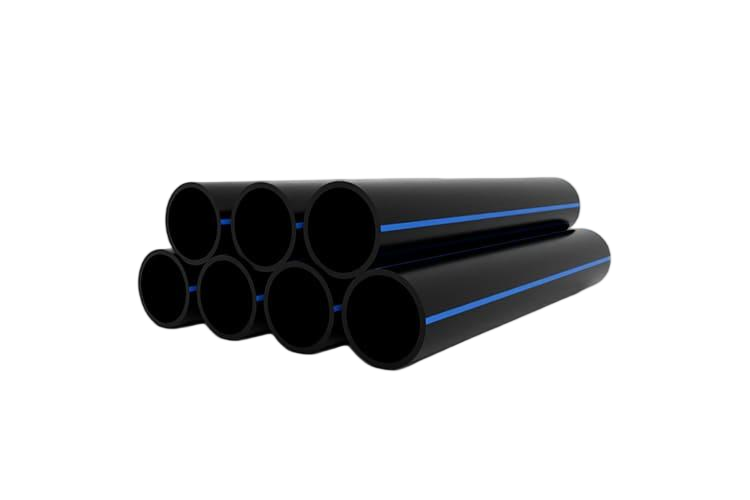
Is HDPE pipe safe to carry drinking water? Yes — modern water-grade PE100 is certified for potable contact in essentially every market, and it brings real advantages over the metal pipes it replaces. But "safe" hinges on a distinction many buyers miss: the standard that proves a pipe's dimensions and pressure rating is not the certification that proves it's safe to touch drinking water. This guide explains that distinction, the regional certifications you must specify, why HDPE is advantageous for potable water, and the honest caveats on disinfection and contaminated ground.
Why "safe" means two separate things
A potable pipe has to prove two independent things. First, that it's dimensionally and mechanically sound — the right size, wall and pressure rating — which is what ISO 4427, EN 12201 or AWWA C901/C906 certify. Second, that it's safe in contact with drinking water — that it doesn't leach harmful substances or affect taste — which is what a separate regional contact/health certification proves. The dimensional standard says nothing about toxicology. A pipe can be fully ISO 4427 compliant and still be unacceptable for potable use without the right contact certification.
Potable-water contact certifications by region
Each market has its own contact/health certification scheme, and they test similar things — migration of substances into the water, taste and odour, and the support of microbial growth — to local limits. The table maps the main ones; the rule for buyers is to specify the destination market's scheme, separately from the dimensional standard, and to defer to the local water authority's approved-products list.
| Region | Contact / health certification | What it tests | Dimensional standard |
|---|---|---|---|
| US / Canada | NSF/ANSI/CAN 61 (+ 372 lead-free, 14 material) | Migration of contaminants; lead content | AWWA C901/C906, ISO 4427 |
| UK | WRAS (BS 6920) + Regulation 31 | Odour, flavour, appearance, cytotoxicity, microbial growth | EN 12201 |
| France | ACS (Attestation de Conformité Sanitaire) | Migration, odour/taste, cytotoxicity, substance list | EN 12201 |
| Germany | KTW-BWGL + DVGW W270 | Migration/formulation; microbial-growth support | EN 12201 |
| Australia / NZ | AS/NZS 4020 | Taste, appearance, microbial growth, cytotoxicity, metals | AS/NZS 4130 |
| All | Local water authority approved-products list | Final acceptance for the network | — |
Why HDPE is advantageous for drinking water
Beyond being certified safe, HDPE actively improves water quality compared with the metal pipes it replaces. It leaches no metal — no lead, copper or iron — and it never corrodes, so there's no tuberculation, rust or discoloured water. Its smooth, non-corroding bore offers far less surface for biofilm to anchor to than rough or corroding metal. The polymer is chemically inert and doesn't react with water. And its butt-fused joints are monolithic, eliminating the gasketed-joint path through which groundwater and contaminants can be drawn in during a low-pressure transient.
Taste & odour: what certified water-grade PE guarantees
Water-grade PE100 has to pass organoleptic (taste and odour) and migration tests within each regional scheme, and its additives — antioxidants and pigments — are controlled to positive lists; Germany's DVGW W270 specifically assesses whether the material supports microbial growth. The rare taste-and-odour complaints associated with plastic pipe trace to non-compliant additives, contamination, or the use of non-water-grade or recycled material — which is exactly what specifying certified, virgin water-grade pipe prevents. Any initial-flush migration drops rapidly after commissioning.
Disinfection: chlorine, chloramine & chlorine dioxide
Disinfectants are oxidants, and PE is essentially unreactive with them at normal residuals — the resin's antioxidants protect the bore. The honest caveat is the long term at high residuals: continuous high free-chlorine, and especially chlorine dioxide (which is markedly more aggressive), can over decades deplete the antioxidants and oxidise the inner wall, shortening life. Chloramine is gentler. The mitigation is to specify a chlorine/chlorine-dioxide-resistant grade where residuals are high. Exact degradation thresholds aren't universally standardised — they depend on grade, temperature and residual — so treat them qualitatively and check manufacturer data.
Permeation in contaminated ground
One genuine limitation: in ground grossly contaminated with hydrocarbons or solvents — a fuel-spill site, say — standard PE potable pipe can allow organic compounds to permeate the wall into the water. The risk is rare and tied to gross contamination, and it isn't unique to PE; the water standards flag permeation for PVC and steel too. The fix is to specify a barrier or multilayer (aluminium-cored or co-extruded) pipe through contaminated corridors. HDPE is, separately, a strong barrier against PFAS permeation.
Lead-free vs legacy metal service lines
Because HDPE is a polymer with no metal content, it adds no lead, copper or iron to the water and meets lead-free material criteria — so replacing old lead, galvanised or copper service lines with HDPE removes a metal-leaching exposure pathway entirely. That's a material fact rather than a marketing claim, and it's a significant part of why utilities replacing legacy service lines specify polyethylene.
How to specify potable HDPE: a quick path
Specifying safe potable pipe comes down to pairing the dimensional standard with the right contact certification and checking the site conditions.
5 common mistakes
- Assuming the dimensional standard covers potability — ISO 4427 / AWWA C906 prove dimensions and pressure, not health-effects approval.
- Not specifying the correct regional contact certification — NSF 61, WRAS, ACS and DVGW/KTW are different schemes; the destination market's and the local authority's list govern.
- Ignoring permeation in contaminated ground — using standard PE instead of a barrier pipe near hydrocarbon or solvent contamination.
- Overlooking chlorine-dioxide and high-residual effects — not specifying a resistant grade where disinfectant residuals are high.
- Using non-water-grade or recycled pipe for potable water — only virgin, water-grade certified compound qualifies; recycled or utility-grade material risks migration and taste/odour issues.
Glossary
- Contact / health certification
- A certification (NSF 61, WRAS, ACS, DVGW/KTW…) proving a material is safe in contact with drinking water — separate from the dimensional standard.
- NSF/ANSI/CAN 61
- The US/Canada drinking-water-contact health-effects standard, testing migration of contaminants into the water.
- WRAS
- The UK Water Regulations Approval Scheme, testing materials to BS 6920 for potable-water contact.
- DVGW W270 / KTW
- German schemes: W270 assesses microbial-growth support; KTW-BWGL covers migration and formulation.
- Organoleptic (taste & odour)
- Tests that confirm a pipe transfers no taste or odour to the water — part of every contact-certification scheme.
- Barrier / multilayer pipe
- Co-extruded or aluminium-cored PE pipe specified through contaminated ground to resist permeation of organics into the water.
References & standards
- [1]NSF — NSF/ANSI/CAN 61 — drinking water system components, health effects
- [2]PE100+ Association — Is PE pipe suitable for potable water applications?
- [3]UK Drinking Water Inspectorate — Regulation 31 approval (materials in contact with drinking water)
- [4]WRAS — Guide to the materials directory (BS 6920 approvals)
- [5]US EPA — Permeation and leaching (white paper)
- [6]Plastics Pipe Institute (PPI) — Assessment of BTEX permeation through HDPE water pipe
- [7]PE100+ Association — Chlorine-dioxide-resistant HDPE — mechanism & solutions
- [8]AWWA — AWWA C901 — PE pressure pipe & tubing for water service (¾–3 in.)
Frequently asked questions
Need expert advice on your project?
Our engineering team helps utilities, contractors and EPCs specify the right pipe material and SDR for their project. Get a no-obligation technical consultation.
Talk to an engineerRead next
Explore further
Related applications, material comparisons and country buying guides selected for this topic.