Guide
HDPE Pipe Standards Compared: ISO 4427 vs ASTM F714 vs AWWA C906 vs EN 12201 (2026)
Which standard applies where — and how SDR/DR, PN/psi and MRS/HDB reconcile across regions, so you specify (and import) the right pipe.

Dr. Wei Liu, P.E.
Senior Engineering Manager · Primepoly
Published: Jun 7, 2026
Updated: Jun 7, 2026
13 min read
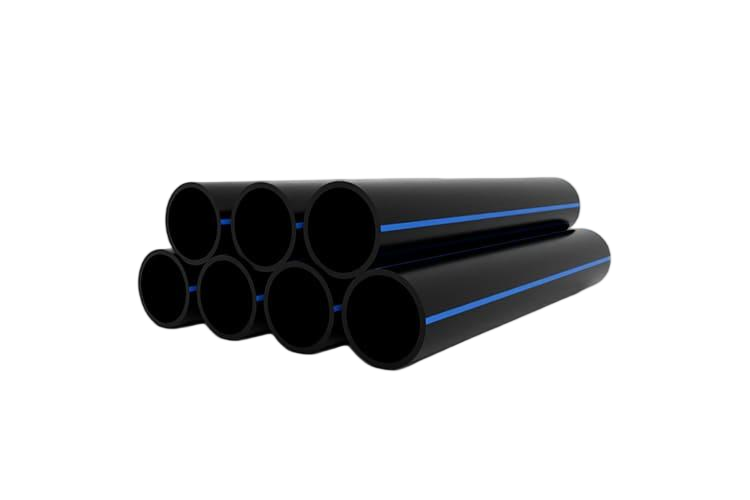
“PE100 SDR11” and “PE4710 DR11” describe almost the same pipe — yet order them from the wrong standard family and you can receive goods whose outside diameter, fittings and pressure rating don't match your project. HDPE pipe is governed by several regional standards systems that use different sizing conventions and different ways of stating pressure. This guide maps them side by side so you can specify, compare and import the right pipe the first time.
Why HDPE pipe standards differ by region
Polyethylene pipe grew up in parallel on different continents, so each market standardised around its own legacy pipe sizing — metric outside diameter in the ISO/European world, inch-based Iron Pipe Size (IPS) and Ductile Iron Pipe Size (DIPS) in North America. On top of that, two different statistical methods evolved for turning a resin's long-term strength into a pressure rating. The pipe is fundamentally the same polymer; the paperwork, dimensions and rating maths are what change.
The five standards families at a glance
The table below is the map: what each standard governs, the region it serves, and how it sizes pipe. Use it to translate a spec written for one market into the equivalent for another.
| Standard | Region | Governs | Sizing |
|---|---|---|---|
| ISO 4427 | International | PE water supply | Metric OD, SDR, PN |
| ISO 4437 | International | PE gas | Metric OD, SDR |
| EN 12201 | Europe (CEN) | PE water (harmonised w/ ISO 4427) | Metric OD, SDR, PN |
| EN 1555 | Europe (CEN) | PE gas | Metric OD, SDR |
| ASTM D3035 | USA | PE pipe ≤ 3″ IPS | IPS (inch), DR, psi |
| ASTM F714 | USA | PE pipe ≥ 4″ (large dia) | IPS / DIPS / metric, DR |
| AWWA C901 | USA municipal | PE potable ≤ 3″ | IPS / CTS, DR, psi |
| AWWA C906 | USA municipal | PE potable 4″–65″ (PE4710) | IPS / DIPS, DR, psi |
| GB/T 13663 | China | PE water (DN20–DN1600) | Metric OD, SDR |
| GB 15558.1 | China | PE gas | Metric OD, SDR |
| NSF 61 / WRAS | US-CAN / UK | Potable-water CONTACT approval | Certification (not dimensional) |
ISO 4427 / 4437 and EN 12201 / 1555 (international + Europe)
ISO 4427 is the international standard for PE water-supply pipe (ISO 4437 covers gas); both size pipe by metric outside diameter and SDR, and rate pressure as PN in bar. EN 12201 is the European (CEN) water standard, harmonised with ISO 4427 — broadly the same dimensions and PN classes, with EU-specific conformity requirements; EN 1555 is its gas counterpart. If you are buying for Europe, the Middle East, Asia, Africa or Australia, you are almost certainly working in this metric / SDR / PN world.
ASTM D3035 vs F714 and AWWA C901 / C906 (USA)
North American PE pipe is specified in inches (IPS or DIPS), by DR (dimension ratio) and pressure class in psi. ASTM D3035 covers the smaller, controlled-OD sizes and ASTM F714 the larger outside-diameter pipe. For municipal potable water, AWWA C901 covers service/distribution pipe up to 3 in and AWWA C906 covers 4 in to 65 in — both built around PE4710 resin.
The practical D3035-vs-F714 split in current editions is roughly ≤3 in (D3035) and ≥4 in / ~110 mm (F714) — though older D3035 editions ran larger, so attribute any hard cut-off to the current edition. F714's latest revision is F714-25. All of these are dimensional/strength standards; US potable jobs still require NSF 61 certification on top.
GB/T 13663 and GB 15558 (China)
China's domestic standards mirror the ISO metric logic: GB/T 13663 (current edition GB/T 13663-2018) governs PE water-supply pipe from DN20 to DN1600 using metric OD and SDR, and GB 15558.1 (GB 15558.1-2015) governs PE gas pipe. Reputable Chinese manufacturers build export pipe to ISO 4427 / EN 12201 / AWWA as required and certify accordingly — but always confirm which standard your order is being produced and marked to.
Sizing systems: metric OD vs IPS / DIPS
ISO, EN and GB name pipe by its metric outside diameter (e.g. 110, 160, 315 mm) with the wall set by SDR. ASTM and AWWA use inch IPS and DIPS, with the wall set by DR (F714 also permits ISO metric). SDR and DR are the same physical ratio — outside diameter divided by minimum wall — but “SDR” denotes the preferred series (11, 17, 21…) while “DR” is the general term that also lists non-preferred values. The number means the same thing; the rating maths attached to it does not.
Pressure ratings: SDR vs DR, PN vs psi, MRS vs HDB
ISO/EN/GB derive the pressure rating from MRS (Minimum Required Strength) via ISO 9080 extrapolation and ISO 12162 classification — PE100 = MRS 10 MPa — divided by a design coefficient (C ≥ 1.25 for water) to give the design stress and PN in bar. ASTM/AWWA derive it from HDB (Hydrostatic Design Basis) per ASTM D2837: PE4710 has HDB 1600 psi, and a 0.63 design factor gives HDS 1000 psi and the psi pressure class. Because the two systems use different design factors, the SAME DR does not give the same rating: a PE100 pipe rates roughly 10–15% higher than a PE4710 pipe at the same DR/SDR (varies with size and temperature).
| System | Designation | Example (SDR/DR 11, PE100/PE4710) |
|---|---|---|
| ISO / EN / GB | PN in bar, via MRS (ISO 9080/12162) | PN16 (16 bar) |
| ASTM / AWWA | Pressure class in psi, via HDB/HDS (D2837) | ≈ 200 psi |
| Difference | Design factor differs (C 1.25 vs DF 0.63) | PE100 rates ~10–15% higher at same DR |
Material grades: PE100 ≈ PE4710
Today's commercial PE4710 generally also meets PE100 — they are frequently the same resin, dual-listed — but the rating systems differ, so never treat a PN class and a psi class as directly interchangeable. The crosswalk below pairs the designations; note that PE4710's “25% higher than old PE3608” figure (from a higher 0.63 design factor) is a different comparison from the “~10–15% PE100 vs PE4710” gap (from the ISO vs ASTM rating maths). Don't conflate the two.
| ISO / EN / GB | US (ASTM / PPI) | Long-term strength |
|---|---|---|
| PE100 | PE4710 | MRS 10 MPa ≈ HDB 1600 psi (DF 0.63) |
| PE80 | PE3608 / PE2708 | MRS 8 MPa ≈ HDB 1250–1600 psi (DF 0.50) |
| PE100-RC | PE4710 (RC-qualified) | MRS 10 MPa + slow-crack-growth resistance |
Testing & QC each standard requires
Behind every standard is a battery of tests that qualify both the resin and the finished pipe. The long-term strength rating itself comes from internal-pressure testing (ISO 1167) extrapolated and classified (ISO 9080 / 12162) or, in the US system, from ASTM D2837 listed via PPI TR-4. Batch and material checks add oxidation induction time, melt flow rate, density, carbon-black content and dispersion, and — for higher grades — slow-crack-growth and rapid-crack-propagation resistance.
| Property / check | Standard |
|---|---|
| Internal pressure (hydrostatic) | ISO 1167 |
| Long-term strength → MRS | ISO 9080 / ISO 12162 (US: ASTM D2837) |
| Oxidation induction time (OIT) | ISO 11357-6 (≈ ≥20 min) |
| Melt flow rate (MFR) | ISO 1133 |
| Carbon black content / dispersion | ISO 6964 / ISO 18553 (~2–2.5%) |
| Slow crack growth (higher grades) | ISO 13479 / ASTM F1473 (PENT) |
Potable-water approvals: NSF 61 / 14 vs WRAS
Dimensional standards govern strength and size, not toxicology — so a pipe can be fully ISO 4427 or ASTM F714 compliant and still be rejected on drinking-water-contact grounds. In the US and Canada that approval is NSF/ANSI/CAN 61 (with NSF/ANSI 14 covering material + performance and NSF 372 lead-free content); in the UK it is WRAS. Specify the contact approval separately from, and in addition to, the base standard.
Which standard should you specify?
Match your market and application to the standard(s) below, then confirm the OD system, pressure basis and potable approval before issuing the order.
| If you are buying… | Specify |
|---|---|
| Water pipe for an EU project | EN 12201 (PE100) + WRAS if UK potable |
| Water pipe, international / Gulf / Asia / Africa / AU | ISO 4427 (PE100) |
| Water pipe, US municipal ≤ 3″ | AWWA C901 (PE4710) + NSF 61 |
| Water pipe, US municipal 4″–65″ | AWWA C906 (PE4710) + NSF 61 |
| US industrial / large PE pipe | ASTM F714 (≥4″) or D3035 (≤3″) + NSF 61 if potable |
| Water pipe in China | GB/T 13663-2018 (PE100) |
| Gas pipe | EN 1555 / ISO 4437 / ASTM D2513 / GB 15558.1 |
Quick decision path
5 costly mistakes when specifying HDPE standards
- Specifying a grade without the standard and system. “PE100 SDR11” and “PE4710 DR11” ship to different OD series and pressure conventions — name the standard, OD system and pressure basis together.
- Cross-system fitting incompatibility. Ordering metric-OD pipe and then IPS/DIPS fittings (or vice versa) leaves joints that won't fuse — a frequent field failure.
- Treating PN (bar) and psi pressure class as directly convertible. The HDS-vs-MRS design-factor difference means the same DR rates ~10–15% apart between ISO and ASTM.
- Forgetting potable-contact certification. ISO 4427 / ASTM F714 don't certify drinking-water safety — US jobs still need NSF 61, UK jobs need WRAS.
- Quoting outdated grades/editions. Calling out legacy PE80/PE3408, or an old D3035 size range, instead of current PE100 / PE4710, GB/T 13663-2018 and AWWA C906-21.
Glossary
- SDR / DR
- Standard Dimension Ratio / Dimension Ratio — outside diameter ÷ minimum wall thickness. Same physical ratio; SDR denotes the preferred series, DR the general term.
- PN (Nominal Pressure)
- Pressure rating in bar at 20 °C over a 50-year basis, used by ISO/EN/GB. PN16 = 16 bar continuous.
- Pressure class (psi)
- The US/AWWA pressure rating in psi, derived from HDB × design factor (HDS). DR11 PE4710 ≈ 200 psi.
- MRS (Minimum Required Strength)
- The ISO long-term strength classification: PE100 = 10 MPa, PE80 = 8 MPa (ISO 9080 / 12162).
- HDB / HDS
- Hydrostatic Design Basis / Stress — the US long-term strength system (ASTM D2837). PE4710 HDB = 1600 psi, HDS = 1000 psi (design factor 0.63).
- IPS / DIPS
- Iron Pipe Size / Ductile Iron Pipe Size — the inch-based North American OD systems. Not interchangeable with metric OD.
References & standards
- [1]ISO — ISO 4427-1 — Plastics piping systems for water supply (PE)
- [2]ASTM International — ASTM F714 — PE plastic pipe (DR-PR) based on outside diameter
- [3]ASTM International — ASTM D3035 — PE plastic pipe (DR-PR) based on controlled outside diameter
- [4]CEN / iTeh — EN 12201-2 — Plastics piping systems for water supply: PE pipes
- [5]Chevron Phillips / PPI — PP-816-TN — PE3608 & PE4710 designation code and pressure rating
- [6]Plastics Pipe Institute (PPI) — TR-55 — historical review of pressure-rating methods for PE pipe
- [7]NSF — NSF/ANSI 14 certification scope (and relationship to NSF/ANSI/CAN 61)
- [8]WRAS — Water Regulations Approval Scheme — approvals directory
Frequently asked questions
Need expert advice on your project?
Our engineering team helps utilities, contractors and EPCs specify the right pipe material and SDR for their project. Get a no-obligation technical consultation.
Talk to an engineerRead next
Explore further
Related applications, material comparisons and country buying guides selected for this topic.