Comparison
HDPE vs Ductile Iron Pipe for Water Mains: An Honest Comparison (2026)
Where each pipe genuinely wins — joints, corrosion, hydraulics, surge and total cost — written without the industry spin from either camp.

Dr. Wei Liu, P.E.
Senior Engineering Manager · Primepoly
Published: Jun 6, 2026
Updated: Jun 6, 2026
13 min read
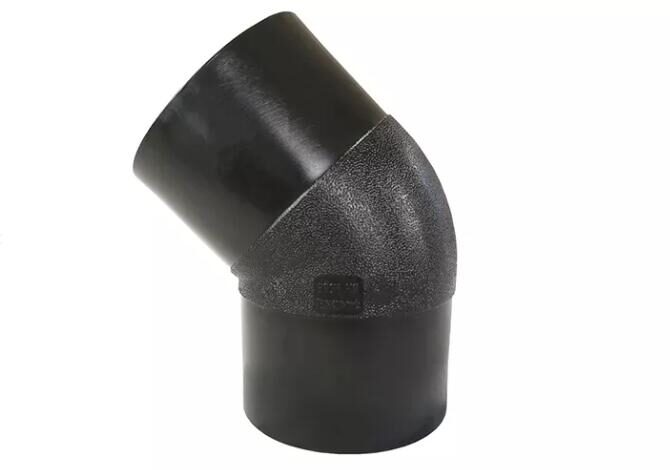
Most HDPE-vs-ductile-iron articles are written by one of two lobbies, and it shows. The iron camp leads with tensile strength and bore size; the polyethylene camp leads with leak-free joints and corrosion immunity. Both are telling the truth — about the metric on which they win. This comparison names every trade-off plainly, including the cases where ductile iron is genuinely the better buy, so you can match the pipe to the project instead of to a brochure.
HDPE vs ductile iron at a glance
The summary table below is the honest version — each row notes which material leads and why, rather than scoring everything for one side.
| Factor | HDPE (PE100/PE4710) | Ductile iron |
|---|---|---|
| Joints | Fused, monolithic, zero-leak | Bell-and-spigot; potential leak paths |
| Corrosion | Inert — none, ever | Needs encasement in aggressive soil |
| Bore (same nominal) | Smaller (thicker wall) | Larger inside diameter |
| Smoothness over life | C ≈ 150, constant | Starts ~140; design lower for age |
| Raw strength | Lower (ductile, flexible) | Much higher tensile & burst |
| Surge / fatigue | Excellent — absorbs transients | Rigid; transients add wall stress |
| Installation | Trenchless, light, long strings | Heavier, more joints, all-weather |
| Fittings ecosystem | Growing, fusion-based | Mature, off-the-shelf |
| Service life | 100+ yrs (no corrosion) | 100+ yrs (if encasement intact) |
Standards & materials
HDPE water main is made to AWWA C906 (4–65 in.), ASTM F714 or ISO 4427, using PE4710 (North America) or PE100 (ISO) resin with a hydrostatic design stress of about 800 psi / 8 MPa. Ductile iron is manufactured to AWWA C151/A21.51, with wall thickness designed to AWWA C150 and a cement-mortar lining to AWWA C104. The crucial difference is what each standard assumes about protection: HDPE needs none, while ductile iron in aggressive soil relies on polyethylene encasement to AWWA C105.
Joints: fused-monolithic vs bell-and-spigot
This is HDPE’s flagship advantage. Butt-fusion and electrofusion produce a homogeneous joint that is as strong as — or stronger than — the pipe wall itself, fully self-restrained and with zero allowable leakage. A fused main is effectively a single continuous pipe, eliminating a potential leak path every 18–20 ft.
Ductile iron uses discrete push-on, mechanical or restrained joints. They are proven and fast to assemble, but each gasketed bell is a potential leak or pull-out point, and restrained joints add cost. Industry leakage figures are worth reading critically: the often-quoted “10–20 % allowable leakage” for gasketed systems comes from polyethylene-industry marketing, so treat it as an advocacy claim. The neutral numbers are AWWA’s sub-10 % non-revenue-water target and the US EPA’s estimate of roughly 16 % average system water loss.
Source: PPI 2018, AWWA M55 (2020)
Corrosion: inertness vs encasement
HDPE is chemically inert. It does not corrode, tuberculate or graphitise, and it is immune to acidic soils, salt and stray electrical current. Ductile iron, by contrast, must be protected in aggressive ground — typically with V-Bio polyethylene encasement and sometimes cathodic protection. That protection adds roughly 1.5–3 % to installed cost by diameter, depends on careful field installation to work, and is the single strongest honest argument in HDPE’s favour for corrosive sites.
Hydraulics: bore vs smoothness
Ductile iron wins on bore. For the same nominal size it has a larger inside diameter, because HDPE’s pressure-rated wall is thicker and eats into the bore. Depending on the HDPE DR you choose, the inside-diameter penalty at a given nominal size can be significant — which is why a like-for-like HDPE main often has to be sized up one step to match flow.
HDPE wins on smoothness that lasts. Its Hazen-Williams C factor is about 150 and stays there for life because the bore never tuberculates. Cement-lined ductile iron starts near 140; the iron industry argues a sound lining holds that value for decades, while the PVC industry argues real systems drift lower. The fair reading: an intact cement lining holds roughly 140, but engineers commonly design aged iron at C ≈ 100–110 for margin. Over a multi-decade horizon HDPE’s constant smoothness narrows or reverses iron’s bore advantage — so run the real numbers with actual inside diameter and a design-life C factor, not nominal size.
| Aspect | HDPE (PE100) | Ductile iron |
|---|---|---|
| Inside diameter (same nominal) | Smaller — thicker pressure wall | Larger — thinner wall |
| New-pipe C factor | ~150 | ~140 (cement-lined) |
| C factor over decades | Holds ~150 (no tuberculation) | Design ~100–110 for aging margin |
| Net flow outcome | Smoothness offsets smaller bore over life | Bore advantage erodes as lining ages |
Pressure, surge & fatigue
Ductile iron has the higher raw strength — roughly an order of magnitude more tensile and burst capacity — and that is where it genuinely leads, for very high static pressure. HDPE answers with ductility: it tolerates recurring surge to about 1.5× and occasional surge to about 2× its pressure class without derating, and it shrugs off the pressure-transient fatigue that stresses rigid pipe. For systems with frequent pump cycling or water hammer, that flexibility is worth more than peak strength.
| Property | HDPE (PE4710) | Ductile iron |
|---|---|---|
| Pressure classes | DR11 = 200, DR13.5 = 160, DR17 = 125 psi | Classes 150 / 200 / 250 / 300 / 350 psi |
| Recurring surge | To ~1.5× class, no derating | Adds to wall stress |
| Occasional surge | To ~2× class | Adds to wall stress |
| Fatigue / cycling | Excellent — viscoelastic | Less forgiving of repeated surge |
| Raw burst / tensile | Lower | Much higher — iron’s genuine win |
Installation: trenchless, weight & crews
HDPE is trenchless-native: it can be installed by horizontal directional drilling, pipe bursting and slip-lining, and fused into long strings pulled in a single shot. At roughly one-seventh the density of iron it is far lighter to handle. The honest caveat the iron camp raises fairly: fusion needs trained, certified crews, the right machines and reasonable weather, and HDD pulls may want a relaxation period before pressurisation. Ductile iron ships in 18–20 ft lengths and is heavier with more joints, but installs in any weather with a simple, widely available jointing skillset.
Cost & total cost of ownership
Material price often favours HDPE, while ductile iron has the more mature fittings and tapping ecosystem. On installed cost HDPE frequently wins — especially trenchless, where it avoids open trench, surface restoration and most joints. On lifetime cost the iron camp counters with pumping energy from its larger bore (vendor models put the difference in the hundreds of thousands of dollars per mile over decades, contingent on the HDPE size assumed). The defensible approach is to compare installed-plus-operating cost for your specific install method and pumping profile, ideally citing an independent life-cycle study rather than either lobby’s figures.
Where ductile iron is still the right call
- Very high pressure or heavy surge beyond HDPE’s standard pressure classes — iron’s strength margin earns its place.
- Shallow cover under heavy traffic, point loads, or rock/ledge bedding, where a rigid pipe resists localised loading that HDPE needs careful bedding to handle.
- Maximum bore for the same nominal size, where pumping energy over the asset life dominates the economics.
- Mature fittings and tapping: valves, hydrants, tees and restrained joints are all off-the-shelf and familiar to every crew.
- Legacy fire-flow networks designed around iron’s inside diameter and fitting dimensions.
- Projects with no access to a certified fusion crew or data-logging QA — unless you hire one in, which is often worth it.
How to choose: a decision path
Work through five questions in order — soil, then install method, then pressure/loading, then crew availability, then total cost. The first clear answer usually settles it.
The verdict
For most new potable water mains in normal-to-aggressive soils — particularly with trenchless crossings or leak-reduction goals — HDPE PE100 is the lower-risk, lower-lifetime-cost choice, because corrosion and joint leakage are the two failure modes that actually cap a main’s life and HDPE removes both. Ductile iron remains the right answer for very high pressure, point-load and traffic-load conditions, and where its mature fittings ecosystem or all-weather installability outweigh HDPE’s advantages. Decide per project, on installed total cost and actual inside diameter — not on nominal size or a single headline number.
Glossary
- Butt fusion / electrofusion
- Thermal welding methods that join HDPE end-to-end or via fittings, producing a monolithic, fully restrained, leak-free joint stronger than the parent pipe.
- Polyethylene encasement (V-Bio)
- A loose polyethylene film wrap (AWWA C105) used to protect ductile iron from corrosive soils; effectiveness depends on correct field installation.
- Hazen-Williams C factor
- A measure of internal pipe smoothness used in flow calculations. Higher is smoother; HDPE holds ~150 for life, while iron is designed lower over time for tuberculation.
- Non-revenue water (NRW)
- Treated water lost between production and billing, largely through leaks. AWWA targets under 10 %; leak-free fusion joints make HDPE strong on NRW.
- Restrained joint
- A ductile-iron joint designed to resist thrust/pull-out without external thrust blocks. Adds cost; HDPE fusion is inherently restrained.
References & standards
- [1]AWWA — ANSI/AWWA C906 — Polyethylene (PE) pressure pipe and fittings, 4–65 in.
- [2]Plastics Pipe Institute (PPI) — Occasional and recurring surge design considerations for HDPE pipe
- [3]DIPRA — Material comparison: ductile iron pipe vs HDPE
- [4]DIPRA — Hydraulic analysis of ductile iron pipe
- [5]Uni-Bell PVC Pipe Association — Ductile iron pipe’s Hazen-Williams flow coefficient declines over time
- [6]DIPRA — Corrosion control — polyethylene encasement design guidance
- [7]McWane Ductile — V-Bio or cathodic protection: an honest comparison
- [8]Plastics Pipe Institute (PPI) — TN-27 — frequently asked questions: HDPE pipe for water
Frequently asked questions
Need expert advice on your project?
Our engineering team helps utilities, contractors and EPCs specify the right pipe material and SDR for their project. Get a no-obligation technical consultation.
Talk to an engineerRead next
Explore further
Related applications, material comparisons and country buying guides selected for this topic.
Applications
HDPE pipe for water supply — trunk mains & distribution
Applications
HDPE pipe for fire-protection mains — AWWA C906 grade
Comparisons
HDPE vs Ductile Iron for Water Mains — The Procurement Decision
Comparisons
HDPE vs PVC for Water Supply Mains — Which Should You Specify?
Markets
Nigeria
Markets