Comparison
HDPE vs PEX Pipe: Which to Use Where (2026)
One is fusible thermoplastic for buried mains; the other is cross-linked tubing for indoor hot water. They're cousins that rarely do the same job.

Dr. Wei Liu, P.E.
Senior Engineering Manager · Primepoly
Published: Jun 8, 2026
Updated: Jun 8, 2026
11 min read
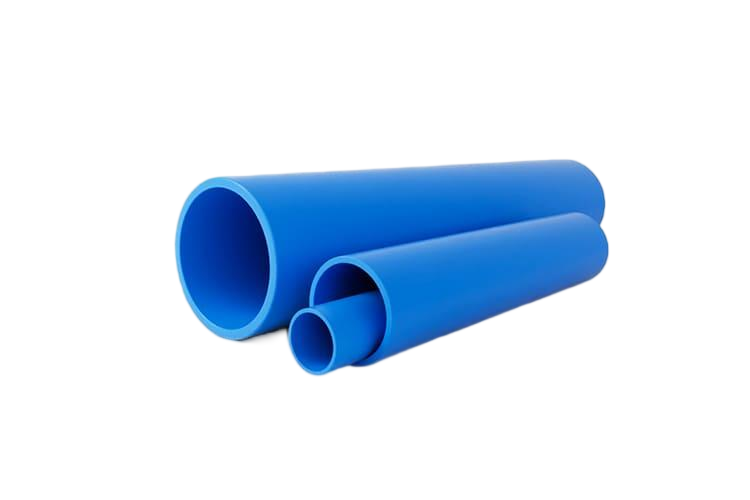
HDPE and PEX are both polyethylene — PEX is literally made from PE base resin — yet they do almost opposite jobs. HDPE is the fusible thermoplastic for buried water and gas mains, service lines and large-diameter pressure pipe. PEX is cross-linked PE for indoor hot-and-cold plumbing and radiant floor heating, joined by mechanical fittings. The cross-linking is the whole story: it gives PEX hot-water capability and shape memory, but it also means PEX can't be heat-fused or recycled the way HDPE can. This is a "which to use where," not a contest.
HDPE vs PEX at a glance
The table maps the two across the properties that matter. Read it as a division of labour: HDPE on burial, size, gas and fusion; PEX on hot water, flexibility and indoor plumbing.
| Dimension | HDPE (PE100) | PEX |
|---|---|---|
| Primary job | Buried mains, water & gas distribution, service lines, irrigation, sewer, large diameter | Indoor hot & cold plumbing; radiant / hydronic heating |
| Water temperature | Cold / ambient; derates sharply with heat | Rated for hot water (~93 °C at reduced pressure) |
| Joining | Heat fusion (butt / electrofusion) — monolithic, restrained | Mechanical fittings (crimp / clamp / expansion / push) |
| Material class | Thermoplastic — fusible, recyclable | Cross-linked — not fusible, not melt-recyclable |
| Size range | ~20 mm to 1600 mm+ | Small bore (3/8 in to ~2–3 in) |
| Form / flexibility | Coilable (small) or rigid (large) | Highly flexible, shape memory (PEX-a) |
| Freeze tolerance | Can crack if frozen full | Expands and recovers — freeze-resistant |
What they are: thermoplastic HDPE vs cross-linked PEX
The defining difference is molecular. HDPE is a thermoplastic — its chains aren't chemically bonded to each other, so it can be melted and re-formed, which is exactly why it can be heat-fused into monolithic joints and recycled. PEX is cross-linked polyethylene: chemical bonds tie the chains into a network, giving it higher temperature capability and elastic shape memory but making it thermoset-like — it cannot be heat-fused, solvent-welded or melt-recycled. Every PEX joint is therefore a mechanical fitting, and every HDPE joint can be a fusion weld.
Cross-linking: PEX-a, -b & -c
PEX comes in three grades by how it's cross-linked. PEX-a (peroxide / Engel method) cross-links in the melt for the highest, most uniform cross-link density, the best flexibility and shape memory (kinks heal with heat), and usually cold-expansion fittings. PEX-b (silane / moisture-cure) cross-links after extrusion, is stiffer and cheaper, and typically uses crimp or clamp rings — it's the most common in North America. PEX-c (electron-beam) sits between the two with no chemical by-products. All three share the trade-off: hot-water capability and shape memory, but no fusibility or recyclability.
Temperature & pressure: the decisive difference
Temperature is what separates the two materials' jobs. PEX is rated for hot water — a standard PEX tubing rating is 160 psi at 73 °F, 100 psi at 180 °F and 80 psi at 200 °F (about 93 °C), so its pressure capacity falls as it heats but it keeps working hot. HDPE is a cold-water and ambient material whose pressure rating is referenced at 20 °C and derates sharply with heat, so it isn't used for sustained hot water. The chart contrasts their hot-water service range.
How they're joined: fusion vs mechanical fittings
HDPE is heat-fused — butt fusion and electrofusion — into a continuous, fully restrained, leak-free line ideal for buried mains and large diameters, with no joint to pull out and no thrust blocks. PEX cannot be fused at all; every connection is a mechanical fitting (crimp, cinch/clamp, cold-expansion or push-fit), which is fast and tool-light for the many small joints of indoor plumbing but means each joint is a discrete fitting. The two joining philosophies match their two worlds: jointless buried strings versus flexible fitted indoor runs.
Durability: freeze, UV, chlorine & recyclability
Several durability factors distinguish them. PEX is very freeze-tolerant — it expands and recovers — and is the indoor choice in freeze-prone runs. On UV, the gap is large: PEX is sensitive, with exposure limits measured in weeks to months, while carbon-black HDPE tolerates sun for years. Both potable grades address hot-chlorinated-water oxidation. And recyclability differs by definition: thermoplastic HDPE can be reprocessed, while cross-linked PEX cannot be melt-recycled. For closed-loop heating, PEX needs an oxygen-barrier (EVOH) layer that cold buried HDPE never requires.
The overlap zone: the buried service line
There's one place the two genuinely overlap: the small buried water service line from the street main to a building. HDPE (to AWWA C901) is the traditional choice, but PEX is also code-accepted for underground water service in many jurisdictions. So at that small service-line scale, either can be valid. The distribution and transmission main, however, is always HDPE — the size, the fusion and the pressure are all out of PEX's range. Competitors often blur this; the honest line is "service line: either; main: always HDPE."
Standards & certifications
The two materials sit under separate standards. HDPE water pipe is made to ISO 4427, EN 12201 or AWWA C901/C906 (with ASTM F714 / D3035 in North America), and gas pipe to ASTM D2513. PEX tubing is made to ASTM F876, with ASTM F877 for the hot-and-cold system and ISO 15875 internationally. For potable use, both also carry the drinking-water contact certification (such as NSF/ANSI 61) on top of the dimensional standard.
Which to use where
Match the material to the job — buried vs indoor, cold vs hot, large vs small. The path below resolves nearly every case.
5 common mistakes
- Specifying PEX for buried mains or large diameter — that's HDPE's domain (fusion, size, pressure); PEX is small-bore building tubing.
- Using HDPE for indoor hot water or radiant heat — HDPE derates with heat; PEX is the hot-water and heating material.
- Assuming PEX can be heat-fused or solvent-welded — it can't; cross-linking is irreversible, so every PEX joint is a mechanical fitting.
- Leaving PEX in sunlight — its UV limit is weeks to months, while carbon-black HDPE tolerates sun for years.
- Ignoring PEX's temperature-pressure derating — sizing to its cold rating when it runs hot overstresses it (it drops from 160 to 80 psi at 200 °F).
Glossary
- PEX (cross-linked PE)
- Polyethylene whose chains are chemically cross-linked, giving hot-water capability and shape memory — but it can't be fused or melt-recycled.
- PEX-a / -b / -c
- The three cross-linking methods (peroxide / silane / electron-beam), differing in cross-link density, flexibility and the fittings used.
- Thermoplastic vs thermoset
- HDPE is thermoplastic (meltable, fusible, recyclable); cross-linked PEX behaves like a thermoset (none of those).
- Cold-expansion fitting
- A PEX-a joining method that expands the tube over a fitting and lets its shape memory shrink back to seal.
- Oxygen-barrier PEX
- PEX with an EVOH layer that blocks oxygen ingress in closed-loop heating, protecting metal boilers and pumps from corrosion.
- Service line
- The small buried pipe from the street main to a building — the one place HDPE and PEX genuinely overlap.
References & standards
- [1]ASTM International — ASTM F876 — crosslinked polyethylene (PEX) tubing
- [2]ASTM International — ASTM F877 — PEX hot- & cold-water distribution systems
- [3]Plastics Pipe Institute (PPI) — TR-56 — history of PEX & ASTM F876
- [4]Plastics Pipe Institute (PPI) — UV resistance of PEX tubing
- [5]NAHB — Builders should be aware of UV resistance of plastic tubing
- [6]SharkBite — The differences between PEX-a, -b and -c
- [7]ISO — ISO 4427-1 — PE pipes for water supply (general)
- [8]Uponor — hePEX oxygen-barrier PEX (EVOH, DIN 4726)
Frequently asked questions
Need expert advice on your project?
Our engineering team helps utilities, contractors and EPCs specify the right pipe material and SDR for their project. Get a no-obligation technical consultation.
Talk to an engineerRead next
Explore further
Related applications, material comparisons and country buying guides selected for this topic.