Comparison
HDPE vs Corrugated Metal Pipe (CMP) for Culverts & Storm Drainage: An Honest Comparison (2026)
CMP's service life is decided by the soil and water chemistry; HDPE's isn't, because it doesn't corrode. So the honest way to choose isn't a brand argument — it's the same pH and resistivity test a DOT engineer runs before specifying either one.

Dr. Wei Liu, P.E.
Senior Engineering Manager · Primepoly
Published: Jun 8, 2026
Updated: Jun 8, 2026
14 min read
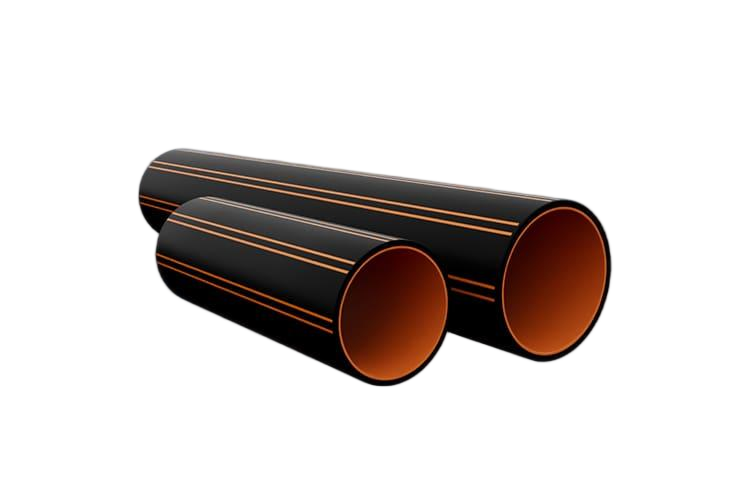
Comparing HDPE and corrugated metal pipe for a culvert usually means reading two partisan pitches — the metal-pipe association on one side, the plastics makers on the other. Here's the balanced version from an HDPE manufacturer that will give CMP its real due. The honest framing isn't 'which material is better' in the abstract; it's that CMP's lifespan is decided by the site's soil and water chemistry, while HDPE's isn't, because it doesn't corrode at all. So the right way to choose is the same one a highway engineer uses: test the pH and resistivity of the site, and let that — plus the required span and a couple of other factors — point you to the material. This guide shows how.
What each pipe is
Dual-wall corrugated HDPE has a smooth interior bore for hydraulics and a corrugated exterior for stiffness, made to AASHTO M294 / ASTM F2306 in sizes to 60 inches (the ADS brand is N-12). Corrugated metal pipe is corrugated steel sheet with a protective metallic coating — galvanised (zinc), aluminised Type 2, or 55% aluminium-zinc — to AASHTO M36 / ASTM A760, or polymer-laminated to A762; corrugated aluminium pipe is AASHTO M196. Both are 'flexible' pipes structurally — they carry load by interacting with compacted backfill, not by sheer wall strength — so both depend on good installation. The defining material difference is what happens over decades: the metal corrodes and the polyethylene doesn't.
Service life & corrosion: the headline difference
Service life is where the two part ways, and the chart shows it. CMP fails by corrosion — usually at the invert, which corrodes first as water and bedload abrade the coating — and how long that takes depends heavily on the environment. Plain galvanised CMP runs roughly 25–50 years (the low end in aggressive or abrasive sites), aluminised Type 2 about 75 years, and polymer-coated longer. HDPE, by contrast, doesn't corrode at all: it's chemically inert, so its ~75–100-year service life doesn't depend on the soil and water chemistry the way CMP's does (ADS N-12 holds a 100-year service-life approval). The honest point cuts both ways — in favourable chemistry, aluminised or polymer CMP can match HDPE; in aggressive chemistry, HDPE pulls far ahead.
Source: FHWA / NCSPA / DOT service-life data
Let the site decide: the pH & resistivity test DOTs run
This is the part the partisan pages skip, and it's the most useful thing in this article. Highway departments don't choose culvert material by brand — they test the site. They measure the soil and water pH and electrical resistivity, and CMP is only qualified as 'non-corrosive' within a window (broadly pH 5–9 and resistivity at or above about 1,500–2,000 ohm-cm; chlorides and sulfates make it worse). Outside that window — acidic soils, soft or saline water, low resistivity, coastal sites — galvanised CMP can fail in 20–30 years. HDPE has no such gate: being chemically inert, it isn't governed by pH or resistivity at all, which is precisely why it's specified where the chemistry is unfavourable. So the neutral decision rule is: run the pH/resistivity test, and if the site is outside the CMP window, HDPE is the durable answer.
| Property | HDPE (dual-wall) | CMP (galvanised / aluminised) |
|---|---|---|
| Service life | ~75–100 yr, chemistry-independent (corrosion-immune) | ~25–50 yr galvanised; ~75 yr aluminised — within the pH/resistivity window |
| Corrosion | None (chemically inert) | Invert corrodes first; pH/resistivity/chlorides govern |
| Hydraulics (Manning's n) | ~0.012 (smooth bore) | ~0.024 standard corrugated (≈0.012 spiral-rib) |
| Abrasion | Resists bedload abrasion (no coating to lose) | Bedload strips the invert coating → corrosion |
| Weight / handling | Very light, often hand-placed, 20-ft sticks | Light vs concrete, but metal |
| Joints | Gasketed bell-and-spigot — soil-tight or watertight | Banded couplers — generally less watertight |
| Max size / span | To ~60 in. (1500 mm) | Round to large; structural plate to ~80 ft span |
| Exposed ends (UV/fire) | Needs UV/headwall; combustible | Metal — no UV/fire degradation |
Hydraulics: smooth bore vs corrugations
Hydraulically, the smooth interior of dual-wall HDPE is a real advantage over standard corrugated metal. HDPE's Manning's roughness is about 0.012, while standard corrugated CMP is around 0.024–0.027 — roughly twice as rough — so an HDPE pipe carries significantly more flow at the same diameter and slope, often letting you drop a pipe size. There's an honest caveat worth stating, though: spiral-rib steel pipe and smooth-lined CMP achieve a Manning's n of about 0.012 too, matching HDPE — so the hydraulic gap is really between HDPE and standard corrugated CMP, not all metal pipe. The glance table above sets the comparison out, and this is one row where the answer depends on which CMP you're comparing against.
Where CMP genuinely wins: large spans & exposed ends
An honest comparison has to credit where CMP genuinely beats HDPE, and there are real cases. The biggest is size: structural-plate CMP — bolted corrugated plates — builds culverts, arches and small bridges with spans of 26 feet, 50 feet, and up to around 80 feet, far beyond HDPE's roughly 60-inch ceiling, so for a large culvert or arch span CMP (or concrete) is simply the material that goes that big. CMP also wins at exposed ends: metal doesn't ignite or degrade in sunlight, whereas an exposed HDPE end needs UV-stabilisation or a headwall and isn't suited to fire-prone locations. And in some markets and large sizes CMP can have a lower upfront material cost, with crews familiar with installing it. Outside those cases, HDPE wins most ordinary culvert and storm-drain duties — but say the span and exposed-end wins plainly.
How to choose: a decision path
The choice resolves on the site, the span and the exposure rather than a brand preference. The path below walks it — and it starts, as the engineers do, with the pH/resistivity test.
5 myths & specification mistakes
- "Metal is automatically stronger and longer-lasting" — only in the right chemistry; in acidic, saline or low-resistivity sites galvanised CMP can fail in 20–30 years.
- "All CMP is hydraulically rough" — spiral-rib and smooth-lined CMP match HDPE's n ≈ 0.012; the roughness gap is vs standard corrugated CMP.
- "HDPE is too flimsy structurally" — as a flexible pipe with proper compacted backfill it carries highway loads at standard cover; installation governs both materials.
- "HDPE can't be made watertight" — gasketed bell-and-spigot watertight joints are pressure-tested and are often tighter than CMP coupling bands.
- "One material is always right" — the site's pH/resistivity, abrasion, required span and exposed ends decide; test before you specify.
Glossary
- Dual-wall HDPE
- Corrugated PE pipe with a smooth interior (hydraulics) and corrugated exterior (stiffness), to AASHTO M294 — e.g. N-12.
- CMP (corrugated metal pipe)
- Corrugated steel (galvanised / aluminised) or aluminium pipe for culverts; corrosion- and abrasion-limited service life.
- pH & resistivity window
- The soil/water chemistry range (≈pH 5–9, resistivity ≥1,500 ohm-cm) within which CMP is qualified as non-corrosive; HDPE has no such gate.
- Manning's n
- The roughness coefficient; HDPE ≈ 0.012, standard corrugated CMP ≈ 0.024 (but spiral-rib CMP ≈ 0.012).
- Aluminised Type 2
- An aluminium-coated steel CMP with ~3.5× the service life of galvanised — ~75 years within the pH/resistivity window.
- Structural plate
- Bolted corrugated metal plates forming large culverts and arches to ~80 ft span — CMP's clearest advantage over HDPE.
References & standards
- [1]NCSPA — Service-life selection guide (CMP coatings & FHWA methodology)
- [2]Contech — Why aluminised is better than galvanised for culvert service life
- [3]FHWA — Durability of drainage pipe (service-life research)
- [4]Caltrans — AltPipe — alternate-pipe selection by pH & resistivity
- [5]ADS — HDPE N-12 pipe — 100-year service-life approval
- [6]Contech — Structural-plate SUPER-SPAN / SUPER-PLATE (large spans)
- [7]Colorado DOT — Corrosion/abrasion guidelines for culvert pipe material selection (neutral)
Frequently asked questions
Need expert advice on your project?
Our engineering team helps utilities, contractors and EPCs specify the right pipe material and SDR for their project. Get a no-obligation technical consultation.
Talk to an engineerRead next
13 min read
HDPE Corrugated & Double-Wall Pipe for Drainage, Stormwater & Culverts (2026)
13 min read
HDPE vs Concrete Pipe for Drainage, Sewer & Culverts: An Honest Comparison (2026)
14 min read
HDPE Pipe for Agricultural Subsurface (Tile) Drainage & Land Drainage (2026)
14 min read
HDPE Pipe for Stormwater Detention, Retention & Infiltration Systems (2026)
12 min read
How Long Do HDPE Pipes Last? Service Life, Lifespan & Degradation Guide (2026)
Explore further
Related applications, material comparisons and country buying guides selected for this topic.