Guide
HDPE Fusion Quality Assurance: Operator Qualification, Procedure Qualification & Joint Records (2026)
A good-looking fusion bead is not proof of a good joint. A cold joint can pass a visual check and a short pressure test, then fail years later — which is why QA is a chain, not a single inspection.

Dr. Wei Liu, P.E.
Senior Engineering Manager · Primepoly
Published: Jun 8, 2026
Updated: Jun 8, 2026
14 min read
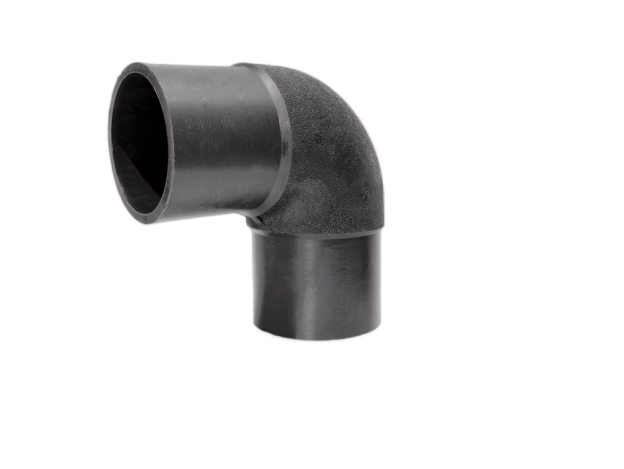
A fused HDPE joint is, when made right, as strong as the pipe itself and good for the life of the line. The danger is the joint that looks right but isn't. A cold or under-fused joint can have a textbook-looking bead, pass a visual inspection, and even survive a short hydrostatic pressure test — then fail years later under fatigue or slow crack growth, buried and out of reach. That's why fusion quality assurance can't rest on any single check. It's a chain: a qualified procedure, made by a qualified operator on calibrated equipment, recorded by a data logger, visually inspected, verified by sampled destructive testing, and fully traceable. This guide is about that QA framework — the management of fusion quality, not the hands-on technique.
Why a good-looking joint isn't proof
The single most important idea in fusion QA is that appearance lies. Heat-fusion makes a joint by melting two pipe ends and pressing them together, and if the heat, pressure, timing or cleanliness is wrong the result can be a cold joint or a lack-of-fusion plane that has almost no long-term strength — yet still produces a normal-looking double rollback bead. Worse, such a joint can pass a visual inspection and a short pressure test, because those don't load it the way decades of service do. It then fails later under fatigue or slow crack growth, by which time the pipe is buried. Non-destructive inspection of fusion joints is notoriously poor at catching lack-of-fusion, which is precisely why the industry relies on a layered QA chain rather than after-the-fact inspection.
The HDPE fusion QA chain
Think of fusion quality as a chain of seven interlocking elements, summarised in the table. Each one closes a gap the others can't: the qualified procedure defines the right parameters; the qualified operator can execute them; calibrated equipment delivers them accurately; the data logger proves they were followed on each joint; visual inspection catches gross defects; sampled destructive testing catches the cold joints that look fine; and traceability ties any suspect joint back to its operator, machine and parameters. The point of the framework is that no single element is sufficient — a logged joint by an unqualified operator, or a qualified operator with no record, both leave a hole. The standards column shows what governs each link.
| # | Element | What it does | Governing standard |
|---|---|---|---|
| 1 | Qualified procedure | Validated parameters by size/wall/material | ASTM F2620; PPI TR-33; ISO 21307 |
| 2 | Qualified operator | Trained & tested to make sound joints | ASTM F3190; 49 CFR 192.285 (gas) |
| 3 | Calibrated equipment | Accurate heater temp & fusion pressure | Pyrometer / gauge calibration; MAB forms |
| 4 | Data logging | Per-joint record of parameters used | ASTM F3124 |
| 5 | Visual inspection | Bead symmetry, double rollback, v-groove | ASTM F2620 bead criteria |
| 6 | Sampled destructive test | Bend-back / tensile on sample joints | At procedure & operator qualification |
| 7 | Traceability | Joint → operator, machine, parameters | F3124 + MAB fusion-reporting forms |
Qualified procedures: the WPS equivalent (F2620, TR-33, ISO 21307)
The parameter set — heater plate temperature, heat-soak time, fusion pressure and cooling time, by pipe size and wall — must be a qualified procedure, not improvised on the day. In North America the generic, ANSI-accredited procedure is ASTM F2620 (heater plate around 400–450 °F / 204–232 °C, interfacial pressure roughly 60–90 psi, and cooling about 11 minutes per inch of wall under pressure), which grew out of and formalised PPI's generic procedure TR-33. The international counterpart is ISO 21307, which defines the butt-fusion procedures and the quality assessment of the finished joint. The useful mental model borrows from welding: F2620 / TR-33 / ISO 21307 is the WPS (the qualified procedure), the operator's qualification is the welder performance qualification, and the data log is the as-built weld record.
Operator qualification: ASTM F3190 vs the gas-code rule
An operator must be trained and tested before fusing in the field. ASTM F3190 is the standard practice for heat-fusion-equipment operator qualification on PE (and PA) pipe: it requires training plus a tested, evaluated joint (visual and bend-back/destructive) before an operator earns a qualification card, and it requires them to be qualified to an approved procedure. Two limits matter — F3190 qualification is machine-specific (one manufacturer's machine, or a size range that works the same way) and does not cover electrofusion, which is qualified separately. Re-qualification is where people get confused: training credentials are commonly valid for about two years, but the gas pipeline code (49 CFR 192) is stricter, requiring re-qualification roughly annually — at an interval not exceeding 15 months — and immediately after a production joint fails testing. Apply the gas rule on gas work; apply F3190 (and the project spec) elsewhere.
Data logging & the traceable joint record (ASTM F3124)
Data logging turns "trust me" into a record. ASTM F3124 is the standard practice for data-recording the procedure used to make heat butt-fusion joints: the logger captures the heater temperature, and the pressures and times for the heating, fusion and cooling steps, and produces a time-versus-pressure graph that can be compared against the qualified procedure to prove the parameters were actually observed on that joint. It applies to hydraulic butt-fusion machines. Modern field devices add the operator ID, machine ID, GPS location, pipe details and pressure-test data, and sync to the cloud — so each joint becomes an auditable record. On large water and utility projects, fusion data logging is now best practice and frequently a contractual requirement, not an optional extra.
| Captured | Why it matters |
|---|---|
| Heater plate temperature | Confirms the melt was at the qualified temperature |
| Heating / fusion / cool times & pressures | The time-vs-pressure graph proves the procedure was followed |
| Operator ID & machine ID | Ties the joint to who made it and on what |
| GPS location & date/time | Builds the joint map / as-built record |
| Pipe details (size, SDR, material) | Confirms the right procedure was used |
| Pressure-test result | Links commissioning back to the joint record |
Inspection & acceptance: visual + sampled destructive
Acceptance combines two checks, because neither is enough alone. Visual inspection assesses the bead against the F2620 criteria — a uniform double rollback bead, symmetry between the two halves, and a v-groove between the beads that doesn't dip below the pipe surface — and rejects gross defects. But because cold joints pass visual, the program also takes sampled destructive tests: bend-back and tensile tests on joints made at procedure and operator qualification, and at a defined sampling frequency during production (first joint, then a per-operator, per-shift or percentage basis set by the project spec — there's no universal fixed number). The data-logger graph for each joint backs both up. On municipal and utility jobs, an owner's engineer or third-party fusion QA/QC inspector typically witnesses the hold points and the destructive samples.
Building a fusion QA program: roles, hold points & third-party inspection
A working fusion QA program assigns roles and sets hold points. The operator self-records via the data logger; an owner's engineer or independent fusion QA/QC inspector verifies the chain. The hold points are the natural checkpoints: incoming material QC (right pipe, grade and condition), tooling and equipment calibration verification, an operator-credential check before work starts, a first or trial joint, and periodic destructive samples through production. PPI's Municipal Advisory Board (MAB) publishes inspection guidelines and standard field forms for exactly these — incoming material, tooling/equipment qualification, personnel qualification, fusion reporting and pressure testing. (Exact MAB document numbers vary by edition; confirm against the current PPI/MAB index.) Some contractors also frame the system in ASME Section IX language — FPS, PQR and FPQ — which maps neatly onto the WPS/PQR analogy.
Fusion QA documentation checklist
Pulling the chain into a record-keeping checklist — the documents a complete fusion QA package should contain:
- The qualified fusion procedure (F2620 / TR-33 / ISO 21307) referenced for each pipe size, wall and material.
- Operator qualification records (ASTM F3190, plus 49 CFR 192 currency for gas) — valid and machine-appropriate for each fuser on site.
- Equipment calibration certificates — heater pyrometer and hydraulic gauges, in date.
- Incoming material QC records — pipe grade, dimensions, condition and batch traceability.
- A data-logger record (ASTM F3124) for every joint, with the time-versus-pressure graph against the qualified procedure.
- A joint log / joint map — each joint numbered and tied to operator, machine, parameters, date, ambient temperature and location.
- Inspection and test records — visual acceptance to F2620 bead criteria, sampled destructive (bend-back/tensile) results, and pressure-test results.
5 common fusion QA mistakes
- No operator qualification — letting uncertified personnel fuse production joints.
- No qualified procedure — improvising heater temperature, pressure and cool time instead of a validated F2620 / TR-33 / ISO 21307 procedure.
- No data logging — keeping no objective per-joint record of the parameters actually used.
- Visual-only acceptance — relying on bead appearance with no qualified procedure and no sampled destructive testing (cold joints pass visual).
- No joint traceability — being unable to tie a suspect joint back to its operator, machine and parameters when a problem surfaces.
Glossary
- Qualified procedure (WPS equivalent)
- A validated set of fusion parameters by size/wall/material — ASTM F2620, PPI TR-33 or ISO 21307; the basis every joint is made to.
- Operator qualification (ASTM F3190)
- A trained-and-tested credential to make sound fusion joints on a specific machine type; for gas, 49 CFR 192 adds annual re-qualification.
- Data logging (ASTM F3124)
- Recording each joint's heater temperature, pressures and times as a time-versus-pressure graph proving the procedure was followed.
- Cold joint / lack of fusion
- An under-fused joint with little long-term strength that can still pass visual inspection and a short pressure test.
- Double rollback bead
- The twin uniform melt beads of a sound butt-fusion joint; assessed for symmetry and v-groove against the F2620 visual criteria.
- Joint traceability
- Numbering and logging each joint so it can be tied back to its operator, machine, parameters, time and location.
References & standards
- [1]ASTM International — ASTM F2620 — heat fusion joining of PE pipe & fittings
- [2]ASTM International — ASTM F3190 — heat-fusion-equipment operator qualification (PE/PA)
- [3]ASTM International — ASTM F3124 — data recording for heat butt-fusion joints
- [4]Plastics Pipe Institute (PPI) — TR-33 / TN-66 — generic butt-fusion joining procedure & its history
- [5]ISO — ISO 21307 — butt-fusion jointing procedures for PE piping systems
- [6]eCFR / PHMSA — 49 CFR Part 192, Subpart F (joining) & Subpart N (personnel qualification)
- [7]Plastics Pipe Institute (PPI) — Municipal Advisory Board (MAB) — HDPE inspection guidelines & field forms
- [8]McElroy — Operator qualification & requalification (per ASTM F3190)
Frequently asked questions
Need expert advice on your project?
Our engineering team helps utilities, contractors and EPCs specify the right pipe material and SDR for their project. Get a no-obligation technical consultation.
Talk to an engineerRead next
13 min read
HDPE Butt Fusion Parameters & Procedure: The DVS 2207 / ISO 21307 / ASTM F2620 Guide (2026)
10 min read
Butt Fusion vs Electrofusion: Choosing the Right HDPE Joining Method
14 min read
HDPE Fusion Joint Inspection & QC: How to Tell a Good Weld (2026)
13 min read
Electrofusion Welding: Procedure & Parameters for HDPE/PE Pipe (2026)
12 min read
HDPE Pipe Pressure Testing (Hydrostatic Leak Test): Procedure & Standards (2026)
Explore further
Related applications, material comparisons and country buying guides selected for this topic.