Guide
HDPE Fusion Joint Inspection & QC: How to Tell a Good Weld (2026)
A good-looking weld can still be a cold joint. The visual bead criteria, the defect-to-cause map, the field and lab tests, and the full QC chain that actually proves fusion.

Dr. Wei Liu, P.E.
Senior Engineering Manager · Primepoly
Published: Jun 8, 2026
Updated: Jun 8, 2026
14 min read
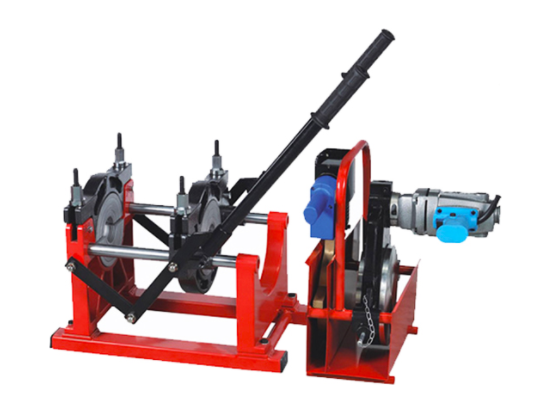
The unsettling truth about HDPE fusion is that a joint can look perfect and still be a cold, unfused weld that passes visual inspection and even a short-term pressure test, then fails years later. That's why no single check certifies a joint — good QC is a chain. This guide walks through what a good butt-fusion bead looks like, how to read the defects, the field and lab tests that catch a bad weld, electrofusion inspection, and the data-logging and procedure controls that together prove fusion is sound.
Why a good-looking weld can still be a cold joint
Heat fusion welds two pipe ends into one continuous material — but only if the heat, time and pressure were all correct. Get the heater temperature too low or the soak time too short and you get a cold joint: the beads may still roll over and look acceptable, yet the interface never properly fused. Research has shown such lack-of-fusion joints passing both visual inspection and short-term pressure tests before failing mechanically. That single fact drives everything in this guide: visual inspection is necessary but never sufficient.
The QC chain: no single check is enough
Quality control for fusion is a sequence of independent safeguards, each catching what the others miss. Skip any link and a bad joint can slip through. The chain runs from qualifying the procedure and the operator, through controlling and recording the machine parameters, to inspecting the bead and destructively testing samples.
- A qualified joining procedure (butt: ASTM F2620 / ISO 21307; electrofusion: ASTM F1290).
- A trained, qualified operator (ASTM F3190).
- A calibrated machine — verified heater temperature and pressure gauges.
- Recorded fusion parameters via a data-logger (ASTM F3124).
- Visual bead inspection against the acceptance criteria.
- Sampled destructive testing (bend-back / guided side bend; tensile).
- A system pressure test of the completed line.
Butt-fusion visual bead: what GOOD looks like
A sound butt-fusion joint shows a "double roll-back": two beads, one each side of the joint, each rolled back down toward the pipe surface — uniform, rounded and consistent in size all the way around the circumference. Both beads should be symmetric (even heat and pressure) and even all around (good alignment, a clean heater plate). Bead width scales with wall thickness, so heavier walls show wider beads — but exact widths are procedure- and machine-specific, so there's no single universal number to check against.
Bead acceptance & the V-notch rule
The key quantitative acceptance check is the valley between the two beads. The V-groove should stay above the pipe's outside surface — the notch must not reach down to the pipe wall. The widely used PPI guidance puts it precisely: the V-groove between the beads should not be deeper than half the bead height above the pipe surface. A valley reaching or dropping below the surface signals over-pressure during fusion, often combined with misalignment. (For molded fittings, judge mainly on the pipe-side bead, since the fitting side can show minor cooling marks.)
Reading bead defects: symptom → cause
The bead is a fingerprint of the fusion parameters. Each visual symptom points to a likely cause — pressure, heat, time, alignment or contamination — which tells the inspector what to correct before the next joint. The table maps the common ones.
| Visual symptom | Most likely cause |
|---|---|
| Bead too small / flat / narrow | Insufficient pressure, or too little heat / soak time |
| Bead too large / excessive | Excess pressure and/or excess heat-soak time |
| V-notch reaching at or below the pipe surface | Over-pressure during fusion (and/or misalignment) |
| Non-uniform bead around the circumference | Misalignment, or a dirty / uneven heater plate |
| Mismatch / high-low offset | Alignment error in the machine clamps |
| Porosity / voids in the bead | Contamination, moisture, or dirty surfaces |
| Incomplete bead with gaps | Low heat or pressure, or poor facing |
| Small, sharp beads, poor roll-over (cold joint) | Heater temperature too low or soak time too short |
Field destructive checks: bend-back & guided side bend
On sampled joints, two field tests catch a weld that looks fine but isn't fused. The bend-back (bent-strap) test — for thinner walls, per ASTM F2620 Appendix X4.1 — strips a strap of the bead and bends the joint back: a ductile bend passes, a brittle crack or separation at the fusion interface fails. For heavier walls (roughly one inch and up) the guided side bend per ASTM F3183 does the equivalent. Both ask the same question: does the interface behave like solid parent material, or does it part?
Lab tests: tensile-impact & tensile/elongation
Laboratory tests put numbers on joint quality. The tensile-impact test (ASTM F2634) loads a sample from the joint quickly and records whether it ruptures ductile or brittle. The quasi-static tensile test (ISO 13953) pulls a sample slowly to measure strength and failure mode — and the defining result of a sound joint is that it fails in a ductile manner in the parent pipe, outside the fusion zone, not at the weld. A break at the interface is a fail no matter what the bead looked like.
Electrofusion joint inspection
Electrofusion fails differently from butt fusion, so it's inspected differently — and the most-skipped check is surface preparation. Before fusion, the pipe surface must be scraped to remove the oxidised skin over the full fusion zone; an un-scraped, shiny surface is an automatic reject. Then confirm the pipe is fully inserted to the depth marks, that clamping held alignment through fusion and the full cool time, and that the control box completed the cycle without fault. After fusion the melt-indicator pins should be raised — but remember they only confirm the cycle ran, not that fusion is sound.
- Scraping / oxidation-layer removal over the full fusion zone (the most-skipped check).
- Pipe inserted fully to the depth witness marks and seated to the stop.
- Alignment and clamping held through fusion and the entire cool time.
- Cycle completed without fault; barcode and parameters matched the fitting.
- Melt-indicator pins raised — confirming the cycle ran (not that fusion is sound).
NDT & data-logging: the modern record
Visual inspection remains the primary field method, but two things strengthen it. Non-destructive testing — chiefly phased-array ultrasonic, per PPI TN-60 — can probe butt and electrofusion joints for lack of fusion on critical infrastructure, though metal-pipe NDT methods don't translate to plastic. And data-logging fusion machines now record the heater temperature, fusion and cool pressures and times, drag, ambient temperature, and operator and joint IDs for every joint (ASTM F3124), comparing the actual profile against the qualified procedure. Joint-by-joint data-logging is now best practice and often contractually required.
Accept or reject? An inspection flow
Putting it together, the path below is how an inspector should walk a butt-fusion joint from process to sampled testing.
5 common inspector mistakes
- Accepting a joint where the V-notch valley reaches the pipe surface — an over-pressure indicator.
- Ignoring bead asymmetry or a high-low mismatch — both alignment defects.
- Accepting on appearance with no data-logging record of the fusion parameters.
- Skipping the scraping / oxidation-removal check on electrofusion (raised pins are not proof of surface prep).
- Relying on visual or a short pressure test alone — a cold, lack-of-fusion joint can pass both and still fail mechanically.
Glossary
- Double roll-back
- The signature of a good butt-fusion joint: two uniform, symmetric beads rolled back toward the pipe surface all around.
- V-notch rule
- The valley between the two beads must stay above the pipe surface (per PPI, no deeper than half the bead height) — a notch reaching the wall means over-pressure.
- Cold joint
- A joint fused with too little heat or time: it can look acceptable and pass a pressure test yet never properly fuse, failing mechanically later.
- Bend-back test
- A field destructive check (ASTM F2620 X4.1) — peel a bead strap and bend the joint; ductile passes, an interface crack fails.
- Decohesion test
- Electrofusion lab tests (ISO 13954 peel / ISO 13955 crush) that pry the joint apart to reveal lack of fusion.
- Data-logging (ASTM F3124)
- Machine recording of every joint's temperature, pressure, time and IDs — the traceable QC record and modern best practice.
References & standards
- [1]Plastics Pipe Institute (PPI) — Butt-fusion bead inspection / acceptance examples (MAB)
- [2]Plastics Pipe Institute (PPI) — TN-60 — inspection of plastic pipe joints using NDT/NDE
- [3]ASTM International — ASTM F2620 — heat fusion joining of PE pipe & fittings
- [4]ASTM International — ASTM F3183 — guided side bend of PE butt fusion joints
- [5]ISO — ISO 21307 — butt fusion jointing procedures for PE
- [6]ISO — ISO 13955 — crushing decohesion test for PE electrofusion joints
- [7]McElroy — Fusion data-logging (recording the joint record)
- [8]PIPA — Principles of PE electrofusion welding & assessment
Frequently asked questions
Need expert advice on your project?
Our engineering team helps utilities, contractors and EPCs specify the right pipe material and SDR for their project. Get a no-obligation technical consultation.
Talk to an engineerRead next
Explore further
Related applications, material comparisons and country buying guides selected for this topic.