Comparison
HDPE vs GRP/FRP Pipe: Which for Water, Sewer & Industrial? (2026)
Fused thermoplastic vs glass-reinforced thermoset — leak-free joints and trenchless versus very-large-diameter stiffness and hot-service chemistry.

Dr. Wei Liu, P.E.
Senior Engineering Manager · Primepoly
Published: Jun 8, 2026
Updated: Jun 8, 2026
13 min read
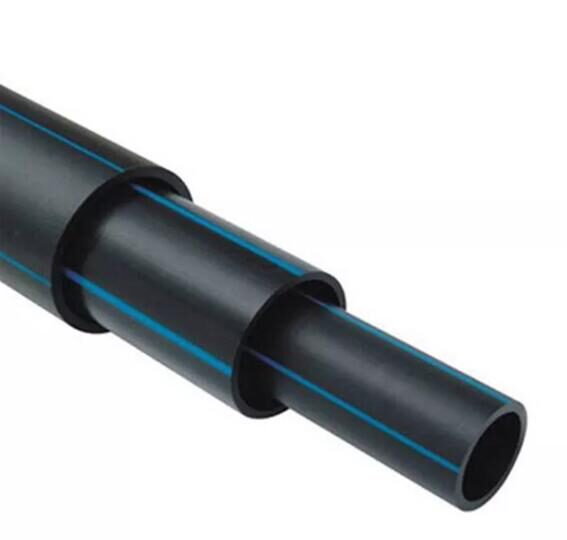
HDPE and GRP are the two corrosion-free workhorses of modern pipelines, but they're built on opposite principles — HDPE is a flexible thermoplastic you fuse into a monolithic, leak-free string, while GRP is a rigid glass-reinforced thermoset you join with couplers and reach into very large diameters. Each genuinely wins in different places, and the marketing from both camps muddies the picture. This comparison sets out the real engineering trade-offs and where to choose each, honestly.
HDPE vs GRP at a glance
| Factor | HDPE (PE100) | GRP / FRP |
|---|---|---|
| Material | Flexible thermoplastic; fused | Rigid glass-reinforced thermoset; coupled |
| Diameter | To ~1,600–2,000 mm | To ~3,000–4,000 mm (wins very large) |
| Joints | Fused, monolithic, leak-free | Couplers / laminate — potential leak paths |
| Stiffness | Flexible (soil-dependent) | High ring stiffness (self-supporting) |
| Abrasion / impact | Excellent (ductile) | Can erode / delaminate (brittle) |
| Temperature | ~60 °C max (derated) | To ~100–120 °C (resin-dependent) |
| Trenchless / marine | Excellent (fused strings) | Limited (jointed) |
What each pipe actually is
HDPE is a thermoplastic — polyethylene, flexible and ductile, extruded and joined by heat fusion into a continuous line. GRP (glass-reinforced plastic, also called FRP, GRE or fiberglass) is a thermoset: a polyester, vinylester or epoxy resin reinforced with glass fibre, often with a sand-filled core wall for stiffness, made by filament winding or centrifugal casting. That difference — flexible re-meltable thermoplastic versus rigid glass-reinforced thermoset — drives every trade-off below.
Diameter & pressure ranges
GRP's signature strength is very large diameter: it's commonly made up to around 3,000 to 4,000 mm, where it leads the market for large gravity and pressure mains. HDPE is common up to roughly 1,600 to 2,000 mm, with larger sizes fabricated. On pressure, HDPE covers the PN classes through SDR selection (SDR11 ≈ PN16, SDR7.4 ≈ PN25), while GRP ranges from low-pressure polyester to high-pressure epoxy (GRE) lines. The detailed table compares the two across the attributes that decide a specification.
| Attribute | HDPE (PE100) | GRP / FRP |
|---|---|---|
| Pressure | PN via SDR (to ~PN25) | Low (polyester) to high (epoxy GRE) |
| Corrosion | Immune | Immune |
| Chemical (aggressive industrial) | Good; limited vs some solvents | Excellent with vinylester resin |
| Weight | Light & flexible | Light & rigid |
| Standards | AWWA C906, ISO 4427, ASTM F714 | AWWA C950, ASTM D3517/D3262, ISO 10639 |
| Best at | Trenchless, abrasive, leak-critical, mid dia | Very large dia, hot service, stiff gravity |
Joints: fused vs coupled — the leak-path question
This is HDPE's clearest advantage. Butt fusion and electrofusion make a homogeneous, leak-free joint that is fully end-load restrained — effectively turning the pipeline into one continuous pipe with no joint to leak or pull apart. GRP is joined with gasketed couplers (double-bell or REKA), adhesive-bonded or laminated joints, or flanges; these are proven but are discrete connections that are potential leak paths, need careful alignment, and may need thrust restraint. For leak-critical mains and high water tables, fused HDPE has the edge; GRP counters with restrained-joint designs.
Stiffness & structural behaviour
GRP is much stiffer than HDPE — a higher modulus and graded by ring-stiffness (SN) classes — so it's more self-supporting and well suited to deep gravity sewers. HDPE is a flexible pipe whose load capacity comes from pipe-soil interaction, so its bedding matters more (see any flexible-pipe installation guide). The flip side is that GRP's stiffness comes with brittleness: it can crack or delaminate under point loads, impact or rough handling, where ductile HDPE simply absorbs the blow. Stiffness and toughness pull in opposite directions here.
Corrosion, chemical & temperature resistance
Both materials are corrosion-free, which is why they displace metal and concrete in aggressive service. On chemistry, HDPE excels with acids, bases, salts, seawater and H₂S sewer gas but is limited against some hydrocarbons and solvents, while GRP with a vinylester resin handles aggressive industrial chemistry that challenges PE. Temperature is where GRP clearly leads: HDPE is limited to roughly 60 °C (with pressure derating), whereas vinylester GRP runs to about 75–100 °C and epoxy GRE higher still — so hot effluent and process lines favour GRP.
Abrasion, impact & handling
For abrasive duty, HDPE wins: its smooth, ductile bore resists slurry and grit, while high-velocity flow can erode GRP and expose its glass fibre. HDPE is also far more forgiving in handling — it's impact-tough and shrugs off the knocks of installation, whereas GRP is more brittle and prone to chipping, cracking or delamination if dropped or point-loaded, so it demands careful handling on site. For mining slurry, dredging and rough-handling environments, HDPE's ductility is a real advantage.
Installation: trenchless & marine
HDPE owns the trenchless space: fused into long continuous strings, it's ideal for horizontal directional drilling, pipe bursting and sliplining, and for marine lines floated out and sunk into place — installations GRP's jointed lengths can't match. GRP is installed in jointed sections and is used in jacking and tunnel-lining applications, but it needs careful handling and alignment. If the route is trenchless, marine, seismic or settling ground, HDPE's fused string is usually the better fit.
Cost & lifecycle: the honest, size-dependent answer
Cost is genuinely size-dependent, so beware blanket claims from either camp. HDPE is competitive at small-to-mid diameters and wherever trenchless installation cuts excavation and joints, while GRP often becomes more cost-effective at very large diameters where its stiffness-per-cost and large-diameter manufacturing scale up well. The fair comparison is installed-plus-lifecycle cost for your specific diameter, route and service — weighing GRP's joint count and handling care against HDPE's fusion crew, and both against decades of leak-free (or leaking) service.
Which to choose by application
Match the pipe to the dominant demand of the project — the decision usually turns on diameter, temperature, install method and how leak-critical the line is.
5 common specification mistakes
- Comparing on price per metre alone — ignoring lifecycle leak cost (GRP's joint count) and the installation method.
- Specifying HDPE at full pressure for hot effluent without applying the temperature derating factor (about 0.6 at 40 °C).
- Choosing GRP for high-velocity slurry or grit, where abrasion can erode it and expose the glass fibre.
- Treating GRP's ring stiffness as equivalent to HDPE's flexibility — GRP is sensitive to point loads and impact; HDPE's deflection depends on the soil.
- Defaulting to GRP at very large diameter without checking whether the route is trenchless, marine or seismic, where HDPE's fused string wins.
Glossary
- GRP / FRP / GRE
- Glass-reinforced plastic / fibre-reinforced plastic / glass-reinforced epoxy — a thermoset resin reinforced with glass fibre, rigid and high-stiffness.
- Thermoplastic vs thermoset
- HDPE is a thermoplastic (re-meltable, fusible); GRP is a thermoset (cured, not re-meltable), joined by couplers or lamination.
- Ring stiffness (SN)
- A measure of a pipe's resistance to ring deflection; GRP is graded by SN classes and is much stiffer than flexible HDPE.
- Vinylester resin
- A GRP resin with strong resistance to aggressive industrial chemistry and higher temperature than polyester.
- Delamination
- Separation of GRP's layers under impact, point load or ageing — a failure mode HDPE's homogeneous wall doesn't share.
- Monolithic (fused) joint
- A heat-fused HDPE joint that makes the line one continuous, leak-free, end-load-restrained pipe.
References & standards
- [1]ASTM International — ASTM F714 — PE plastic pipe (DR-PR) based on outside diameter
- [2]ASTM International — ASTM D3517 — fiberglass (GRP) pressure pipe
- [3]ASTM International — ASTM D3262 — fiberglass (GRP) sewer pipe
- [4]ISO — ISO 10639 — GRP piping systems, polyester resin (DN50–DN4000)
- [5]AWWA — ANSI/AWWA C950 — fiberglass pressure pipe
- [6]AWWA — AWWA C906 — PE pressure pipe & fittings, 4–63 in.
- [7]ISO — ISO 4427-2 — PE pipes for water supply
- [8]Flowtite — GRP pipe systems — technical characteristics (SN classes, diameters)
Frequently asked questions
Need expert advice on your project?
Our engineering team helps utilities, contractors and EPCs specify the right pipe material and SDR for their project. Get a no-obligation technical consultation.
Talk to an engineerRead next
Explore further
Related applications, material comparisons and country buying guides selected for this topic.