Application
HDPE Pipe for Water & Wastewater Treatment Plant Process Piping (2026)
Inside the plant — aeration air, sludge, dosing, submerged headers — HDPE's corrosion immunity and fused joints earn their place, as long as you mind the hot blower air and the chemical chart.

Dr. Wei Liu, P.E.
Senior Engineering Manager · Primepoly
Published: Jun 8, 2026
Updated: Jun 8, 2026
13 min read
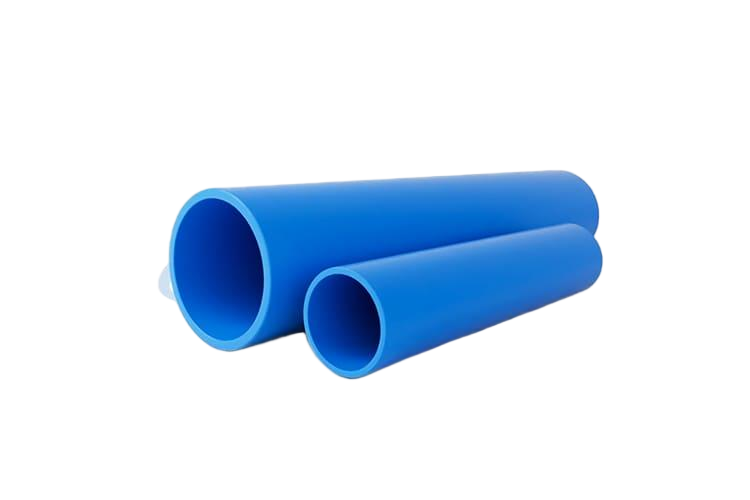
A treatment plant is a permanently wet, chemically aggressive place — chlorine, ferric, alum, lime, polymer, hydrogen sulfide and abrasive sludge — and most metals corrode in it. That's why HDPE has become a workhorse for process piping inside the plant, from the air headers feeding the aeration diffusers to the sludge lines and submerged in-tank manifolds. It's corrosion-free, its fused joints don't leak, and it can sit underwater for decades. Two cautions shape the design: hot air near the blowers, and chemical compatibility. This guide maps where HDPE fits inside the plant.
Process piping vs buried mains: why it's different
HDPE inside a treatment plant is a different job from the buried distribution mains it's better known for. The fluids are more varied and more aggressive — process air, sludge, dosing chemicals — the runs are often above ground on supports or submerged in tanks rather than buried, and temperature and chemical compatibility matter much more than they do for cold water in the ground. So while the material's core strengths carry over, the design has its own considerations, which is what this guide covers application by application.
Where HDPE is used inside a treatment plant
HDPE turns up throughout a plant's process piping. The table maps the main uses, from the aeration air system down to tank drains. The common thread is a wet, corrosive duty where a corrosion-free, fused, often-submerged pipe is exactly what's wanted — with the aeration and chemical-dosing lines carrying the two design caveats discussed below.
| Application | Service |
|---|---|
| Aeration / diffuser air | Blower air to submerged fine-bubble diffusers (mind the hot air near the blower) |
| Sludge transfer (RAS / WAS, primary) | Abrasive, gritty sludge lines |
| Chemical dosing | Hypochlorite, ferric, alum, caustic, lime, polymer — where the chart confirms |
| Plant / process water | Non-potable plant, seal, wash and service water |
| Scum, supernatant & backwash | Clarifier scum, decant returns, filter backwash |
| Submerged in-tank headers | Ballasted / anchored manifolds inside basins and tanks |
| Odour / foul-air ducting & drains | Corrosion-free duct for H2S foul air; tank drains |
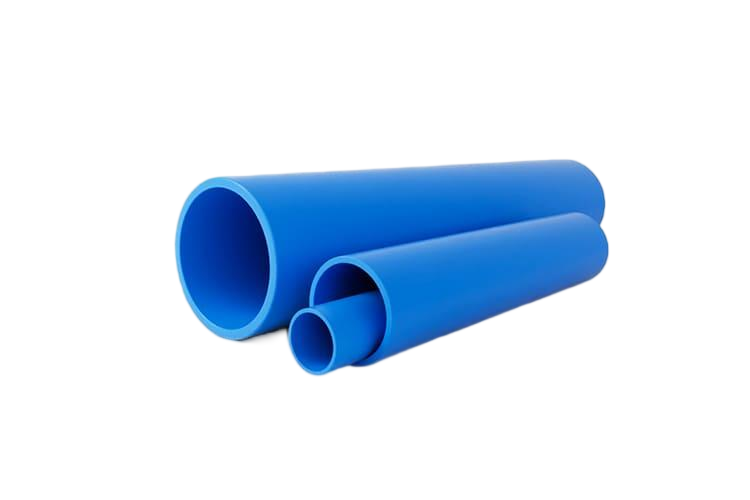
Why HDPE: corrosion-free, fused, flexible, submersible
HDPE suits the plant on several counts at once. It's corrosion-free, so the chlorine, ferric, alum, lime and hydrogen sulfide that attack metal do nothing to it; its butt- and electrofused joints are monolithic and leak-free, with no gaskets or threads to fail or trap grit; it resists abrasion from gritty sludge; it's flexible enough to tolerate the differential settlement of tanks and structures; and it works submerged, anchored or ballasted as in-tank headers without corroding. Add a smooth, low-fouling bore and light weight for handling, and it earns its place in plant process piping.
Aeration & diffuser air — and the hot-blower-air caveat
HDPE air headers and submerged laterals feeding the fine-bubble diffusers are corrosion-free where galvanised or painted steel rusts and where stainless can pit from chlorides. But there's a caveat that every design must respect: blower discharge air is hot — commonly 60–80 °C and sometimes higher — and HDPE derates with temperature and has a continuous limit around 60 °C. The standard solution is to run stainless steel (or another high-temperature material) on the hot section immediately downstream of the blower, then transition to HDPE once the air has cooled along the header. Verify the blower's discharge-temperature curve.
Sludge transfer: abrasion, grit & fused joints
Sludge — return and waste activated sludge, primary and thickened sludge — is abrasive and gritty, and here HDPE's abrasion resistance pays off, preserving the bore and self-cleansing velocity longer than steel or ductile iron would. Its fused joints have no gaskets to erode or crevices to trap solids, so there are fewer clogs and leaks over decades, and its flexibility tolerates the settlement at tank and pump connections. For the plant's dirty, abrasive lines, fused HDPE is a natural fit.
Chemical dosing: what HDPE handles — and what it doesn't
HDPE is compatible with many treatment chemicals — caustic, lime slurry, alum, ferric chloride and dilute sodium hypochlorite are commonly fine at ambient temperature — but this is not a blanket yes. Concentrated oxidisers (such as strong hypochlorite, especially when warm), some acids at high concentration or temperature, and many organic solvents can attack or permeate HDPE, and those lines need PVDF, PTFE-lined, CPVC or other special materials. The discipline is simple and non-negotiable: check every dosing line against the chemical-resistance chart by chemical, concentration and temperature, and consider dual containment for hazardous dosing.
Submerged & in-tank headers: ballast & expansion
HDPE is slightly less dense than water, so it floats — which means submerged in-tank headers and diffuser laterals must be ballasted or anchored (concrete weights, anchor brackets, stainless stand-offs) to stay where they're put. Connections to diffuser grids, weirs and equipment are typically flanged with a stub end and backing ring, and because HDPE's thermal expansion is high, the design has to allow for movement with anchors and guides. Get the ballast and the expansion provisions right and a submerged HDPE header runs corrosion-free for the life of the tank.
HDPE vs stainless, PVC/CPVC, ductile iron & FRP
No single material does everything in a plant, so the honest comparison matters. HDPE wins on corrosion immunity, fused leak-free joints, abrasion, flexibility, submerged service and cost; stainless is reserved for the hot legs (near blowers), high-temperature and high-purity duties; PVC/CPVC suit some chemical lines but are rigid and brittle; ductile iron corrodes in the wet, sour plant environment. The table summarises it — and the one-liner is that HDPE covers most of the plant, with stainless and special plastics kept for the hot, high-temperature or concentrated-chemical duties.
| Material | Pros | Cons |
|---|---|---|
| HDPE | Corrosion-free, fused leak-free, abrasion-resistant, flexible, submersible, low cost | Temperature-limited (~60 °C; derate above 20); buoyant (needs ballast); not for concentrated oxidisers/solvents |
| Stainless steel | High temperature & pressure; rigid | Expensive; chloride pitting risk; bolted/welded joints |
| PVC / CPVC | Cheap; chemical-resistant (CPVC higher temp) | Rigid/brittle; solvent-weld; often banned for aeration |
| Ductile iron | Strong, rigid | Corrodes in wet / H2S / chemical service; heavy; gasketed |
| FRP | Corrosion-resistant, light, large diameter | Brittle; resin-dependent resistance; specialist joining |
Standards
Treatment-plant HDPE is made to ISO 4427 or EN 12201 (PE100), with AWWA C906 and ASTM F714 in North America, and the cell classification per ASTM D3350. Chemical compatibility is checked against the PPI / PE100+ chemical-resistance references (and ISO/TR 10358), and plant process design follows the WEF Manual of Practice No. 8. NSF/ANSI 61 applies where plant water touches potable. As always, the chemical-compatibility check and the hot-blower-air handling are the project-specific points to get right.
5 common mistakes
- Chemical incompatibility — specifying HDPE for a dosing chemical without checking the chart at the actual concentration and temperature (concentrated oxidisers and solvents are the trap).
- Running HDPE on the hot leg straight off an aeration blower — use a stainless or high-temperature transition until the air has cooled.
- Ignoring tank settlement and expansion — not allowing flexibility at tank, structure and equipment connections.
- Submerged headers floating — not ballasting or anchoring in-tank HDPE that is positively buoyant.
- Under-supporting above-ground plant runs and not accommodating HDPE's high thermal expansion — leading to sag and thrust at anchors.
References & standards
- [1]Plastics Pipe Institute (PPI) — Handbook of PE Pipe, Ch. 6 — design (temperature derating)
- [2]PE100+ Association — Chemical resistance of PE/HDPE pipe
- [3]INEOS — HDPE chemical resistance guide
- [4]ISO — ISO 4427-1 — PE pipes for water supply & pressure sewerage
- [5]AWWA — AWWA C906 — PE pressure pipe & fittings (waterworks/wastewater)
- [6]ASTM International — ASTM F714 — PE pipe (DR-PR) based on outside diameter
- [7]Water Environment Federation — MOP 8 — design of water resource recovery facilities
- [8]Environmental Dynamics Intl. — Floating HDPE air lateral system (aeration case)
Frequently asked questions
Need expert advice on your project?
Our engineering team helps utilities, contractors and EPCs specify the right pipe material and SDR for their project. Get a no-obligation technical consultation.
Talk to an engineerRead next
Explore further
Related applications, material comparisons and country buying guides selected for this topic.