Guide
HDPE Service Connections & Tapping: Branch Saddles, Tapping Tees & Under-Pressure Tapping (2026)
How to branch a service off a live HDPE gas or water main without shutting it down — the methods, the electrofusion tapping tee, coupon retention, and the scrape step that makes or breaks the joint.

Dr. Wei Liu, P.E.
Senior Engineering Manager · Primepoly
Published: Jun 8, 2026
Updated: Jun 8, 2026
13 min read
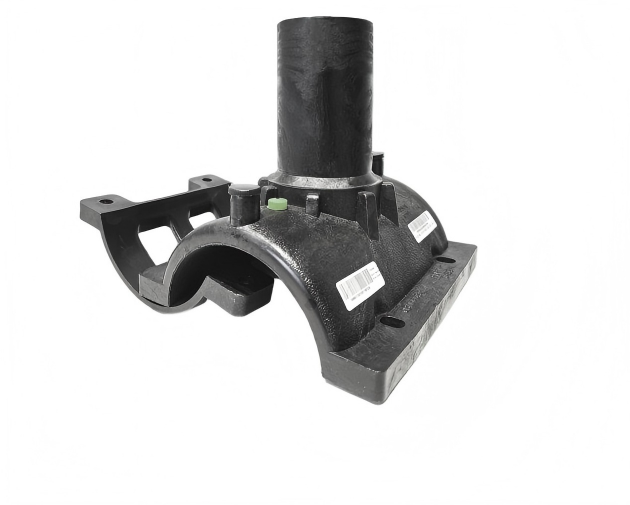
Sooner or later a buried HDPE main needs a branch — a new service to a building, a tie-in for an extension. The remarkable thing about PE is that you can do it on a live, pressurised main without a shutdown: an electrofusion tapping tee is fused on, then its integral cutter taps through the wall and captures the coupon, all while the main keeps flowing. This guide covers the branch methods, how under-pressure tapping works, the coupon-retention detail that protects downstream equipment, and the one QC step — scraping the oxidation layer — that decides whether the joint holds.
Why service connections matter on HDPE mains
Service connections are among the most common operations on a distribution network, and on HDPE they can be made without interrupting service — a major operational advantage over materials that need the main shut down and drained. The choice of method depends on whether the main is live, whether you have fusion equipment, and whether you need a small service tap or a full-bore branch. Get the method and the fusion QC right and the branch is as strong and leak-free as the main itself.
The ways to branch off an HDPE main
There are several ways to take a branch or service off an HDPE main, differing in whether they can tap a live (pressurised) main and whether they need fusion equipment. The table summarises them; the electrofusion tapping tee is the workhorse for live service connections.
| Method | What it is | Live tap? | Fusion gear? |
|---|---|---|---|
| EF tapping tee | Saddle with integral cutter, electrofused on | Yes | EF processor |
| EF branch saddle | Saddle electrofused; drill/tap separately | Tap after cool | EF processor |
| Saddle (sidewall) fusion | Heat-fused saddle/tapping tee to the sidewall | Tap after cool | Heater + clamp |
| Mechanical service saddle | Bolt-on clamp with gasket (needs stiffener) | Yes | None |
| Cut-in butt-fusion tee | Cut the main, fuse a tee in line | No — shutdown | Butt-fusion machine |
| Hot-tap fitting | EF/mechanical fitting tapping a live main | Yes | Varies |
Electrofusion tapping tees: the workhorse for live taps
An electrofusion tapping tee is a saddle fitting with an embedded heating coil and an integral cutter. It's clamped to the main and electrofused in place — the coil melts and bonds the saddle to the pipe — and then, after the joint has fully cooled, the built-in cutter is turned down to cut through the pipe wall and open the branch. Because the fusion seals the saddle to the main before the wall is breached, the whole operation can be done on a live, pressurised gas or water main with no shutdown and no loss of service to existing customers.
Under-pressure tapping, step by step
The sequence is what makes a no-shutdown tap safe. The saddle is scraped, clamped and electrofused to the main; then the joint is left to cool and cure fully; then the integral cutter is turned to cut through the wall, capturing the coupon; then the tapping port is capped. Manufacturers cite full-pressure tapping at around 10 bar for gas and 16 bar for water with no leakage. The critical discipline is that the wall is never breached until the fusion is complete and cooled — tap a hot joint and you can destroy it.
Coupon retention: why the cut disc must never enter the flow
When the cutter cuts the branch opening, it removes a disc of pipe wall — the coupon. The integral cutter is designed to capture and retain that coupon so it can't drop into the flow stream, where it would travel downstream and block a service, foul a meter, or damage a regulator. Coupon retention is a small detail with outsized importance, especially in gas service where debris reaching a regulator is a safety issue. It's one of the reasons a purpose-made tapping tee is preferred over improvised methods.
Surface prep & fusion QC: scrape the oxidation layer
Every electrofusion or saddle-fusion connection lives or dies on surface preparation. Polyethylene develops an oxidised skin on exposure, and that skin will not fuse — so the bond footprint must be scraped to remove it (typically a few tenths of a millimetre across the whole fusion area up to the witness mark), then kept clean. Skipping or under-scraping is the number-one cause of failed saddle joints. After scraping, clamp the saddle immobile, run the correct electrofusion cycle, confirm the melt indicators rise, and — crucially — wait the full cool time before tapping or pressurising.
Mechanical saddles & the stiffener requirement
Where there's no fusion equipment, or for a fast repair, a mechanical service saddle bolts onto the main and seals with a gasket, with a cutter to tap the wall. It's quick and needs no power, but it has one essential requirement that's easy to miss: the service outlet needs an internal stiffener, because the flexible PE wall of the service pipe would otherwise be crushed or pulled out by the mechanical connection. Torque the saddle to spec, fit the stiffener, and confirm the coupon is retained — mechanical taps are valid, but the stiffener is non-negotiable.
Gas vs water service connections
The mechanics are the same, but the rules differ. Gas service connections are governed by the gas-fitting standards (ASTM D2513, EN 1555-3) and pipeline-safety rules, with coupon retention especially critical because debris in a regulator is a safety hazard; gas distribution is typically up to about 10 bar. Water connections follow the water standards (AWWA, EN 12201-3 / ISO 4427-3), can tap at higher pressures, and require potable-contact compliance for the wetted parts. Both share the identical electrofusion and saddle-fusion QC discipline.
When to use which: a decision path
The right method follows from whether the main is live, what equipment you have, and whether you need a service tap or a full-bore branch. The path below resolves it.
Standards
Tapping and service-connection fittings are governed by the electrofusion-fitting and gas/water pipe standards. ASTM F1055 specifies electrofusion fittings (including saddles and tapping tees); ASTM D2513 is the US gas spec and EN 1555-3 (with ISO 4437-3) the international gas-fitting standard; and water connections follow AWWA C906 and EN 12201-3 / ISO 4427-3. PPI's generic electrofusion and saddle-fusion procedures provide the QC backbone. Confirm the certified editions for your fittings and market.
5 common mistakes
- Not scraping (or under-scraping) the oxidation layer under the saddle — the oxidised skin won't fuse, giving a cold joint.
- Tapping before the fusion has fully cooled and cured — which can destroy the joint.
- Mismatching the saddle to the main size (OD/SDR) — a poor seat and a leak path.
- Omitting the internal stiffener on a mechanical saddle's service outlet — the PE wall collapses or pulls out.
- Letting the saddle move or being mis-clamped during fusion and cooling — misalignment, voids, incomplete fusion.
Glossary
- Tapping tee
- A saddle fitting with an integral cutter that branches a main; the electrofusion version taps a live, pressurised pipe.
- Branch saddle
- A saddle fitting fused to a main to take a branch; without an integral cutter, the main is drilled/tapped separately after cooling.
- Under-pressure tapping
- Branching a live, pressurised gas or water main without a shutdown, using a tapping tee whose fusion seals before the wall is cut.
- Coupon retention
- The integral cutter capturing the disc of wall it cuts, so the coupon never enters the flow to block or foul equipment.
- Oxidation-layer scraping
- Removing PE's un-fusible oxidised surface skin over the bond footprint — the make-or-break step for a sound saddle joint.
- Stiffener
- An internal support insert required in a mechanical saddle's service outlet so the flexible PE wall isn't crushed or pulled out.
References & standards
- [1]Plastics Pipe Institute (PPI) — Handbook of PE Pipe, Ch. 9 — joining procedures
- [2]Plastics Pipe Institute (PPI) — TR-49 — electrofusion user guide for PE gas piping
- [3]Plastics Pipe Institute (PPI) — MAB-01 — generic electrofusion procedure
- [4]ASTM International — ASTM F1055 — electrofusion-type PE fittings
- [5]GF Piping Systems — ELGEF Plus Y-tapping saddle (live tapping)
- [6]IPEX — PE electrofusion tapping tees for gas applications
- [7]Continental Industries (Hubbell) — Mechanical saddles & fittings (stiffeners, coupon punch)
- [8]Metropolitan Utilities District — Sidewall fusion / saddles on HDPE water pipe
Frequently asked questions
Need expert advice on your project?
Our engineering team helps utilities, contractors and EPCs specify the right pipe material and SDR for their project. Get a no-obligation technical consultation.
Talk to an engineerRead next
Explore further
Related applications, material comparisons and country buying guides selected for this topic.