Guide
HDPE Pipe & Earthquakes: Why Fused Polyethylene Survives Seismic Ground Movement (2026)
When the ground moves, the joint fails first — and HDPE has no joint to pull apart. Fused, continuous and ductile, it bends with the earth where cast iron and concrete crack.

Dr. Wei Liu, P.E.
Senior Engineering Manager · Primepoly
Published: Jun 8, 2026
Updated: Jun 8, 2026
14 min read
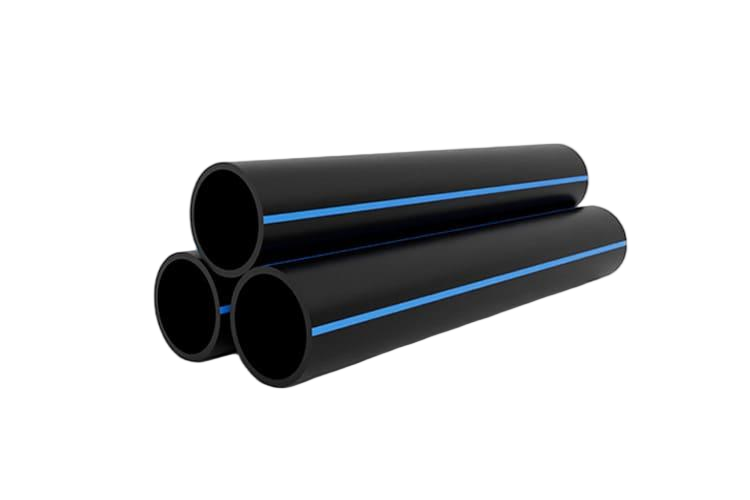
When an earthquake damages a water or gas network, the failures cluster at one place: the joints. Bell-and-spigot cast iron pulls apart, gasketed couplings slip, brittle pipe cracks — and a city can lose its water within hours. HDPE is the exception, for two simple reasons: its butt- and electrofused joints make the line one continuous, fully restrained string with no joint to separate, and the polymer itself is ductile enough to stretch and bend with the moving ground instead of snapping. That combination is why Japan and New Zealand turned to polyethylene after their big quakes — and it's what this guide explains.
Why earthquakes break pipes — and why the joint fails first
An earthquake doesn't usually break a pipe by overstressing the wall in mid-span; it breaks it at the connection. Traditional buried pipe is a chain of short rigid segments joined by bells, spigots and gaskets, and when the ground shifts those joints are the weak link — they slip out, the spigot drives into the next bell, or the gasket leaks. The dominant failure mode of small-diameter cast iron in the 1995 Kobe earthquake was exactly this joint slip-out. Brittle materials add a second failure mode: cast iron, asbestos cement and concrete simply crack when strained. So seismic pipe design comes down to two questions — can the joints take the movement, and can the material take the strain?
Two ways the ground moves: transient strain vs permanent deformation
Engineers split seismic ground movement into two categories, because they load a pipe very differently. Transient ground deformation is the temporary strain from seismic waves passing through the soil — driven by peak ground velocity, it's usually the smaller effect. Permanent ground deformation (PGD) is the ground that doesn't go back: liquefaction lateral spread, settlement, landslide and fault rupture. PGD strains are far larger than wave strains and cause most of the serious pipe damage. The table contrasts them. HDPE's value is that it handles both — its strain capacity and restrained joints absorb the small transient strains easily and give it a fighting chance against the large PGD strains that destroy rigid pipe.
| Transient (wave) deformation | Permanent ground deformation (PGD) | |
|---|---|---|
| Cause | Seismic waves passing through soil | Liquefaction spread, settlement, fault rupture, landslide |
| Driven by | Peak ground velocity | Ground failure / offset |
| Strain size | Smaller | Much larger — causes most pipe damage |
| Where it acts | Along the whole alignment | Localised at the ground-failure zone |
| HDPE response | Absorbed easily by strain capacity | Stretches/bends; restrained joints stay intact |
What makes HDPE seismically resilient: fused joints + ductility
Two mechanisms, working together. First, the fused joint: butt fusion and electrofusion create a joint as strong as the pipe wall, fully end-load-restrained, so the whole line behaves as one continuous monolithic string with no separation planes — and no thrust blocks needed. Second, ductility: PE100 has a tensile yield strain of around 8% or more, far above any metal, and it stretches well beyond that before breaking, while it relaxes stress rather than building it up to a crack. Where cast iron, asbestos cement and concrete are brittle and fail by cracking, and even PVC behaved unexpectedly brittly in Christchurch, ductile fused HDPE deforms with the ground and springs back. Restrained continuity plus strain capacity is the whole case.
HDPE vs cast iron, asbestos cement, concrete & PVC — a survival comparison
The honest comparison sorts pipe materials by how they meet ground movement: by the joint, and by the material. The table sets it out. The pattern from every major earthquake is consistent — rigid, brittle, jointed pipe (cast iron, asbestos cement, concrete) suffers the heaviest damage; even PVC, though tougher, has gasketed joints and behaved brittly under the worst Christchurch shaking; and fused, ductile HDPE comes through best. One honesty note on break-rates: published rates vary widely by study, magnitude and ground condition, so treat any single ratio as illustrative, not a universal law.
| Material | Joint behaviour | Material behaviour |
|---|---|---|
| HDPE (fused) | Continuous, fully restrained — nothing to slip out | Ductile (≈8%+ yield strain); stretches & bends |
| Cast iron | Bell-and-spigot slips out (the Kobe failure mode) | Brittle — cracks |
| Asbestos cement | Jointed, low restraint | Brittle — heavy Christchurch damage |
| Concrete | Jointed/rigid | Brittle — cracks under strain |
| PVC | Gasketed (some restraint options) | Tougher than metal but behaved brittly in worst shaking |
Proof from real earthquakes: Kobe, Christchurch & Sichuan
The strongest evidence isn't a lab test, it's the field record. In Kobe 1995 (M6.9), 1,200-plus pipeline failures drained the reservoirs within hours, predominantly by joint slip-out in small-diameter cast iron — and Osaka Gas's post-quake review found failures in steel and iron systems but none where HDPE had been installed, which set Japan on its systematic shift to polyethylene. In the Christchurch / Canterbury sequence of 2010–11, a network that was largely asbestos cement and cast iron suffered enormous brittle damage in the heavily liquefied areas, while the flexible/PE gas network kept its integrity and a fused HDPE line survived metres of ground displacement intact; New Zealand has favoured PE since. In Sichuan 2008 (M8), polyethylene performed best of the materials in service, and Dujiangyan rebuilt its gas network in PE. (Loma Prieta 1989 is often cited, but the evidence there is less clean — Kobe, Christchurch and Sichuan are the solid cases.)
Liquefaction: lateral spread, settlement — and the buoyancy you must design for
Liquefaction is the signature earthquake hazard for buried pipe: saturated loose soil loses its strength and behaves like a heavy liquid, spreading laterally and settling. Jointed rigid pipe separates as the ground pulls apart; a fused, flexible HDPE string moves with it and stays intact. But liquefaction adds one effect the design must respect — buoyancy. When the soil turns to liquid, an empty or partly-filled HDPE pipe (which is slightly less dense than water) can float upward and break the surface. The fix is ordinary geotechnical practice: enough cover depth, and ballast or anchoring where the buoyancy calculation calls for it. Don't let the same low density that helps handling become an uplift problem in liquefied ground.
Crossing an active fault: strain, slack & oblique angle
Crossing a known active fault is the hardest seismic case, because the ground on the two sides can offset by a metre or more. Here HDPE's strain capacity is the asset: the design goal is to let the pipe stretch rather than buckle. In practice that means laying the crossing at an oblique angle chosen so the offset puts the pipe in tension (not compression), providing slack, minimising soil friction in the fault zone, and often using horizontal directional drilling to deepen and decouple the line. PPI's MAB-10 sizes the wall from the fault offset, crossing angle, burial depth and acceptable strain. One honest caveat from Cornell's full-scale tests: for large-diameter HDPE under rupture, cross-section ovaling can govern failure, so the design is diameter-specific — don't assume a small-pipe rule scales up.
Design points & standards
Pulling it together: in a seismic zone, use fused (butt/electrofusion) joints rather than mechanical or gasketed ones — fusion is inherently restrained and needs no thrust blocks; design for strain, not just stress, because PE relaxes stress and strain governs; check buoyancy in liquefiable ground; specify PE100-RC where the post-quake backfill may be rocky or poorly controlled (it resists point loads and slow crack growth); and at fault crossings provide slack and a tension-favouring oblique angle. The reference documents are the American Lifelines Alliance Seismic Guidelines for Water Pipelines, PPI's MAB-9 (lateral-spread hazard) and MAB-10 (fault-crossing hazard), AWWA M55 for PE pipe, and Japan's JWWA framework, which sets performance criteria that polyethylene meets well.
5 common mistakes
- Using gasketed or mechanical joints in a seismic zone — they slip out; fusion gives an inherently restrained, continuous line.
- Designing by stress alone — PE relaxes stress, so strain (not stress) governs the seismic check.
- Ignoring liquefaction buoyancy — an empty HDPE pipe can float in liquefied soil without adequate cover or ballast.
- Treating a fault crossing like ordinary trench — no slack, wrong angle (compression instead of tension), no HDD decoupling.
- Assuming small-diameter rules scale to large diameter at a fault — ovaling can govern, so the wall must be checked per diameter (MAB-10).
Glossary
- Permanent ground deformation (PGD)
- Ground that doesn't return — liquefaction lateral spread, settlement, landslide and fault rupture; the large strains that cause most seismic pipe damage.
- Transient ground deformation
- Temporary strain from passing seismic waves (driven by peak ground velocity); generally smaller than PGD.
- Liquefaction
- Saturated loose soil losing strength in an earthquake and behaving like a heavy liquid — causing lateral spread, settlement and pipe buoyancy.
- End-load-restrained joint
- A joint that carries axial (pull-out) load — a fused HDPE joint is inherently restrained, unlike bell-and-spigot.
- Yield strain
- The strain a material reaches at yield; PE100 is ≈ 8% or more, far above brittle metals and the basis of HDPE's ductile seismic behaviour.
- PE100-RC
- A 'resistant to crack' PE100 grade for point loads and poorly controlled backfill — useful for disturbed post-quake ground.
References & standards
- [1]American Lifelines Alliance — Seismic Guidelines for Water Pipelines (2005)
- [2]Plastics Pipe Institute (PPI) — MAB-9 — design of HDPE water mains for the lateral-spread seismic hazard
- [3]Plastics Pipe Institute (PPI) — MAB-10 — design of HDPE water mains for the fault-crossing seismic hazard
- [4]TEPPFA — Behaviour of plastic pipe systems in response to dynamic ground movements
- [5]PE100+ / PPI — Polyethylene pipeline performance against earthquake (Omuro & Himono, PPXIX 2018)
- [6]University of Canterbury — Lifelines performance following the 22 Feb 2011 Christchurch earthquake (Giovinazzi)
- [7]WCEE / IIT-K — Damage to water supply system in the 2011 Great East Japan earthquake (Miyajima)
- [8]AWWA — M55 — PE pipe: design and installation
Frequently asked questions
Need expert advice on your project?
Our engineering team helps utilities, contractors and EPCs specify the right pipe material and SDR for their project. Get a no-obligation technical consultation.
Talk to an engineerRead next
13 min read
HDPE vs Ductile Iron Pipe for Water Mains: An Honest Comparison (2026)
13 min read
Why HDPE Pipes Fail: Failure Modes & How to Avoid Them (2026)
13 min read
HDPE Trenchless Installation: HDD, Pipe Bursting & Sliplining (2026)
10 min read
Butt Fusion vs Electrofusion: Choosing the Right HDPE Joining Method
11 min read
PE100 vs PE100-RC: When the 20% Premium Pays for Itself (B2B Buyer's Decision Guide)
Explore further
Related applications, material comparisons and country buying guides selected for this topic.