Guide
Why HDPE Pipes Fail: Failure Modes & How to Avoid Them (2026)
The honest version: with modern PE100, the pipe rarely fails on its own within its design life — most real failures are the backhoe, the trench, and the joint, and all three are preventable.

Dr. Wei Liu, P.E.
Senior Engineering Manager · Primepoly
Published: Jun 8, 2026
Updated: Jun 8, 2026
13 min read
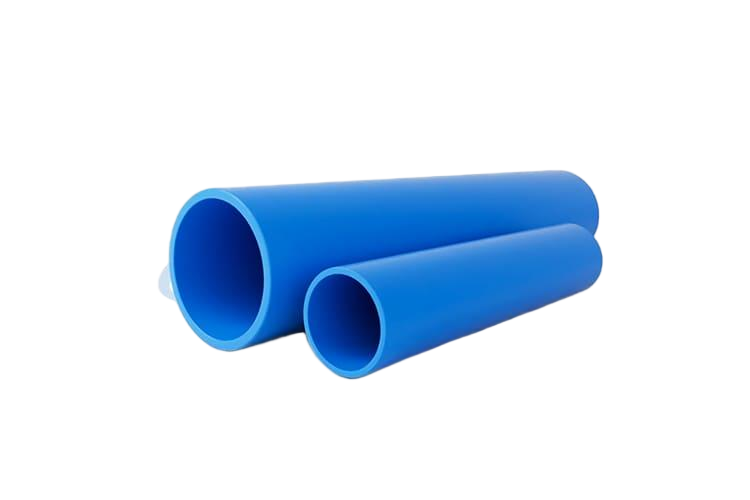
"How long until an HDPE pipe fails?" is the wrong question, because modern PE100 and PE100-RC push the pipe's intrinsic failure modes — slow crack growth and oxidation — out beyond a 50-to-100-year design life. The honest truth is that the failures crews actually see are rarely the material: they're excavation strikes, poor installation, and bad fusion joints. This reference covers both halves: the material failure modes (the classic three-stage curve, plus rapid crack propagation) so you understand them, and the real-world causes so you can prevent the failures that actually happen.
The honest picture: the pipe rarely fails on its own
Start with the conclusion most articles bury: with qualified modern material, an HDPE pipe seldom fails intrinsically within its design life. Field-failure studies consistently rank third-party damage (excavation strikes) as the leading cause, with installation damage and fusion-joint defects close behind — and intrinsic material failure (slow crack growth or oxidation reaching the wall within design life) is rare. That reframes the whole topic: understanding the material modes matters, but preventing failures is mostly about the trench, the joint, and the backhoe.
The three-stage stress-rupture curve
The classic way to understand PE's intrinsic strength over time is the three-stage stress-rupture (regression) curve: as the load gets lower and the time longer, the failure mode changes. Stage I is short-term ductile failure; Stage II is long-term brittle slow crack growth; Stage III is very-long-term oxidative degradation. The whole point of modern PE100 and PE100-RC is to push Stages II and III out beyond the design life — and the regression is extrapolated to 50 years (per ISO 9080) to set the material's Minimum Required Strength, 10 MPa for PE100.
| Stage | Mechanism | Trigger | Modern PE100/RC effect |
|---|---|---|---|
| I — Ductile | Yielding / ballooning | Overpressure, surge | Avoided by the correct pressure class |
| II — Brittle (SCG) | Slow crack growth from a defect/notch | Point load, scratch, notch + time | PE100/PE100-RC raise SCG resistance — pushed beyond design life |
| III — Oxidative | Antioxidant depletion → embrittlement | Heat, oxygen, chlorine/ClO₂ | Stabilised & resistant grades + OIT QC push it out |
Slow crack growth (SCG): the classic long-term mode
Slow crack growth is the intrinsic failure mode that matters most. A tiny crack initiates at a stress concentrator — a point load from a rock, a deep scratch, a notch, a scoring mark — and then creeps slowly through the wall over years until it perforates. It's a brittle mode that appears at modest stress over long times (Stage II). The good news is that PE100 and especially PE100-RC dramatically raise SCG resistance (the PE4710 grade is cited at up to 50× the improvement of older resins), which is exactly why specifying RC grade and avoiding notches pushes SCG past the design life.
Oxidative degradation: chlorine, heat & antioxidant depletion
The third, very-long-term mode is oxidation. PE is protected by antioxidant stabilisers, and as those deplete — accelerated by heat and by oxidising disinfectants, especially chlorine dioxide and high free-chlorine residuals — the inner wall can slowly oxidise and embrittle. It's a decades-long process, and modern stabiliser packages and chlorine-resistant grades push it out beyond the design life, with oxidation induction time (OIT) used as the quality check. The honest caveat: under aggressive continuous disinfection it's a real consideration, which is why high-residual systems should specify a resistant grade.
Rapid crack propagation (RCP): the fast brittle mode
Rapid crack propagation is the dramatic exception to PE's slow failure modes: a brittle crack that runs axially along a pressurised pipe at high speed, potentially for long distances, once initiated by an impact or pressure pulse. It's primarily a concern for gas and large-diameter cold-service pipe, and it's governed by a critical pressure and temperature — below the critical temperature or above the critical pressure the crack propagates, otherwise it arrests. PE100 resists RCP well; it's a design check for gas networks (via the S4 test), not an everyday water-pipe risk.
The real-world causes: third-party, installation, fusion
Set against those material modes, the real-world failure record looks very different — most failures never reach the material's limits at all. Excavation strikes (third-party damage) are repeatedly the top cause; poor installation (point loads, rock impingement, bad bedding) and bad fusion joints (cold or contaminated welds) follow. The chart shows an illustrative split; the exact percentages vary by study and network, but the message is consistent: the failures you actually see are external and preventable, not the pipe wearing out.
Scratches, notches & the 10% rule
Because slow crack growth starts at stress concentrators, surface damage is a real risk, and the long-standing industry rule of thumb is that a scratch or gouge deeper than about 10% of the wall thickness is a rejection or removal-from-service point — it becomes an SCG initiation site. The honest nuance, from recent research, is that the 10% figure (dating to 1971) isn't universally conservative: the allowable depth actually depends on diameter, SCG resistance, temperature and pressure, so large-diameter or high-stress lines may need a stricter, engineered limit.
Failure modes & prevention reference
The table consolidates the failure modes — material and external — with what drives each and how to prevent it. Read it as a checklist: most rows are addressed by specifying PE100-RC, bedding the pipe properly, qualifying and data-logging the fusion, and protecting the pipe from notches and strikes.
| Failure mode | Driver | Prevention |
|---|---|---|
| Ductile rupture | Overpressure / surge | Correct PN class; surge design |
| Slow crack growth (SCG) | Point load, notch, scratch + time | PE100-RC; proper bedding; reject deep scratches |
| Oxidative degradation | Antioxidant depletion (heat, chlorine/ClO₂) | Stabilised / resistant grades; OIT QC |
| Rapid crack propagation (RCP) | Fast brittle crack + impact/pressure pulse | PE100; S4 critical-pressure margin (gas) |
| Squeeze / scoring damage | Over-squeeze; dragging over rock | Follow squeeze-off limits; avoid dragging |
| Third-party strike | Excavation, impact | Locate-before-dig; tracer tape; cover depth |
| Fusion-joint defect | Cold joint, contamination, misalignment | Qualified operators; data-logging; bead inspection |
| Buckling | External pressure / vacuum / over-deflection | Adequate SDR/stiffness; embedment |
Standards & tests to specify
A handful of tests underpin all this. Slow crack growth is measured by PENT (ASTM F1473) and FNCT (ISO 16770); long-term strength and the MRS rating come from regression testing to ISO 9080 (with ISO 1167 pressure tests); rapid crack propagation is assessed by the S4 test (ISO 13477); oxidative stability by oxidation induction time (ISO 11357-6); and PE100-RC's point-load and stress-crack performance by PAS 1075. Specifying the right grade and asking for these results on the certificate is how you keep the material modes beyond design life.
5 misconceptions
- "HDPE just fails after X years" — no; modern PE100/PE100-RC pushes SCG and oxidation past design life, and most real failures are external.
- "Point loads are fine, lay it on anything" — point loads plus time cause SCG; use PE100-RC and proper bedding.
- "A deep scratch is cosmetic" — a scratch over ~10% of the wall is an SCG initiation site and a rejection point (stricter for large/high-stress lines).
- "The fusion bead looks fine, so the joint is fine" — cold or contaminated joints can look perfect and fail later; qualify and data-log the fusion.
- "Chlorine doesn't matter for plastic" — over decades, high chlorine/chlorine-dioxide residuals can deplete antioxidants and embrittle the wall; use a resistant grade.
Glossary
- Stress-rupture curve
- The regression of failure stress against time that defines PE's three failure stages (ductile → SCG → oxidative).
- Slow crack growth (SCG)
- A brittle crack creeping from a defect, notch or point load through the wall over years — the classic long-term failure mode.
- Rapid crack propagation (RCP)
- A fast brittle crack running axially along a pressurised pipe (mainly a gas, cold, large-diameter concern); PE100 resists it.
- OIT (oxidation induction time)
- A test of remaining antioxidant in the pipe; a key indicator of resistance to long-term oxidative degradation.
- MRS (minimum required strength)
- The 50-year extrapolated strength (per ISO 9080) that classifies the resin — 10 MPa for PE100.
- PE100-RC
- A PE100 grade with greatly enhanced resistance to slow crack growth and point loads, allowing sand-free installation.
References & standards
- [1]Plastics Pipe Institute (PPI) — Handbook of Polyethylene Pipe (2022)
- [2]PE100+ Association — Rapid crack propagation — technical library
- [3]PE100+ Association — Challenging the 10% wall-thickness scratch rule
- [4]Performance Pipe (Chevron Phillips) — PP 838-TN — preventing RCP in fused water pipelines
- [5]Performance Pipe (Chevron Phillips) — PP 818-TN — PENT & slow-crack-growth resistance
- [6]DIPRA — Chlorine disinfectant effect on HDPE pipe (adversarial source — balance)
- [7]DIN CERTCO — PE100-RC pressure pipes per PAS 1075
- [8]Advances in Civil Engineering (Wiley) — Failure mode & prevention of buried PE pipeline (Li 2022)
Frequently asked questions
Need expert advice on your project?
Our engineering team helps utilities, contractors and EPCs specify the right pipe material and SDR for their project. Get a no-obligation technical consultation.
Talk to an engineerRead next
Explore further
Related applications, material comparisons and country buying guides selected for this topic.