Guide
PE-RT & HDPE for District Heating & Hot Water: When Polyethylene Can Take the Heat (2026)
Plain HDPE is a cold-water material — but PE-RT is the polyethylene engineered to carry continuous hot water, and unlike PEX it can still be heat-fused. It's the hot counterpart to cold-water HDPE.

Dr. Wei Liu, P.E.
Senior Engineering Manager · Primepoly
Published: Jun 8, 2026
Updated: Jun 8, 2026
13 min read
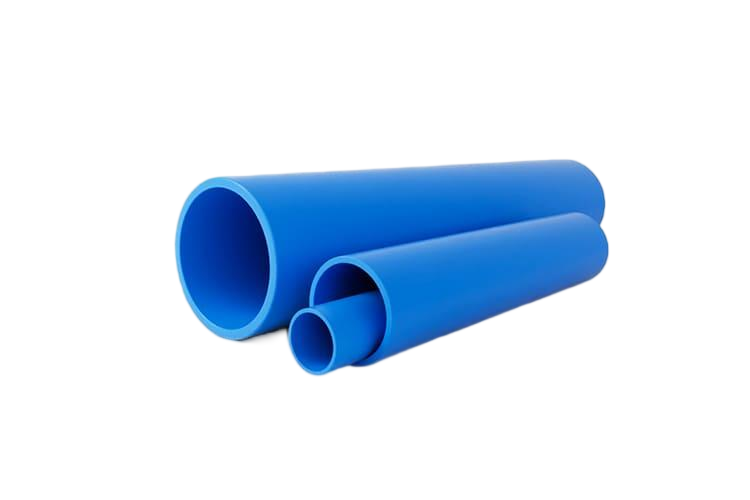
For years "polyethylene" and "hot water" didn't belong in the same sentence: standard HDPE is a cold-water material whose strength falls away as it heats. PE-RT changes that. It's a polyethylene engineered — without cross-linking — to retain its strength in continuous hot water, which makes it the hot counterpart to cold-water HDPE. And because it stays thermoplastic, it can be heat-fused like HDPE, unlike cross-linked PEX — the decisive advantage for buried district-heating mains. This guide explains what PE-RT is, where it fits, and why low-temperature district heating is its sweet spot.
Why "polyethylene" and "hot water" used to be a contradiction
Standard HDPE earns its long life by carrying a given hoop stress for decades — but only at moderate temperature. As the water gets hotter, the material's long-term strength falls, so its pressure rating derates sharply with temperature, and sustained hot water would shorten its life. That's exactly why HDPE is specified for cold-water mains, gas and chilled water, and not for heating. The question for decades was whether a polyethylene could be made to hold its strength hot — and PE-RT is the answer.
What PE-RT is: polyethylene engineered to take the heat
PE-RT — polyethylene of raised temperature resistance — is a polyethylene built with a controlled molecular structure (a carefully designed copolymer, often bimodal, with long side chains that tie the crystalline regions together) so it retains strength at elevated temperature. Crucially, it achieves this without cross-linking the polymer, so it remains a thermoplastic: it can be melted and re-formed, which means it can be heat-fused and recycled, while keeping HDPE's flexibility, corrosion immunity and chemical resistance. It is, in effect, HDPE that can take the heat.
PE-RT Type I vs Type II
PE-RT comes in two grades, both defined in the hot-and-cold-water standard ISO 22391. Type I is the original grade; Type II uses a different (often bimodal) resin design to give higher elevated-temperature capability, which is why larger-bore and district-heating products tend to use Type II. The exact temperature uplift of Type II varies by resin and standard, so match the type to the service class rather than assuming they're interchangeable — Type II where the temperature or pressure duty is higher.
The big advantage: PE-RT is fusible (PEX isn't)
This is the point that matters most for infrastructure. PEX is cross-linked polyethylene — chemically bonded so it can't be melted, which gives it hot-water capability but means it can only be joined with mechanical fittings and can't be recycled. PE-RT gets its hot-water capability a different way, without cross-linking, so it stays thermoplastic and can be butt-, socket- and electrofused exactly like HDPE — and recycled. For a buried district-heating main, that's decisive: you can fuse PE-RT into a continuous, restrained, leak-free line, where PEX would need compression sleeves.
PE-RT vs PEX vs HDPE vs steel
The four materials divide cleanly by what they do. The table sets them side by side: PE-RT takes heat and fuses; PEX takes heat but can't fuse; HDPE fuses but is cold-only; steel handles the highest temperatures and pressures but corrodes and is welded rather than fused.
| Property | PE-RT | PEX | HDPE | Steel |
|---|---|---|---|---|
| Heat fusion | Yes (thermoplastic) | No (cross-linked) | Yes | Welded |
| Continuous hot water | Yes | Yes | No (cold; derates) | Yes (high temp) |
| Recyclable | Yes | No | Yes | Yes |
| Buried DH mains | Butt / electrofusion joints | Compression sleeves only | Cold only | Traditional high-temp DH |
| Best fit | Low-temp DH, radiant, hot plumbing | Radiant & indoor plumbing | Cold-water & gas mains | High-temp / high-pressure DH |
Temperature & pressure: application classes
PE-RT is rated by application (service) class, which combines a continuous design temperature with peak excursions over a design life — the framework set out in ISO 10508 and ISO 22391. In broad terms PE-RT carries continuous hot water up to around 70–80 °C with peak/malfunction excursions toward 95 °C depending on class, and the North American specification rates it at full design life to 82 °C (180 °F). The chart compares the approximate hot-water reach of the materials; treat the figures as class- and grade-dependent.
PE-RT for district heating — low-temperature DH is its sweet spot
District heating is moving to lower supply temperatures — the 4th and 5th generations run at roughly 50–70 °C and below, rather than the 90–120 °C of older steel networks — and that shift is exactly where PE-RT excels. At those temperatures a flexible, corrosion-free, fusible plastic carrier becomes viable and attractive: cheaper and faster to install than welded steel, with no corrosion or cathodic protection. So as district heating decarbonises and cools down, PE-RT is increasingly the carrier of choice for the distribution network.
Pre-insulated flexible PE-RT pipe (EN 15632)
For buried district heating, PE-RT is supplied as pre-insulated flexible pipe: a PE-RT (often Type II) carrier with an oxygen-diffusion barrier, inside bonded PUR foam insulation, inside an HDPE outer jacket — a flexible pipe-in-pipe made to EN 15632. The carrier's fusibility lets the service joints be electrofused, where a PEX system can only be sleeved. It's the natural fit for the lower-temperature networks, combining the insulation of a district-heating pipe with the corrosion-immunity and jointing of polyethylene.
Don't forget the oxygen barrier on closed loops
A closed heating loop has metal components — boilers, pumps, manifolds — that corrode if oxygen permeates in through the pipe wall. So heating-grade PE-RT for closed loops carries an oxygen barrier (an EVOH layer, meeting DIN 4726), and pre-insulated district-heating carriers add an aluminium/EVOH diffusion barrier. It's an easy detail to overlook and a damaging one to get wrong: a non-barrier pipe on a closed loop slowly corrodes the system's metal parts. Specify the oxygen-barrier grade for any closed heating circuit.
Standards
PE-RT is governed by ISO 22391 (EN ISO 22391) for hot-and-cold-water pipe, with service classes defined in ISO 10508, and ASTM F2769 in North America; the material requirements appear in DIN 16833. Pre-insulated flexible district-heating pipe follows EN 15632, and closed-loop oxygen permeability follows DIN 4726. The table lists them. Verify the exact application-class temperatures and the Type I/II distinction against the source standards for your specific product.
| Standard | Scope |
|---|---|
| ISO 22391 / EN ISO 22391 | PE-RT pipes for hot & cold water (Type I/II) |
| ISO 10508 | Application / service classes by temperature & pressure |
| ASTM F2769 | PE-RT hot- & cold-water tubing (potable) |
| DIN 16833 | PE-RT material requirements (95 °C test) |
| EN 15632 | Pre-insulated flexible district-heating pipe |
| DIN 4726 | Oxygen-permeability limits (EVOH barrier) |
5 common mistakes
- Using plain HDPE/PE100 for sustained hot water — it derates with temperature and fails early; use PE-RT.
- Assuming PE-RT is the same as PEX — PE-RT is thermoplastic, fusible and recyclable; PEX is cross-linked and is none of those.
- Ignoring the temperature class — not matching the ISO 10508 application class to the actual service temperature and pressure.
- Omitting the oxygen barrier on a closed loop — letting oxygen permeate in and corrode the system's metal components.
- Operating PE-RT beyond its class — exceeding the rated temperatures, or using Type I where Type II is required.
Glossary
- PE-RT
- Polyethylene of raised temperature resistance — a polyethylene engineered to carry continuous hot water without cross-linking, so it stays fusible.
- PE-RT Type I / Type II
- The two grades in ISO 22391; Type II has higher elevated-temperature capability and is used for larger-bore and district-heating duty.
- Cross-linking (vs PE-RT)
- The chemical bonding that makes PEX hot-rated but non-fusible and non-recyclable; PE-RT achieves heat resistance without it.
- Application class (ISO 10508)
- A service classification combining a continuous design temperature and peak excursions over a design life.
- Low-temperature district heating
- 4th/5th-generation DH running at ~50–70 °C and below — the sweet spot for flexible, fusible PE-RT carriers.
- Oxygen barrier (EVOH)
- A layer that blocks oxygen permeating into a closed heating loop, protecting metal boilers, pumps and manifolds from corrosion.
References & standards
- [1]ISO — ISO 22391-1 — PE-RT piping for hot & cold water (general)
- [2]ASTM International — ASTM F2769 — PE-RT hot- & cold-water tubing
- [3]Plastics Pipe Institute (PPI) — PE-RT pipe and tubing
- [4]Dow — DOWLEX 2344 PE-RT resin (datasheet)
- [5]PE100+ Association — PE-RT in low-temperature district heating systems
- [6]Danish Board of District Heating — PertFlextra — flexible PE-RT district-heating pipe
- [7]NREL — Fifth-generation district heating and cooling
- [8]BSI / CEN — EN 15632-2 — pre-insulated flexible pipe (plastic service pipes)
Frequently asked questions
Need expert advice on your project?
Our engineering team helps utilities, contractors and EPCs specify the right pipe material and SDR for their project. Get a no-obligation technical consultation.
Talk to an engineerRead next
Explore further
Related applications, material comparisons and country buying guides selected for this topic.