Guide
Can You Use HDPE Pipe for Compressed Air? A Safety Guide (2026)
The honest answer is "be very careful — usually no for ordinary above-ground shop air." Here's the stored-energy physics, the rules, and the safe alternatives.

Dr. Wei Liu, P.E.
Senior Engineering Manager · Primepoly
Published: Jun 8, 2026
Updated: Jun 8, 2026
9 min read
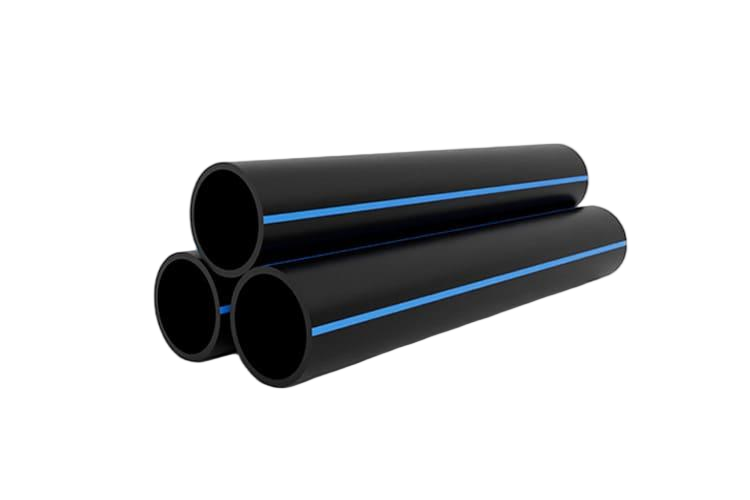
"Can I run my shop air on HDPE pipe?" is one of the most dangerous DIY questions in a workshop, and the honest answer is: be very careful, and usually no for ordinary above-ground air using non-rated pipe. Standard PVC is condemned outright because it shatters into shrapnel. HDPE is genuinely better — it's ductile and is used for compressed air in industry — but only when it's specifically rated for air, kept cool, protected from compressor oil, and ideally buried or guarded. This guide gives the physics, the rules, and the safe options, without the marketing spin.
Why compressed air is so dangerous: stored energy
The hazard is energy, not just pressure. A gas is compressible, so pressurising it squeezes a large volume into a small one and stores a large amount of elastic energy; water is nearly incompressible, so a water line at the same pressure stores very little. When a water line fails it springs a leak and the pressure drops almost instantly — benign. When a compressed-air line fails, the stored energy releases explosively, accelerating pipe fragments. That difference is the whole reason plastic compressed-air failures injure people.
Brittle vs ductile: why PVC shatters and HDPE behaves differently
Material failure mode is what separates a leak from an explosion. PVC and CPVC are brittle: under the stored energy of compressed air they shatter into sharp fragments — which is why OSHA has cited PVC compressed-air lines and manufacturers condemn them. HDPE is ductile: it tends to tear or balloon rather than fragment, especially air-formulated PE100, which stays ductile to very low temperatures. But ductile is not the same as safe — a severed, pressurised HDPE line can still whip violently, and cold impact can still shatter pressurised PE.
| Property | PVC / CPVC | HDPE / PE |
|---|---|---|
| Failure mode | Brittle → shatters into shrapnel | Ductile → tears/balloons (esp. air-rated PE100) |
| Cold behaviour | Embrittles further below ~70 °F | Ductile to ~-40 °F, but cold impact can still shatter pressurised pipe |
| Oil/lubricant resistance | Attacked / degraded | More resistant, but compressor-oil vapours still cut strength |
| Above-ground air status | Prohibited unless buried/encased | Only if manufacturer-rated & within limits |
What the rules actually say (and verify locally)
The regulatory position is real but nuanced. OSHA's 1988 hazard bulletin states PVC must not be used to transport compressed air unless buried or encased, and a 1991 interpretation requires thermoplastic for above-ground air to be shatter-resistant or encased — enforced through the General Duty Clause, since there's no single CFR line banning it. Oregon OSHA is clearest: plastic for compressed air must be manufacturer-designed ("project specific") for that service — it names HDPE and ABS as examples — and PVC must not be used unless buried or encased. These vary by jurisdiction, so verify your local code and authority.
"HDPE" isn't one thing: water-grade vs air-rated
The biggest trap is assuming all HDPE is equal. Standard water-grade PE4710 is a fluid pipe; using it for compressed gas means applying the manufacturer's heavy derating. Performance Pipe's data, for example, multiplies the rating down by an environmental factor as low as ~0.25 for air carrying lubricant vapour at room temperature — throwing away around three-quarters of the nominal capacity before temperature is even considered. Only PE specifically formulated and rated for compressed air, used strictly within its limits, is appropriate — generic water HDPE is not a shop-air pipe.
The hidden enemies: oil, heat, UV & cold impact
Four quiet factors degrade PE in air service, and they stack worst right at the compressor. Compressor-oil and aromatic-hydrocarbon vapours condense on the pipe wall and reduce its strength by chemical solvation. Hot discharge air slashes the temperature design factor — PE's rating falls steeply above room temperature, and compressed air or oxygen service at elevated temperature is explicitly not recommended. UV embrittles any exposed run, and cold impact can shatter even ductile pressurised PE. Keep the plastic cool, oil-compatible, shaded and protected from impact — or don't use it.
When HDPE for air may — and may not — be acceptable
There is a legitimate niche, but it's narrow. HDPE for air may be acceptable only when all of the following hold at once — and is not acceptable for ordinary above-ground high-pressure shop air with generic pipe.
- The pipe is manufacturer-rated / "project-specific" for compressed air — not generic water pipe.
- It is buried, or fully restrained and guarded so a failure can't whip or throw fragments.
- It runs at low pressure, with the correct SDR and a real safety factor after derating.
- It is kept within temperature limits — well away from hot compressor discharge.
- The air is oil-free or compatible with the PE grade, and any sun-exposed run is UV-protected.
Safe alternatives compared
For ordinary above-ground shop air, a purpose-made air-piping system is the cheapest way to avoid a serious mistake. The table compares the common options against general-purpose plastic.
| System | Notes |
|---|---|
| Modular aluminium | The shop-air default; oil-resistant, UV-stable, ductile, push-connect, smooth bore |
| Copper | Clean, corrosion-resistant, smooth bore; soldered joints; higher cost/labour |
| Black iron / galvanised steel | Strong and cheap, but black iron rusts internally and galvanised can flake zinc; heavy |
| Stainless steel | Corrosion-proof, high pressure; expensive; for clean/demanding air |
| Engineered plastic rated for air | Acceptable when specifically rated (PE100 air systems, ABS); mind temperature & oil |
| General HDPE / PVC | PVC: never. General HDPE: only if buried/rated/derated within limits |
The honest verdict
Put plainly: never use standard PVC or CPVC for compressed air. General water-grade HDPE is risky for above-ground shop air and should only be used if the manufacturer specifically rates it for compressed air and it's installed within its temperature, oil and pressure limits — ideally buried or guarded. For everyday above-ground shop air, choose a purpose-made system. And remember the energy-release risk applies to every material: size it, derate it, restrain it, and stay within ratings.
5 safety mistakes
- Using PVC because it's cheap and rated 300–600 psi — that rating is for the pipe body and static water, not joints, ageing, UV, cold or compressed gas, and PVC shatters.
- Assuming "HDPE is ductile, so it's safe" — generic water-grade HDPE isn't air-rated; apply the maker's gas derating and bury or guard it.
- Ignoring compressor oil and heat — oil vapours solvate PE and hot discharge air slashes its rating, and the two stack right at the compressor.
- Running unrated plastic above-ground, unguarded, near people — a severed pressurised line can whip and a brittle failure throws fragments.
- Skipping labelling, pressure relief and the under-30-psi cleaning rule — mislabelled lines and full-pressure blow-guns are hazards independent of the pipe material.
References & safety guidance
- [1]OSHA — Hazard bulletin — PVC pipe in above-ground installations (1988)
- [2]OSHA — Interpretation — thermoplastic pipe above ground (1991)
- [3]Oregon OSHA — Fact sheet FS-44 — compressed air piping systems
- [4]Performance Pipe (Chevron Phillips) — PP 831-TN — PE4710 in compressed air/gas service
- [5]CAGI — Working with compressed air — safety
- [6]Asahi/America — Thermoplastic pipes for compressed air — a safe option
- [7]Parker — Transair — aluminium vs plastic for compressed air
- [8]EXAIR — Is PVC pipe alright to use with compressed air?
Frequently asked questions
Need expert advice on your project?
Our engineering team helps utilities, contractors and EPCs specify the right pipe material and SDR for their project. Get a no-obligation technical consultation.
Talk to an engineerRead next
Explore further
Related applications, material comparisons and country buying guides selected for this topic.