Guide
How to Buy HDPE Pipe: Specification Checklist & What to Demand From a Supplier (2026)
A 50-year buried asset is only as good as the pipe you bought — so specify it precisely, demand the test certificate, and learn to spot the recycled-pipe trap before you pay.

Dr. Wei Liu, P.E.
Senior Engineering Manager · Primepoly
Published: Jun 8, 2026
Updated: Jun 8, 2026
13 min read
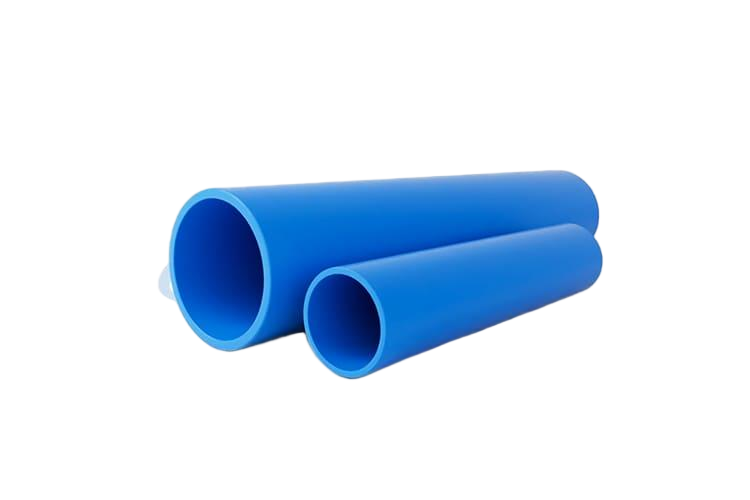
HDPE pipe is a 50-year buried asset, and the difference between a good one and a bad one is invisible across a desk — both look like black plastic pipe. The risk is real: cheap pipe extruded from recycled or regrind plastic instead of virgin PE100 can pass a quick pressure test and then fail brittlely years later, underground, where it's most expensive to fix. The defence is procurement discipline: specify the pipe precisely, demand the documents that prove what it is, and learn the signs of sub-standard pipe before you pay. This guide is that checklist.
Why buying HDPE pipe is risky: the sub-standard pipe problem
The uncomfortable truth is that bad HDPE pipe doesn't look bad. Pipe made from recycled, regrind or filled plastic instead of virgin water-grade PE100 has no guaranteed minimum required strength, poor slow-crack-growth resistance and depleted antioxidants — yet it can pass a short hydrostatic test and look identical to good pipe. The failure comes later, as a brittle crack years into service, when the pipe is buried and the cost of replacement is highest. That's why buying HDPE pipe is a quality-assurance exercise, not just a price negotiation — and why the rest of this guide is about proof, not appearances.
Step 1 — Specify it precisely: the order form
A complete order line removes ambiguity and exposes a weak supplier — one who can't quote precisely against these fields is already a warning sign. Specify all of them. The table is the order form; the key point is that "HDPE" alone is not a specification.
| Field | What to specify | Watch out for |
|---|---|---|
| Material grade | PE100 / PE4710 (PE100-RC for trenchless) | "HDPE" alone isn't a grade; PE80/PE63 are weaker |
| Pressure class | SDR or PN (state the standard) | Pair SDR with grade — PN16 on PE80 ≠ PN16 on PE100 |
| Diameter | Outside diameter (OD) in mm | ISO/EN/AWWA are OD-controlled; don't mix sizing systems |
| Application / standard | ISO 4427 / EN 12201 / AWWA C906 / ASTM F714 (+ year) | Gas uses ISO 4437 / EN 1555 |
| Colour / stripe | Blue = potable; yellow = gas; purple = reclaimed | Confirm the destination market's convention |
| Length / form | Coil (small bore) or straight lengths (6 / 12 m) | Coils cut freight & joints on small bore |
| Quantity | Metres or kg + count | — |
| Potable contact cert | NSF 61 / WRAS / KIWA / DVGW (if drinking water) | Specify the scheme the destination accepts |
Step 2 — Certificates & documents to demand
Ask for copies before you pay a deposit, and check that each document names the actual product and SDR — not just the company. The list below is what a credible supplier can produce. The single most important is the Mill Test Certificate with your lot's results; the most revealing is the resin certificate, which is what actually proves the pipe is virgin PE100.
- ISO 9001 — the quality-management system (a company-level baseline, not product proof).
- Product certification to the dimensional standard (ISO 4427 / EN 12201 / AWWA C906) for this product.
- A third-party / national mark — NSF, WRAS, KIWA, DVGW, SAI Global or BSI Kitemark — matched to the destination market.
- The Mill Test Certificate (ideally EN 10204 Type 3.1, or 3.2 counter-signed by an inspector) with the batch number and your lot's actual results.
- The potable-water contact certificate (NSF 61 / WRAS / KTW-W270) if it's for drinking water.
- The resin (raw-material) certificate naming a listed PE100 compound — the proof of virgin material — with pipe-batch-to-resin-batch traceability.
Step 3 — The test report that proves quality
A glossy brochure proves nothing; a Mill Test Certificate with real numbers for your production lot proves a great deal. The table lists the tests a good supplier runs and what each one tells you. Treat the acceptance figures as typical guidance — exact values are standard- and grade-specific — but a low or scattered OIT, an off density or a wandering melt flow rate are classic fingerprints of recycled or mixed resin.
| Test | Standard | What it proves |
|---|---|---|
| OIT (oxidation induction time) | ISO / EN 728 | Antioxidant level & thermal stability (≥ ~20 min at 200 °C); low OIT suggests recycled resin |
| Density | ISO 1183 | The correct HDPE resin (compound ≥ ~0.955 g/cm³) |
| Melt flow rate (MFR) | ISO 1133 | Correct, consistent resin; scatter = mixed or recycled feed |
| Hydrostatic pressure | ISO 1167 | The core proof — the pipe holds pressure over time (MRS/PE100 validity) |
| Elongation at break | ISO 6259 | Ductility, not brittleness (≥ ~350%) |
| Carbon black content & dispersion | ISO 6964 / 18553 | UV protection (~2–2.5%) and good mixing |
| Dimensions / ovality / reversion | Product standard / ISO 2505 | Correct OD, wall and roundness; low frozen-in stress |
The #1 trap: recycled / regrind pipe — how to spot it
The biggest single risk in buying HDPE pipe is cheap pipe made from recycled or regrind plastic rather than virgin PE100. The logic that catches it is simple: PE100 resin is a global commodity with a floor price, so pipe sold far below that floor can't be made from it. Recycled feedstock has an unknown thermal and oxidative history, so it carries no guaranteed strength, poor crack resistance and depleted antioxidants — and, crucially, it can never be legitimately certified as PE100 no matter what the invoice says. The signs are a too-good price, no resin certificate, a low or scattered OIT, off-colour or streaky pipe, a burnt smell, brittleness on bending, and missing batch marking.
Read the print line: marking & batch traceability
A genuine pipe carries a continuous, indelible printed line repeated at short intervals (at least every metre under ISO 4427), showing the manufacturer, the material and grade (PE100), the dimension and SDR/PN (for example OD110 SDR11 PN16), the standard and year, and — critically — a batch or lot number and production date. That batch number is the thread that ties the pipe back to its Mill Test Certificate and its resin certificate. Missing, sparse, hand-stamped, smudged or batch-less marking is a major red flag, because it breaks the traceability that lets you prove what you bought.
Field checks you can do before you pay
Even without a lab, a buyer or inspector can do a lot with their eyes, hands and nose. None of these replaces the test certificate, but together they catch obvious sub-standard pipe quickly.
- Read the print line — grade, SDR/PN, standard and batch number all present and legible.
- Check roundness and wall — consistent OD and even wall around the circumference, no obvious ovality.
- Check colour uniformity — even, with no streaks, spots or grey patches.
- Check the bore — smooth and glossy, with no grit, voids, pits or bubbles.
- Bend test (small bore) — it should flex or fold without whitening or cracking.
- Smell it — neutral, not a pungent or burnt-plastic odour (a recycled-feed sign).
- Ask for the OIT result and Mill Test Certificate for your lot, plus the resin certificate.
Step 4 — Lock the commercial terms
Once the technical specification and documents are settled, pin down the commercial terms in writing. Confirm the minimum order quantity and the lead time, and the packaging — coils for small bore (freight-efficient, fewer joints) versus bundled straight lengths for large bore, with UV-protected wrapping and end caps. Agree the Incoterms (FOB, CIF, CFR) and the risk-transfer point. And — the cheapest insurance an importer can buy — engage a third-party inspection body (SGS, Bureau Veritas, Intertek) to witness the dimensions, marking and key tests at the mill before shipment, ideally issuing an EN 10204 3.2 certificate.
5 mistakes that get buyers stuck with bad pipe
- Buying on price — the surest route to recycled or regrind pipe with no guaranteed strength.
- Not demanding the Mill Test Certificate (with the OIT and other results) for the actual production lot.
- Skipping third-party pre-shipment inspection — trusting the supplier's own photos.
- A wrong or vague spec — ordering "HDPE" with no grade, or mismatching SDR, PN and grade.
- No resin or grade traceability — accepting pipe with no link from its batch back to a certified PE100 resin batch.
Glossary
- Mill Test Certificate (MTC)
- The manufacturer's QC document listing a batch's actual test results — the single most important document to demand.
- EN 10204 3.1 / 3.2
- Certificate types: 3.1 is issued by the maker's QC; 3.2 is counter-signed by an independent inspector (stronger).
- OIT (oxidation induction time)
- A test of the antioxidant remaining in the pipe; low OIT is a classic sign of recycled or degraded resin.
- Regrind / recycled
- Reprocessed plastic used instead of virgin resin; standards allow only the maker's own clean rework in limited proportion, never post-consumer feed for pressure pipe.
- Print line / marking
- The continuous printed line on the pipe (grade, SDR/PN, standard, batch) that carries identification and traceability.
- Third-party inspection (TPI)
- Independent pre-shipment inspection (e.g. SGS, Bureau Veritas) witnessing tests and marking at the mill — cheap insurance for an importer.
References & standards
- [1]ISO — ISO 4427-2 — PE pipes for water supply (pipes)
- [2]ISO — ISO 4427-1 — PE pipes for water supply (general; marking, regrind)
- [3]PE100+ Association — Testing & inspection guidance (and approved compounds)
- [4]PE100+ Association — Oxidation induction time (OIT) — spec & caveats
- [5]NSF — NSF/ANSI/CAN 61 — drinking water system components
- [6]WRAS — Water Regulations Advisory Scheme (UK potable approvals)
- [7]SGS — Inspection services (pre-shipment / TPI)
- [8]Bureau Veritas — Inspection & verification services
Frequently asked questions
Need expert advice on your project?
Our engineering team helps utilities, contractors and EPCs specify the right pipe material and SDR for their project. Get a no-obligation technical consultation.
Talk to an engineerRead next
Explore further
Related applications, material comparisons and country buying guides selected for this topic.