Application
HDPE Pipe for Oilfield & Produced Water (Saltwater Disposal) (2026)
Produced water is saltier than the sea and corrodes steel in months — which is exactly why the shale basins' water-gathering and disposal lines run on corrosion-immune, fused HDPE.

Dr. Wei Liu, P.E.
Senior Engineering Manager · Primepoly
Published: Jun 8, 2026
Updated: Jun 8, 2026
13 min read
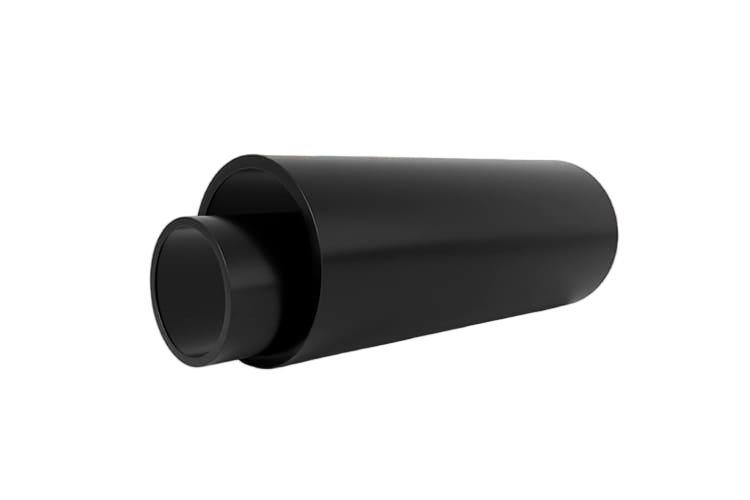
Oilfield produced water is one of the most corrosive fluids in industry — often several times saltier than seawater, laced with hydrogen sulfide, CO2, scale and bacteria — and it eats carbon steel from the inside in months. That, more than anything, is why the water-gathering and saltwater-disposal networks of the shale basins increasingly run on HDPE: it has no corrosion mechanism at all, its fused joints don't leak (a real spill and regulatory advantage), and it's cheaper and faster to lay across a sprawling gathering field. This guide covers HDPE for oilfield water — where it wins, and where steel still belongs.
Why produced water is the hardest fluid in the oilfield
Produced water is brine that comes up with the oil and gas, and it's brutal. Its total dissolved solids commonly run from around 100,000 mg/L in the Permian to 150,000–350,000 mg/L in the Bakken — up to roughly seven times seawater — and it carries chlorides, hydrogen sulfide (sour service), CO2, scale-forming ions and bacteria. Every one of those attacks carbon steel: general and pitting corrosion, microbially induced corrosion, and scaling can perforate an unprotected steel line in months. Handling it is also a major spill and regulatory exposure, so leak-tightness matters as much as corrosion.
Where HDPE fits: gathering, SWD feed & frac transfer
HDPE turns up across the oilfield water cycle, but with one clear boundary worth stating up front: it carries the water, not the high-pressure frac iron. The table maps the uses. The dominant one is the buried produced-water gathering network; SWD injection feed runs at higher pressure (lower DR); and frac and flowback transfer can be temporary surface lay or permanent buried trunk.
| Application | Role of HDPE | Pressure tier |
|---|---|---|
| Produced-water gathering | Buried fused network, wellpad to disposal/recycle | Low–moderate |
| SWD injection feed | Corrosion-proof brine feed to the disposal well | Moderate–higher (DR9/DR7) |
| Frac / flowback transfer | Temporary surface lay or buried trunk; reusable | Moderate |
| Recycled-water distribution | Hub-and-spoke brine recycle to completions | Low–moderate |
| Large water-transfer trunklines | Big-diameter water highways (16–54 in) | Moderate |
| (Not HDPE) high-pressure frac iron | Steel / alloy — HDPE carries the water, not the frac manifold | Very high |
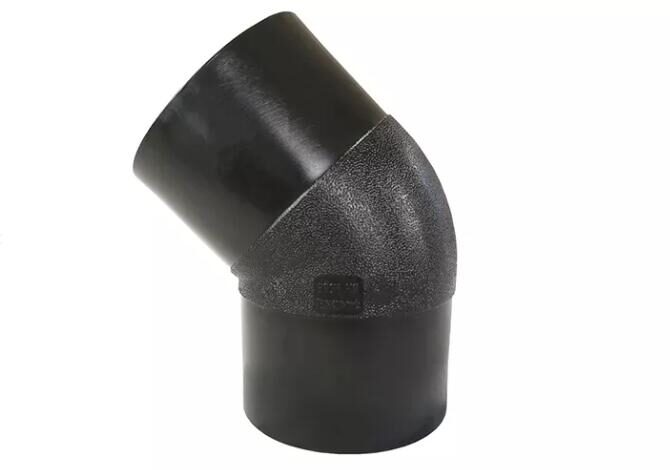
The headline: corrosion immunity to chlorides, H2S & CO2
The reason HDPE took over is simple and hard to argue with: it doesn't corrode. Polyethylene is chemically inert and has no electrochemical corrosion mechanism, so the chlorides, hydrogen sulfide and CO2 that destroy carbon steel — and the microbially induced corrosion and scaling that attack it — do nothing to HDPE. There's no corrosion allowance to add, no internal coating or corrosion-resistant alloy to pay for, and no inspection-and-replace cycle chasing pinholes. For the saline, sour produced water of the shale basins, that immunity is the whole case.
Fused leak-free joints — a spill & regulatory win
The second advantage is the joints. Butt- and electrofused HDPE joints are monolithic and as strong as the pipe wall, with no gaskets or threads to leak — and a produced-water spill is a serious environmental and regulatory liability in every basin. A fully fused gathering line removes the leak paths that gasketed or corroding pipe carries, which is a genuine risk-management win, not just a convenience. (Some disposal installs use mechanical couplings for schedule speed; that trades a little of the leak-tightness for faster assembly — a real trade-off to weigh.)
Pressure & SDR: gathering vs SWD injection feed
Match the DR to the pressure tier. PE4710 gives roughly 200 psi at DR11 (produced-water gathering), about 250 psi at DR9 and 335 psi at DR7 (higher-pressure gathering and SWD injection feed), with the lowest-DR configurations marketed up to around 500 psi. Whatever the steady pressure, add a surge allowance — pump start-ups and shutdowns on an injection feed send water hammer down the line — so size for head plus surge, not steady-state alone.
Temperature derating & the hydrocarbon-permeation caveat
Two honest caveats. First, temperature: produced water can be warm from the geothermal gradient and flowback heat, and HDPE's pressure rating (set at about 73 °F / 23 °C) derates as it warms, so design warm lines at the derated rating; PE4710 suits continuous service to around 140 °F, with PE-RT for hotter flowback. Second, permeation: produced water carries dissolved hydrocarbons, which can permeate the HDPE wall — for non-potable produced-water lines this is a containment and material-ageing consideration rather than a health issue, but where it matters (thin walls, hydrocarbon-contaminated soil), barrier or multilayer pipe is the answer.
HDPE vs carbon steel, fiberglass & HDPE-lined steel
The honest comparison is clear once you split by pressure. For the low-to-moderate-pressure water tier, HDPE wins on corrosion, leak-free joints, abrasion and cost; for the high-pressure frac and injection tier, and for hot service, steel and fiberglass take over. The table summarises it. The recurring theme: HDPE owns the water; steel owns the high-pressure frac iron.
| Material | Wins | Loses |
|---|---|---|
| HDPE (PE4710) | Immune to Cl/H2S/CO2 corrosion, fused leak-free, abrasion-resistant, lowest cost | Low–moderate pressure (~≤500 psi); hydrocarbon-permeation caveat |
| Carbon steel | High pressure | Corrodes fast (Cl/H2S/CO2/MIC); coating or CRA is expensive |
| Fiberglass / GRE | Corrosion-free, high pressure (common in SWD) | Brittle; jointed (adhesive/threaded) — joint failures |
| HDPE-lined steel | Steel pressure rating + corrosion-proof bore | Cost; steel joints plus the liner |
Standards
Oilfield-water HDPE is made to the PE pressure-pipe standards — ISO 4427, ASTM F714, AWWA C906 — and to the oilfield-specific API 15LE (PE line pipe) where applicable, with PPI TR-19 the reference for chemical resistance. There isn't a single dedicated "HDPE produced-water" pressure standard; the water-pipe standards apply, governed by the state spill and disposal regulations (such as the Texas Railroad Commission or North Dakota rules). Confirm the governing regulation for the basin and the duty.
5 costly mistakes
- Specifying corrodible carbon steel for saline produced water without coating or a corrosion-resistant alloy — it fails in months.
- Under-rating the pressure or surge — sizing to steady-state and ignoring pump water hammer on the injection feed.
- Ignoring temperature derating — using the 73 °F rating for warm produced water and flowback.
- Overlooking hydrocarbon permeation where lines run through contaminated soil or carry free hydrocarbons — specify barrier pipe if needed.
- Trading away leak-tightness — choosing mechanical couplings over fusion for speed, then carrying the spill and regulatory liability.
Glossary
- Produced water
- The brine that comes up with oil and gas — often several times saltier than seawater, with H2S, CO2, scale and bacteria; intensely corrosive to steel.
- Saltwater disposal (SWD)
- Injecting produced water into a deep disposal well; the feed lines are a major HDPE use.
- Total dissolved solids (TDS)
- The salinity measure of produced water — commonly 100,000–350,000 mg/L, up to ~7× seawater.
- Microbially induced corrosion (MIC)
- Bacteria-driven corrosion that attacks steel in produced-water service; HDPE is immune.
- Hydrocarbon permeation
- Dissolved hydrocarbons passing slowly through the PE wall — a containment consideration addressed with barrier pipe where needed.
- PE4710
- The high-performance HDPE grade (≈ PE100) used for oilfield water, made to ASTM F714 / API 15LE.
References & standards
- [1]PE100+ Association — PE100 pipe systems — technical authority
- [2]Plastics Pipe Institute (PPI) — TR-19 — chemical resistance of thermoplastics piping
- [3]JPT (SPE) — Handling produced water from hydraulic fracturing
- [4]NM Produced Water Research Consortium — Characterization of produced water in the Permian Basin
- [5]WL Plastics — Oil & gas gathering HDPE (PE4710, API 15LE)
- [6]ISCO Industries — HDPE for saltwater disposal, Williston Basin
- [7]Chevron Phillips Chemical — PP-816-TN — PE3608 & PE4710 pressure ratings
- [8]Journal of Water & Health (IWA) — Modelling benzene permeation through HDPE pipe
Frequently asked questions
Need expert advice on your project?
Our engineering team helps utilities, contractors and EPCs specify the right pipe material and SDR for their project. Get a no-obligation technical consultation.
Talk to an engineerRead next
Explore further
Related applications, material comparisons and country buying guides selected for this topic.