Guide
Locating & Leak Detection on HDPE Pipe: Tracer Wire, Markers & Acoustics (2026)
Polyethylene is invisible to metal-pipe locators and quiet when it leaks — so you design in detectability at install. Here's how to find it and how to find its leaks.

Dr. Wei Liu, P.E.
Senior Engineering Manager · Primepoly
Published: Jun 8, 2026
Updated: Jun 8, 2026
13 min read
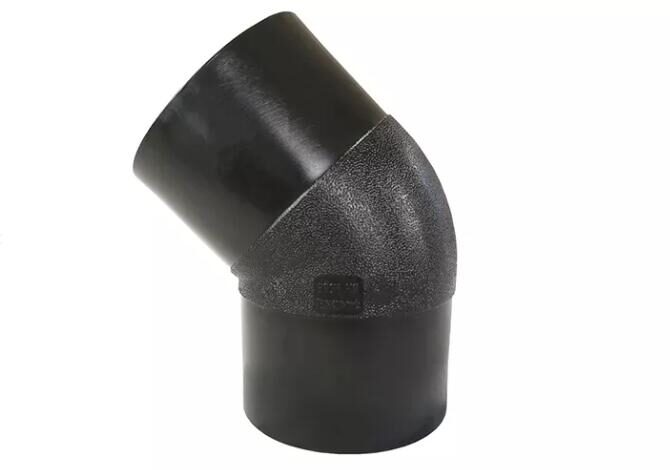
Buried HDPE has a quiet secret: once it's in the ground, it's hard to find — and when it leaks, it's hard to hear. Polyethylene is electrically non-conductive, so the electromagnetic locators that find metal pipe get nothing from it; and its flexible, sound-damping wall muffles leak noise that travels easily along metal. Both problems trace to the same material properties, and both are solved the same way: by designing in detectability when the pipe goes in. This guide covers how to locate buried PE and how to detect its leaks.
Why HDPE is invisible underground
Standard pipe locators work by energising a metallic conductor and tracing the electromagnetic field it radiates. HDPE is non-conductive and non-magnetic, so there's nothing for the locator to energise — it simply can't see the pipe. This isn't a minor inconvenience: a buried PE line with no built-in aid is effectively unfindable from the surface without specialist methods. Because retrofitting detectability onto already-buried pipe is difficult and expensive, the practical answer is always to design it in before backfill.
One root cause, two challenges
It helps to see that locating and leak detection are two symptoms of the same cause. PE's non-conductivity is what makes it hard to locate. PE's sound-damping wall and low, temperature-dependent acoustic wave speed are what make its leaks hard to hear — leak noise attenuates fast and shifts to low frequencies that traditional gear isn't tuned for. Both are material facts you can't change, so both are managed the same way: build in detectability (for locating) and use plastic-appropriate methods (for leaks).
Locating methods for buried PE
Several methods make buried HDPE findable, with very different reliability. The table summarises them; tracer wire is the workhorse, with markers, tape, GPR and GIS as complements. The golden rule is to use more than one independent method where it matters.
| Method | How it works | Limit |
|---|---|---|
| Tracer wire | Energised wire laid along the pipe, traced by EM locator | A break = untraceable past it; needs test stations |
| Detectable tape | Buried tape with metal foil core; locates + warns | Lower trace reliability than dedicated wire |
| RFID / EM markers | Passive markers at valves/tees, read by marker locator | Point markers, not continuous; depth-limited |
| GPR | Finds pipe by density/dielectric contrast, no wire | Skill- & soil-dependent; poor in wet clay |
| Acoustic sonde | Push a transmitter sonde through the line | Sanitary issues in potable lines; limited range |
| GPS / GIS as-built | Survey position at install, store in GIS | Only as good as the captured field data |
Tracer wire: the standard method
Tracer wire is the default solution: an insulated copper or copper-clad-steel wire is laid in the trench along the pipe, and a transmitter energises it so a standard EM locator can trace it. The details make or break it. Use a robust wire (a common spec is #12 AWG copper-clad steel with a thick HDPE jacket and a high break load), join it with waterproof locking connectors, ground it with drive-in rods, and — critically — bring it up to accessible above-ground test stations at each end. A single break leaves the wire untraceable past it, so continuity and accessible terminations are everything.
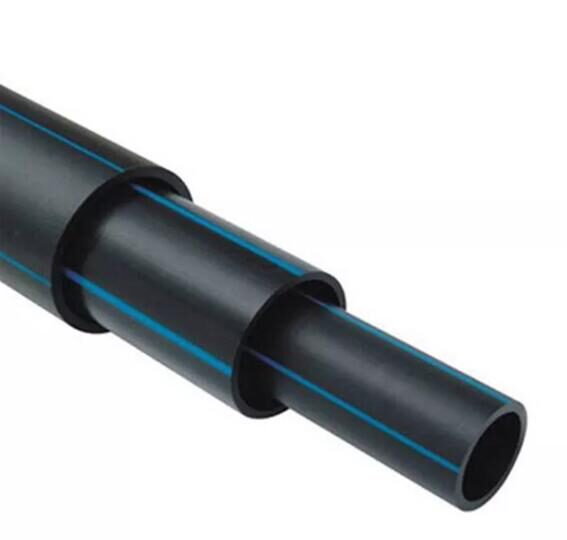
Marker tape, RFID markers & GPR
Beyond tracer wire, several aids help. Detectable warning tape — buried tape with an aluminium foil core — both locates and warns excavators, the cheapest insurance you can lay. RFID or electronic markers (marker balls) are passive, battery-free devices buried at points like valves, tees and bends, read by a marker locator and able to store depth, asset type and a GPS reference. And ground-penetrating radar can find bare PE through density contrast with no wire at all — though it's skill- and soil-dependent and degrades in wet clay. Use these alongside, not instead of, a tracer wire.
As-built GPS/GIS: your permanent backup
The most reliable record is the one you capture before backfill. Surveying the pipe's position by GPS at install and storing it in a maintained GIS gives a permanent, wire-independent backup — the thing you fall back on when a tracer wire eventually breaks. Paired with RFID markers at key fittings, an accurate as-built GIS turns "where is the pipe?" from a field hunt into a database query. It's only as good as the field data captured, so make as-built survey part of the install, not an afterthought.
Why leak detection is harder on HDPE
On metal pipe, a leak makes a sound that carries far and pinpoints well with acoustic correlators and listening sticks. On HDPE, the physics work against you. The flexible wall damps the leak noise, which attenuates rapidly along the pipe; the energy concentrates at low frequencies that traditional equipment doesn't listen for; and the acoustic wave speed is both low and variable with temperature, which undermines the correlation maths that locates a leak between two sensors. The result: standard metal-pipe methods are markedly less effective, so you need plastic-appropriate techniques.
Leak-detection methods for HDPE
Several methods work on plastic if chosen and tuned for it. The table lists the main ones; acoustic correlators and loggers still work when tuned to low frequency with closer spacing, but tracer gas is often the strongest method when acoustics struggle.
| Method | Notes for PE |
|---|---|
| Acoustic correlators | Work if tuned to low frequency with closer sensor spacing |
| Leak noise loggers | Deploy in district metered areas for overnight monitoring |
| Tracer gas (H₂/N₂) | Injected gas escapes the leak and is sniffed at surface — strong when acoustics fail |
| In-pipe tools | SmartBall (free-swimming) and Sahara (tethered) pinpoint small leaks |
| Thermal imaging | Surface temperature anomalies over shallow leaks |
| Pressure / flow & DMA | Network-level detection of new losses |
Best practice: design in detectability at install
Everything points to the same conclusion: solve both problems before backfill. The path below is the install-first checklist that keeps a buried HDPE line findable and its leaks locatable for its whole service life.
Standards & marking
A few references guide the practice. The APWA Uniform Color Code sets the marking colours (blue for potable water, purple for reclaimed). PPI guidance recommends tracer wire or detectable tape for buried PE, and tracer-wire makers specify wire and connector grades. Importantly, there is no single national standard that universally mandates tracer wire on HDPE — it's required by individual utility, municipal and state specifications, which vary by jurisdiction (and the UK's PAS128 is a separate survey standard). Check the governing local spec.
5 common mistakes
- Installing no tracer wire, tape or markers — the pipe is then effectively unfindable from the surface.
- A tracer wire that breaks or loses continuity, or has no test stations — you can't trace past a break or even connect a transmitter.
- Assuming metal-pipe acoustic methods work on PE — its sound-damping and low wave speed defeat standard correlators and listening sticks.
- Keeping no as-built GIS or GPS record — losing the only backup when the wire eventually fails.
- Relying on memory or old paper drawings instead of a maintained, surveyed record.
Glossary
- Tracer wire
- An insulated conductor laid along non-metallic pipe so an electromagnetic locator can trace the line; the standard locating aid for HDPE.
- Detectable tape
- Buried warning tape with a metallic foil core that both locates the line and warns excavators.
- EM / RFID marker
- A passive buried marker placed at valves, tees and bends, read by a marker locator; can store depth and asset data.
- GPR (ground-penetrating radar)
- A surface method that finds non-metallic pipe by density contrast — effective but skill- and soil-dependent.
- Acoustic correlator
- A leak-detection tool that locates a leak from the sound it makes between two sensors; must be low-frequency-tuned for plastic.
- Tracer gas
- Injected non-flammable hydrogen/nitrogen that escapes through a leak and is sniffed at the surface — strong when acoustics fail on PE.
References & guidance
- [1]Plastics Pipe Institute (PPI) — Pipe locating (Municipal Advisory Board)
- [2]PE100+ Association — Detecting buried PE pipes from the surface
- [3]APWA — Uniform Color Code (utility marking)
- [4]Copperhead Industries — 5 steps to installing a tracer wire system
- [5]Minnesota Rural Water Association — Tracer-wire specification guide (utility-level mandates)
- [6]Echologics (Mueller) — Non-invasive leak detection (plastic mains)
- [7]Gutermann — Leak noise correlators
- [8]NRC Canada (peer-reviewed) — Acoustic filtering in buried plastic water pipe
Frequently asked questions
Need expert advice on your project?
Our engineering team helps utilities, contractors and EPCs specify the right pipe material and SDR for their project. Get a no-obligation technical consultation.
Talk to an engineerRead next
Explore further
Related applications, material comparisons and country buying guides selected for this topic.