Application
HDPE Pipe for Irrigation: Drip, Sprinkler & Farm Mains (2026)
Pressure mains vs soft drip tubing, the standards that govern, UV and coiling, fertigation chemistry, and water-saving economics for arid markets.

Dr. Wei Liu, P.E.
Senior Engineering Manager · Primepoly
Published: Jun 7, 2026
Updated: Jun 7, 2026
13 min read
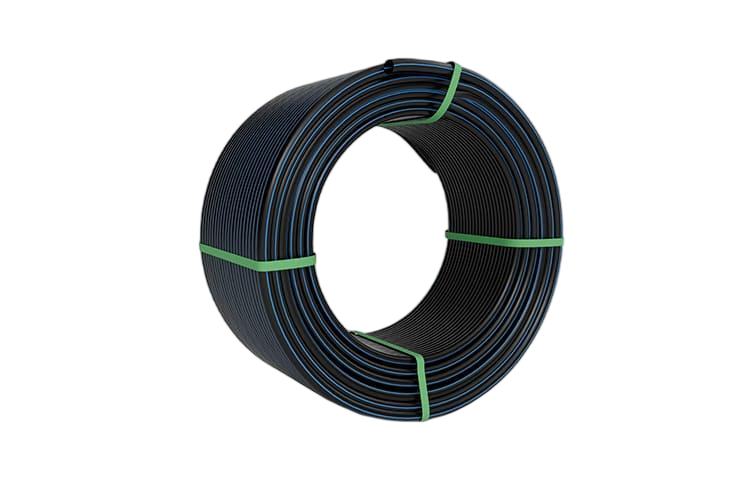
Polyethylene is the backbone of modern irrigation — flexible enough to follow the terrain, light enough to lay by hand, coilable for long jointless runs, and immune to the corrosion and fertilizer chemistry that destroy metal. But "PE irrigation pipe" spans two very different materials, and choosing the wrong one is a classic field failure. This guide explains the PE100 pressure mains versus soft LDPE drip tubing split, the standards that govern each, and how to select, protect and connect irrigation pipe for drip, sprinkler and farm-main systems.
Why HDPE/PE is the backbone of modern irrigation
PE earns its place in irrigation through a stack of practical advantages: it's flexible, so it follows undulating fields; it's light and coilable, so it lays fast with few joints; it's corrosion- and chemical-resistant, so fertigation and aggressive soils don't degrade it; its smooth bore gives low friction and good flow; and it tolerates freeze and ground movement. Add a long service life and leak-free joints, and PE outperforms the metal and rigid alternatives across nearly every irrigation duty.
HDPE vs LDPE: pressure mains vs soft drip tubing
The single most important distinction is material density. High-density PE100 (HDPE) is rigid and pressure-rated — the right choice for buried mains and submains carrying significant pressure. Low-density LDPE/MDPE is soft and flexible, made for low-pressure drip laterals that carry emitters and snake along the surface. Using soft LDPE tubing where a pressure-rated PE100 main is required leads to bursts and blowouts; matching the material to the duty is the foundation of a reliable system.
| Type | Material | Role | Pressure |
|---|---|---|---|
| Pressure mains & submains | HDPE PE100 | Buried trunk distribution | High (PN6–PN16+) |
| Drip laterals & small submains | LDPE / MDPE | Surface drip lines with emitters | Low (~1–4 bar) |
| Layflat hose | PE (collapsible) | Surface / temporary supply | Low–medium |
| Coiled small-diameter tubing | LDPE | Long drip runs, few joints | Low |
Matching pipe to method: drip, SDI, sprinkler, surface
Each irrigation method uses PE differently. Drip and trickle systems run LDPE laterals fitted with emitters — pressure-compensating ones for even flow on slopes and long runs. Sub-surface drip (SDI) buries that dripline to protect it from UV and damage and maximise efficiency. Sprinkler and center-pivot systems use PE100 mains and submains feeding the sprinklers. And surface or flood irrigation uses PE layflat and gated pipe. The pipe follows the method's pressure and exposure needs.
Standards that govern irrigation pipe
Three ISO standards matter, and they cover different duties. ISO 8779 is the dedicated irrigation pipe standard, written for intermittent irrigation service (roughly a 10-year design life, not continuous pressure). ISO 9261 covers emitters, emitting pipe and drip tape. ISO 4427 covers continuous-pressure PE100 water mains (a ~50-year basis). The key teaching point: permanent buried pressure mains are usually specified to ISO 4427 PE100, while drip laterals and light irrigation pipe go to ISO 8779 — and local agronomic and hydraulic practice governs the final selection.
| Standard | Scope |
|---|---|
| ISO 8779 | PE pipes for irrigation (intermittent, ~10-yr life) |
| ISO 9261 | Emitters, emitting pipe and drip tape |
| ISO 4427 | Continuous-pressure PE100 water mains (~50-yr) |
Pressure & SDR: from low-pressure drip to high-pressure mains
Pressure needs span a wide range. Drip systems run low — emitters typically operate around 1 to 4 bar — so drip tubing is lightly rated. Mains and submains must be selected by pump head, elevation and a surge margin, so they range from PN6 (SDR21) through PN10 (SDR13.6) to PN16 (SDR11) and beyond. As always, a lower SDR means a thicker wall and a higher pressure rating; size the main for the real operating pressure plus a margin for water hammer on pump start and stop.
UV resistance: why surface drip lines must be carbon-black
Drip laterals and tape are laid on the surface in full sun, so their UV resistance is critical. Black PE stabilised with well-dispersed carbon black (around 2% or more) resists sunlight effectively indefinitely; light-coloured or uncarbonised tubing degrades and cracks within a season. For surface drip, always specify black, carbon-black-stabilised tubing — and where the dripline is buried (SDI), UV exposure is no longer the issue, but mechanical protection becomes one.
Coiling: fewer joints, faster lay
One of PE's biggest practical advantages in irrigation is coiling. Small-diameter pipe is supplied in long coils, so a lateral or submain can be rolled out in one continuous length with very few joints — which means faster laying, lower labour, and fewer potential leak points than rigid jointed pipe. For field-scale runs, coiling is often the difference between a fast, economical install and a slow, joint-heavy one.
Fittings & connections
Small-diameter irrigation pipe doesn't need fusion: compression fittings, barbed or insert fittings with a clamp or crimp ring, takeoffs, start connectors and drip connectors handle the laterals and submains quickly with hand tools. Larger PE100 mains use butt fusion, electrofusion or compression for leak-free joints. Matching the fitting size and type to the pipe — and using the right clamp — prevents the leaks and blow-offs that come from mismatched connections.
Fertigation & chemigation: HDPE's chemical resistance
Injecting fertilizers and chemicals through the irrigation system (fertigation) plays to HDPE's strengths. PE is chemically resistant to the common injectates — urea, ammonium sulfate, potassium nitrate, phosphoric-acid-based fertilizers and fertilizer salt solutions — and shrugs off the herbicides and soil chemicals that corrode metal. The one limitation to watch is concentrated, strongly oxidising acids above a threshold concentration, which can degrade PE over time; for aggressive injectates, check a chemical-resistance chart.
Water efficiency & cost in arid regions
Drip is the most water-efficient irrigation method, delivering small, precise volumes straight to the root zone instead of flooding a field — and in arid export markets across the Middle East, semi-arid Africa and Southeast Asia, that water saving is decisive. PE is the enabling material: light, coilable, corrosion-proof and long-lived, it makes drip and micro-irrigation affordable to install and cheap to maintain, so the lifecycle cost beats corrosion-prone metal comfortably.
Choosing irrigation pipe
5 common buyer mistakes
- Using soft LDPE drip tubing where a pressure-rated PE100 main (ISO 4427) is required — it bursts under main-line pressure.
- Specifying the wrong UV grade — light-coloured or non-carbon-black tubing on surface runs, which cracks within a season.
- Under-rating pressure/SDR — ignoring pump head, elevation and surge, and picking a PN too low for the system.
- Skimping on filtration — letting emitters clog, then blaming the pipe instead of the (missing) filter and flushing regime.
- Mismatched fittings — wrong barb or compression size, or no clamp, causing leaks and blow-offs; or assuming fusion is needed for small-diameter tubing.
Glossary
- HDPE (PE100)
- High-density, rigid, pressure-rated PE for buried irrigation mains and submains (ISO 4427).
- LDPE / MDPE
- Lower-density, soft, flexible PE for low-pressure drip laterals and tubing (ISO 8779).
- ISO 8779
- The dedicated PE irrigation pipe standard, written for intermittent service (~10-year design life).
- Pressure-compensating (PC) emitter
- A drip emitter that delivers a constant flow over a range of pressures — important on slopes and long runs.
- Fertigation
- Injecting fertilizers/chemicals through the irrigation system; PE's chemical resistance suits it well.
- SDI (sub-surface drip irrigation)
- Buried dripline that maximises water efficiency and avoids surface UV and mechanical damage.
References & sources
- [1]ISO — ISO 8779 — PE pipes for irrigation: specifications
- [2]ISO — ISO 9261 — irrigation emitters and emitting pipe
- [3]ISO — ISO 4427-1 — PE pipes for water supply (general)
- [4]ICID — List of irrigation standards (ISO and CEN)
- [5]FAO — Localized (drip) irrigation — drip irrigation chapter
- [6]FAO — Irrigation manual (knowledge repository)
- [7]Engineering ToolBox — PE pipe dimensions (ISO 4427 — PN/SDR reference)
- [8]WL Plastics — HDPE pipes in irrigation & agriculture
Frequently asked questions
Need expert advice on your project?
Our engineering team helps utilities, contractors and EPCs specify the right pipe material and SDR for their project. Get a no-obligation technical consultation.
Talk to an engineerRead next
Explore further
Related applications, material comparisons and country buying guides selected for this topic.