Guide
HDPE Pipe in Hot Climates: UV, Heat & Thermal Movement in the Desert (2026)
Black HDPE shrugs off desert sun for decades — the real work is derating the pressure for heat, taming thermal movement on exposed lines, and remembering that burying it solves all three at once.

Dr. Wei Liu, P.E.
Senior Engineering Manager · Primepoly
Published: Jun 8, 2026
Updated: Jun 8, 2026
12 min read
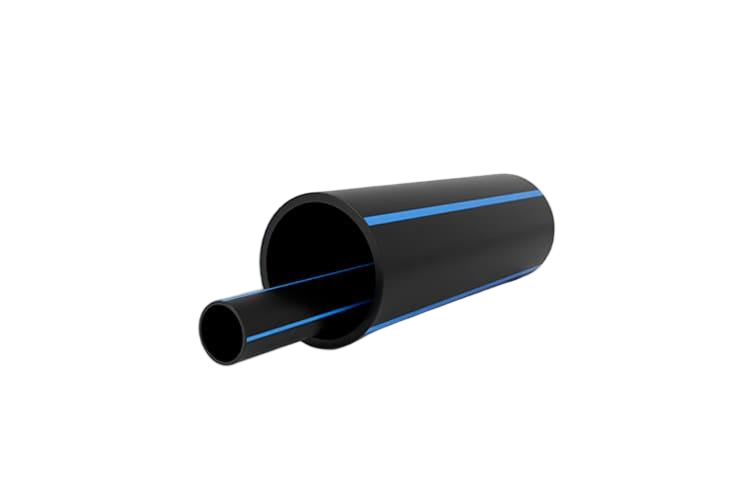
Hot, arid climates put three things to HDPE at once: intense year-round UV, high temperatures that cut its pressure rating, and big thermal movement on exposed lines from large day-night and seasonal swings. The good news is that the first is largely a non-issue for black pipe, and all three have the same master solution — burial. This guide separates the reassurance from the real engineering: black HDPE is UV-fine for decades, but you must derate the pressure for heat and manage the movement of exposed runs, and burying the line handles all of it in one move.
Why hot, arid climates are a special case
A pipe in the desert faces three distinct hot-climate challenges, and it helps to keep them separate. UV exposure attacks the polymer at the surface. High ambient and surface temperatures heat the pipe wall and reduce its pressure capacity. And the large temperature swings — desert days to nights, summer to winter — drive substantial thermal expansion and contraction on any exposed line, while pipe stored in the sun gets hot and soft. Each has its own mitigation, but as we'll see, one decision addresses all three.
UV in the desert: why black HDPE is fine for decades
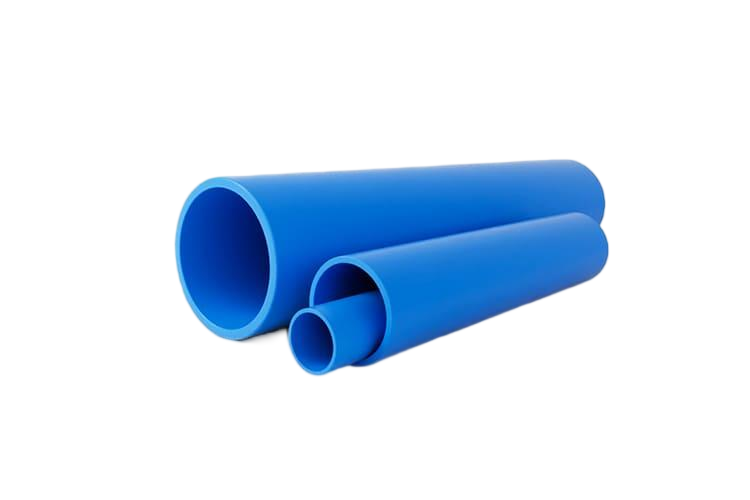
UV is the challenge people worry about most and the one that's largely solved. Black HDPE is compounded with finely dispersed carbon black (typically 2–2.5%), which absorbs and blocks UV and protects the polymer for decades of exposed service — even under intense desert sun, black pipe is rated for effectively unlimited outdoor storage and service life. The caveat is colour: non-black, blue or striped pipe doesn't carry that full-volume UV protection, so for exposed desert use you specify black, and treat any coloured pipe as needing its UV rating confirmed.
Heat & pressure: derating for high temperature
HDPE's pressure rating is referenced to 20 °C, and the pipe-wall temperature — which in the desert can be well above the air temperature — governs the actual allowable pressure, which falls as the pipe heats. The table gives representative derating factors: a PE100 line keeps roughly 83% of its rating at 40 °C and about 71% at 50 °C, while PE80 derates harder. For exposed lines with large unpredictable swings, design to the maximum service temperature; for buried lines, the cooler, stable ground temperature means far less derating. Confirm the exact factors against your compound's data.
| Pipe-wall temperature | PE100 (× rating) | PE80 (× rating) |
|---|---|---|
| 20 °C | 1.00 | 1.00 |
| 30 °C | ~0.91 | ~0.83 |
| 40 °C | ~0.83 | ~0.77 |
| 45 °C | ~0.77 | ~0.71 |
| 50 °C | ~0.71 | ~0.63 |
| 60 °C | ~0.67 | ~0.56 |
How hot does the pipe get? Air vs surface vs fluid
It's worth distinguishing three temperatures, because they differ. The air temperature is what the forecast gives; the surface temperature of a black pipe in full sun is higher, because black PE absorbs solar energy and runs hotter than the surrounding air (it can exceed 60 °C in strong desert sun); and the fluid temperature is whatever the contents are. The derating is governed by the pipe-wall temperature, which on an exposed line is driven by that hot surface — another reason exposed desert lines derate more than the air temperature alone would suggest, and another argument for burial.
Thermal expansion & contraction on exposed lines
Polyethylene expands and contracts a lot — its coefficient is roughly 0.13–0.20 mm per metre per °C, about ten times steel — and desert temperature swings are large, so an exposed run moves substantially. A useful rule of thumb is about an inch per 100 feet per 10 °F, or roughly half a metre over a 100 m run for a 30 °C swing. Surface temperature swings are larger than air swings, and the day-night cycling repeats daily, so exposed desert lines see big, repeated movement that has to be designed for or the line buckles or pulls joints apart.
Managing movement: burial, snaking, loops, anchoring
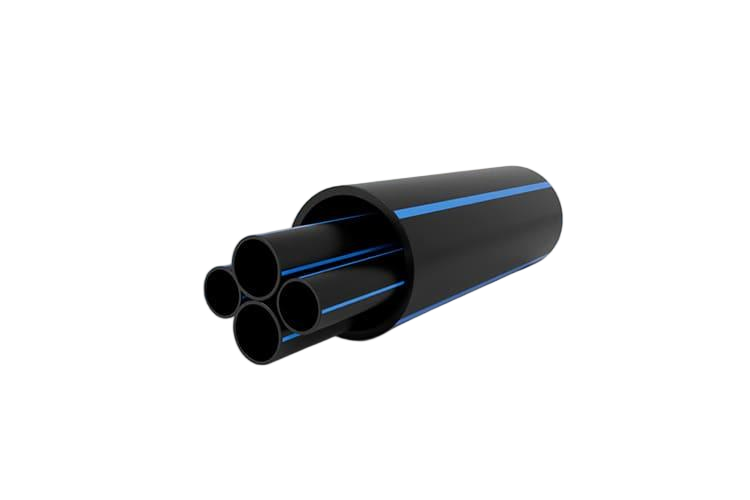
There are a few coherent ways to handle the movement on an exposed line, and the table sums them up. The simplest and most complete is to bury the pipe, which restrains it. Where it must stay above ground, snake the run or build in expansion loops so the curves absorb the growth, or fully anchor and guide it — remembering that a restrained end carries a large thermal thrust that the anchors must take. Pick one coherent strategy rather than half-restraining.
| Strategy | How it works |
|---|---|
| Bury it | Stable cool ground temperature + soil restraint — solves UV, derating and movement at once |
| Snake / expansion loops | Lay the run serpentine or with loops so the curves absorb the movement (≈1 in per 100 ft per 10 °F) |
| Anchor & guide | Fix and guide the exposed run; restrained ends carry a large thermal thrust the anchors must take |
Storing & handling HDPE in extreme heat
Heat affects the pipe before it's even installed. Pipe left in the sun gets hot and soft, expands, and can ovalise — coils and stacks deform under their own weight when warm, and very hot pipe is best not handled until it cools. So store pipe shaded and properly supported, keep stacks within the recommended heights, and where possible install in the cooler hours. And account for the length change between a hot installation and cooler operation (or the reverse): pipe laid hot will contract and pull on its joints as it cools, while pipe laid cool will push as it heats.
Burial: the one decision that solves UV, derating & movement
If there's one thing to take from this guide, it's that burial solves all three hot-climate problems at once. Buried pipe is shielded from UV entirely; it sits at the stable, cooler ground temperature, so it derates far less than a sun-baked exposed line; and the surrounding soil restrains its thermal movement through friction, removing the need for loops or anchors. Where the application allows it, burying the line is the single most effective hot-climate decision — which is why it's the default for desert water transmission, irrigation and distribution networks.
5 common mistakes
- Not derating the pressure for high wall temperature — using the 20 °C rating as-is in 45 °C-plus conditions.
- Leaving non-black, blue or striped pipe exposed to desert sun without confirming its UV rating.
- Ignoring thermal movement on above-ground runs — no loops, snaking or anchors, so the line buckles or pulls joints apart.
- Storing pipe in direct sun — letting it soften, ovalise and deform before it's even installed.
- Installing hot then operating cool (or the reverse) without allowing for the length change — locking in stress that fails the joints.
Glossary
- Carbon black (UV)
- The finely dispersed pigment (≈2–2.5%) that makes black HDPE UV-stable for decades of exposed desert service.
- Temperature derating
- Reducing the allowable pressure as the pipe-wall temperature rises above the 20 °C reference (PE100 ~0.83 at 40 °C).
- Coefficient of thermal expansion
- How much the pipe grows per metre per °C (~0.13–0.20 mm/m/°C) — about 10× steel, driving exposed-line movement.
- Snaking
- Laying a run in a serpentine path so the curves absorb thermal movement on an exposed line.
- Pre-snaking
- Laying the pipe snaked while warm so it absorbs movement at lower force as it cools.
- Burial (mitigation)
- Burying the pipe — the single action that removes UV, lowers the temperature (less derating) and restrains movement at once.
References & standards
- [1]PE100+ Association — Is PE pipe affected by exposure to UV light?
- [2]PIPA — POP013 — temperature re-rating of PE pipes (derating tables)
- [3]Chevron Phillips Chemical — PP-814-TN — thermal effects (expansion, loops, surface heating)
- [4]Vinidex — PE temperature considerations (derating & expansion)
- [5]ISO — ISO 13761 — pressure reduction factors for PE above 20 °C
- [6]Plastics Pipe Institute (PPI) — TR-18 — weatherability of thermoplastic piping systems
- [7]Plastics Pipe Institute (PPI) — Handbook of Polyethylene Pipe (storage, UV, thermal)
- [8]Sino Pipe — Storing HDPE pipe against UV (handling in heat)
Frequently asked questions
Need expert advice on your project?
Our engineering team helps utilities, contractors and EPCs specify the right pipe material and SDR for their project. Get a no-obligation technical consultation.
Talk to an engineerRead next
Explore further
Related applications, material comparisons and country buying guides selected for this topic.